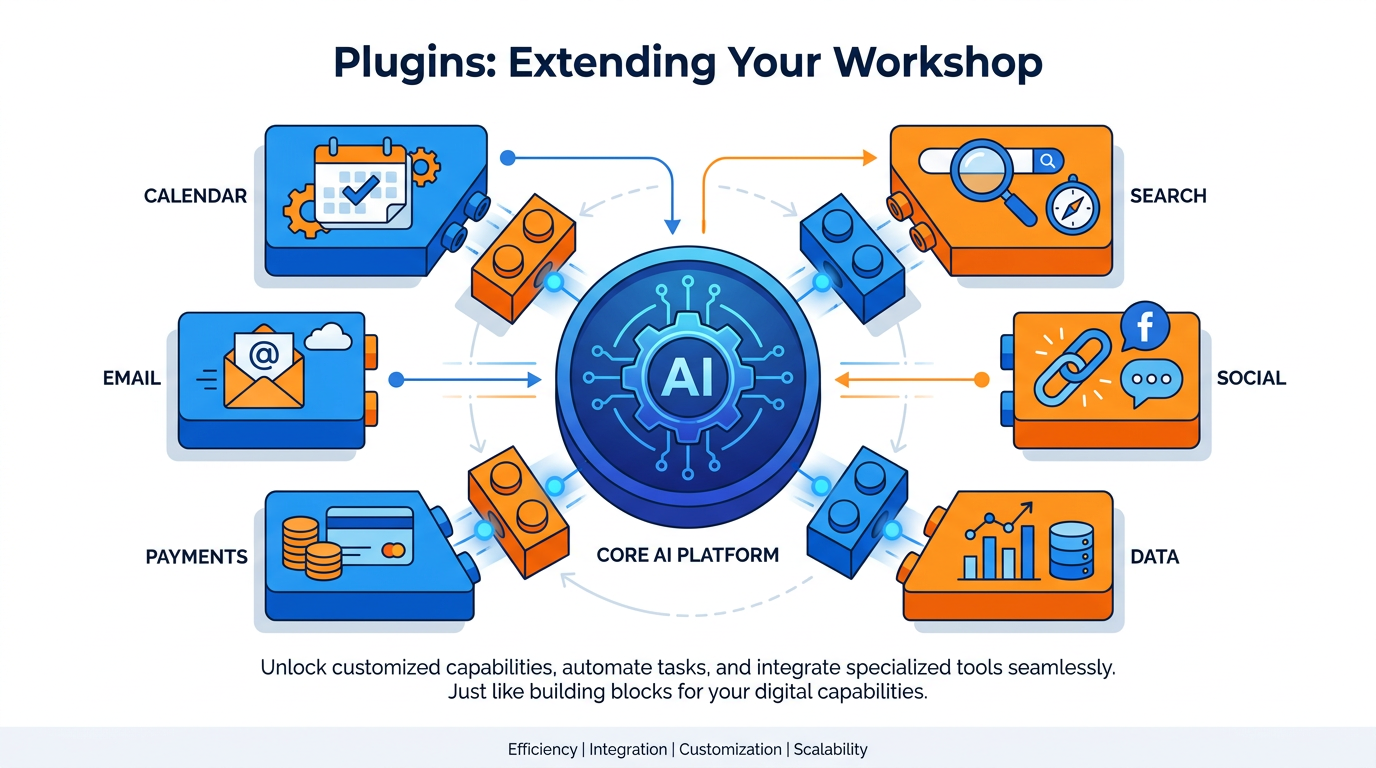
Figure 1:Plugins — The one-click layer. No configuration. No credentials file. No developer required. Just install and use.
There is a difference between a tool that is powerful and a tool that is connected.
A powerful tool does impressive things in isolation. A connected tool does useful things in the context of your actual life and work. The difference between the two is not capability — it is integration.
You have already built the capability layer. You have Claude Desktop configured with your system prompt. You have Gems set up for recurring tasks. You have MCP connections to Google Workspace, Firecrawl, and Supabase. Your AI has intelligence and access.
Plugins are the next layer — and they work differently from everything you have set up so far.
Where MCP connections require configuration, plugins install with a single click. Where MCP servers talk to your local machine, plugins are cloud-based integrations maintained by the tool providers themselves. Where building a custom MCP connection takes fifteen minutes and some patience, installing a plugin takes thirty seconds.
The tradeoff is control. MCP gives you maximum flexibility — you can connect anything, configure it exactly as you need, and own the entire setup. Plugins give you maximum convenience — pre-built, maintained, ready to use, with no configuration required.
Both have a place in your workshop. This chapter is about plugins — what they are, where to find them, how to install them, and how to build one when you need something that does not yet exist.
One more distinction worth making clearly: plugins are not the same as skills. A skill (Chapter 4) is a saved set of instructions that tells your AI how to behave for a specific task. A plugin is a live connection that tells your AI where to get information or what to do in the real world. A skill shapes the thinking. A plugin extends the reach. The most powerful workflows use both — a skill that defines the process, and a plugin that provides the live data that process runs on.
What Plugins Actually Are
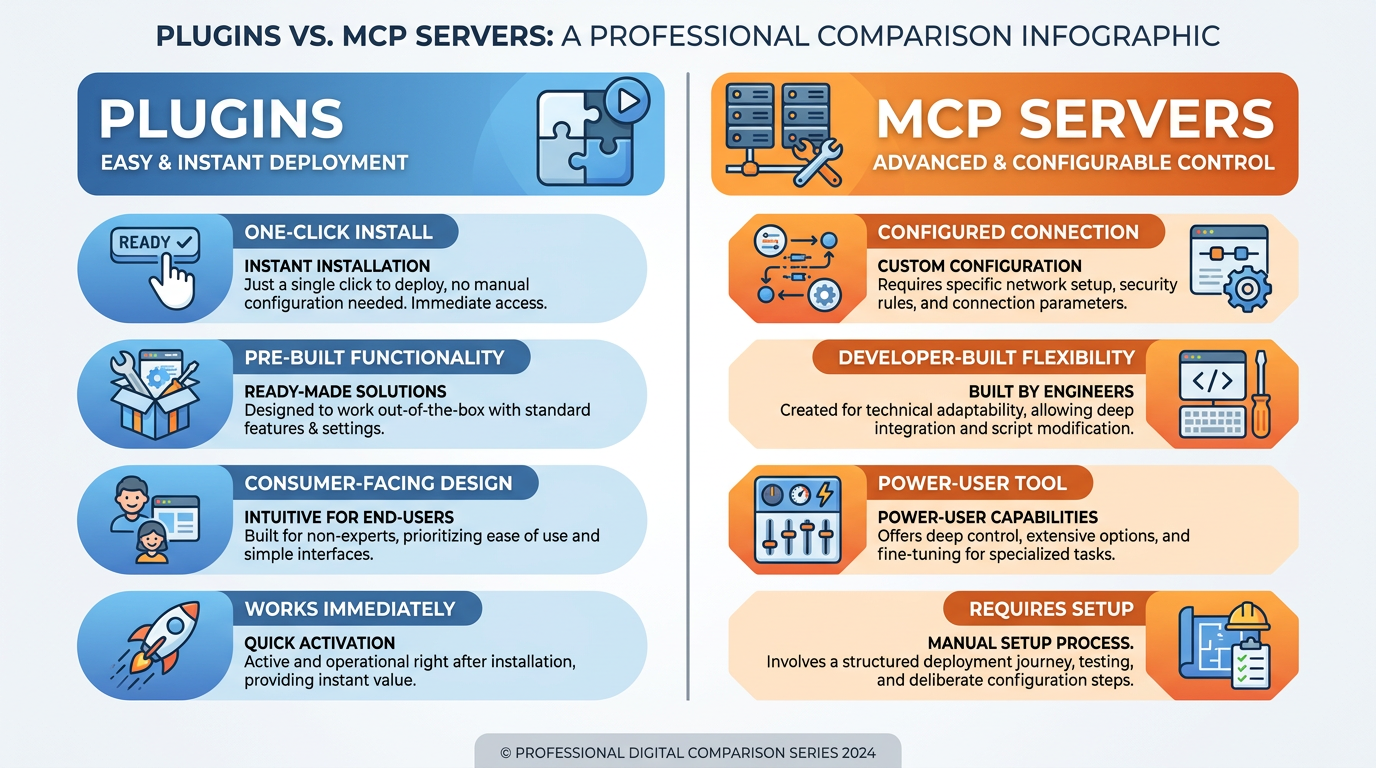
Figure 2:Plugins vs. MCP — Two ways to extend your AI. Plugins for convenience and speed. MCP for power and customization. Both belong in your workshop.
A plugin is a pre-built integration between an AI tool and an external service, distributed through a marketplace and installed with a single action.
Think of it like your phone’s app store. You do not build an Uber app from scratch every time you need a ride. You open the store, find the app, tap install, and it works. Plugins work the same way — except instead of adding an app to your phone, you are adding a capability to your AI.
When you install a Zapier plugin in Claude, for example, Claude can trigger automations across thousands of apps without you leaving the conversation. When you install a Google plugin, Claude can search Google, read results, and incorporate current information without you having to paste anything. When you install a Salesforce plugin, Claude can read and write to your CRM records during a conversation.
The plugin handles the connection. The authentication. The API calls. The data translation. From your perspective, you just say what you need, and the AI does it.
This is what makes plugins so immediately powerful for business users: they close the gap between “having access to information” and “having the information exactly when you need it, in the conversation where you are already thinking.”
Discovering the Plugins You Actually Need
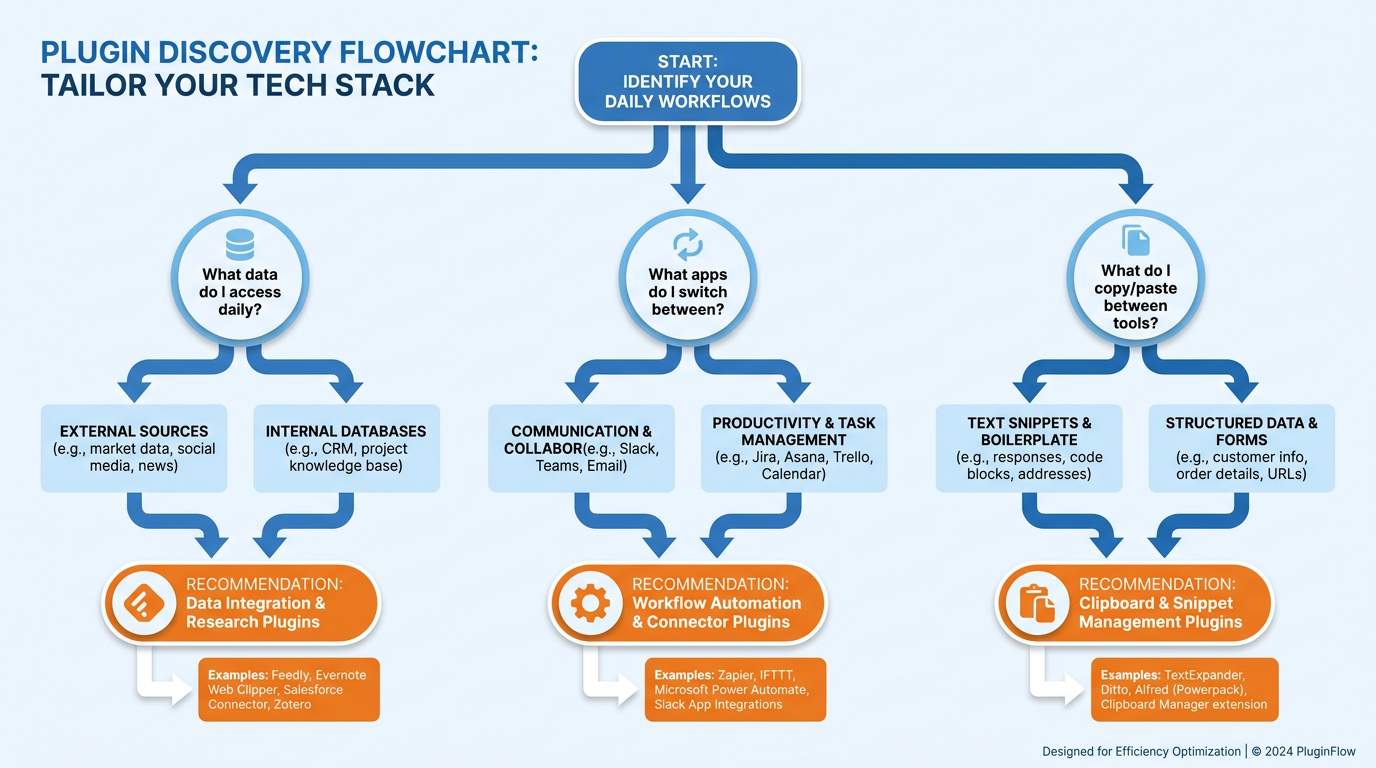
Figure 3:Finding Your Plugins — The best plugin for you is the one that eliminates your most frequent friction. Start there.
The plugin marketplace can feel overwhelming. There are hundreds of options across different AI platforms, and it is easy to install a dozen things and use none of them consistently.
The right approach is to start with friction.
Ask yourself: in a typical workday, what do I find myself doing outside of my AI conversation that I wish I could do inside it? Where do you switch tabs to look something up? What do you copy and paste from other tools? What information do you have to manually fetch and bring into a conversation?
Those friction points are your plugin roadmap.
For most business professionals, the highest-friction integrations fall into a small number of categories:
Real-time information — Your AI’s training has a cutoff date. When you need current information — today’s news, a live stock price, a recent announcement — your AI does not have it without a search plugin. A web search plugin eliminates this limitation entirely. You stop copying articles into the chat and start asking questions that get answered with current sources.
CRM and customer data — If you are in sales, client services, or business development, your CRM is where your professional world lives. A Salesforce, HubSpot, or similar plugin means your AI can pull client history, update records, and help you act on customer data without you leaving the conversation to look it up.
Project management — A Notion, Asana, or Linear plugin means your AI can see your actual tasks, your project status, your team’s work. You stop describing your project and start working on it directly.
Communications — Beyond the Google integration you set up in Chapter 3, specialized communication plugins for Slack, Teams, or your specific email environment can give your AI access to the real-time context of your working conversations.
Research and knowledge — Plugins that access specific knowledge bases — academic databases, legal research tools, industry databases — can give your AI specialized depth in areas where general training falls short.
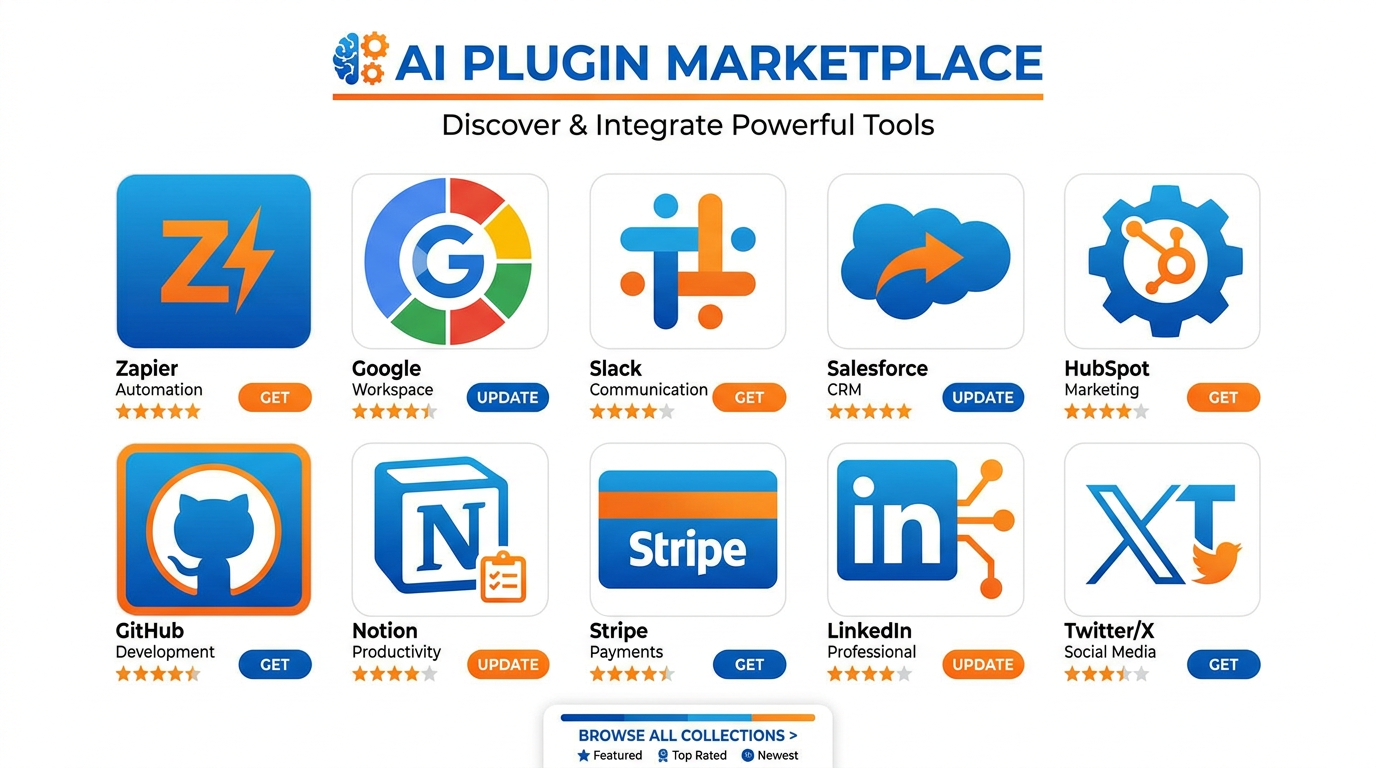
Figure 4:The Marketplace — Hundreds of integrations. Most of them interesting. A handful of them genuinely transformative for your specific work. Find yours.
The discipline is restraint. Install what you will actually use. A plugin you install and ignore is not a neutral addition — it adds to the cognitive overhead of your setup without adding value. Three plugins you use every day are worth more than twenty you forget are there.
Here is a practical prioritization method. Before you install anything, write down the specific task you are going to use this plugin for. Not “to be more productive” — the actual, specific task. “To pull client history before calls.” “To check live stock prices without leaving the conversation.” “To see my Asana tasks without switching tabs.” If you cannot write that sentence, do not install the plugin yet. Come back when you have a use case clear enough to articulate in one sentence.
Installing and Configuring a Plugin
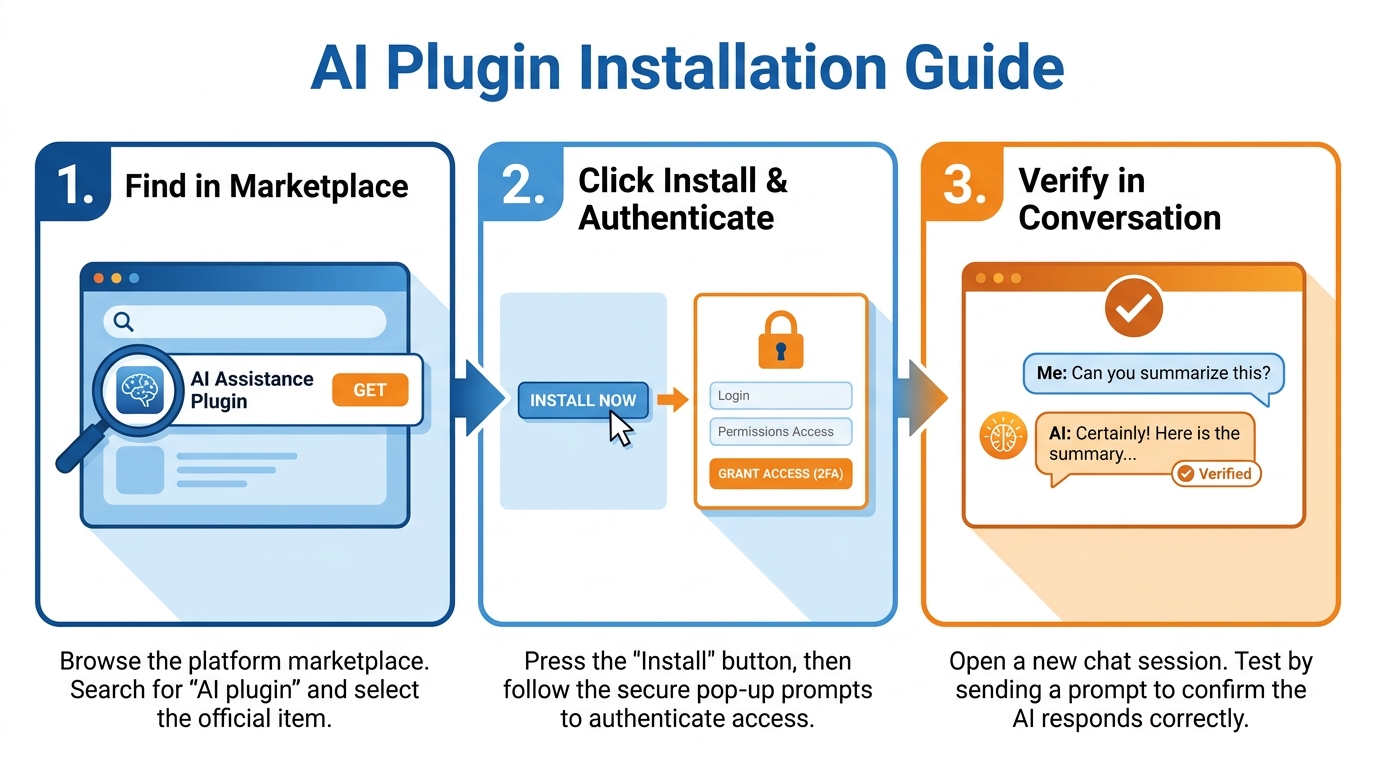
Figure 5:Installation — Three steps. Thirty seconds. Done.
Installing a plugin is genuinely simple — and the simplicity is the point.
In Claude Desktop: Go to Settings → Integrations (or the equivalent in your version). Browse or search for the plugin you want. Click Install or Connect. A browser window opens asking you to authenticate with the relevant service — sign in, grant the requested permissions, and you are done. The plugin is now available in any conversation.
In Gemini: Gemini’s extensions work similarly. In the Gemini interface, look for the Extensions menu. Find the tool you want to connect. Click Enable. Authenticate. Done.
Verification: After installing any plugin, test it immediately. Ask Claude or Gemini a question that requires the plugin to work — not a general question, but one that specifically requires the connected data. If the plugin is working, you will see it being invoked in the response. If something went wrong, you will know immediately and can troubleshoot while the installation is fresh.
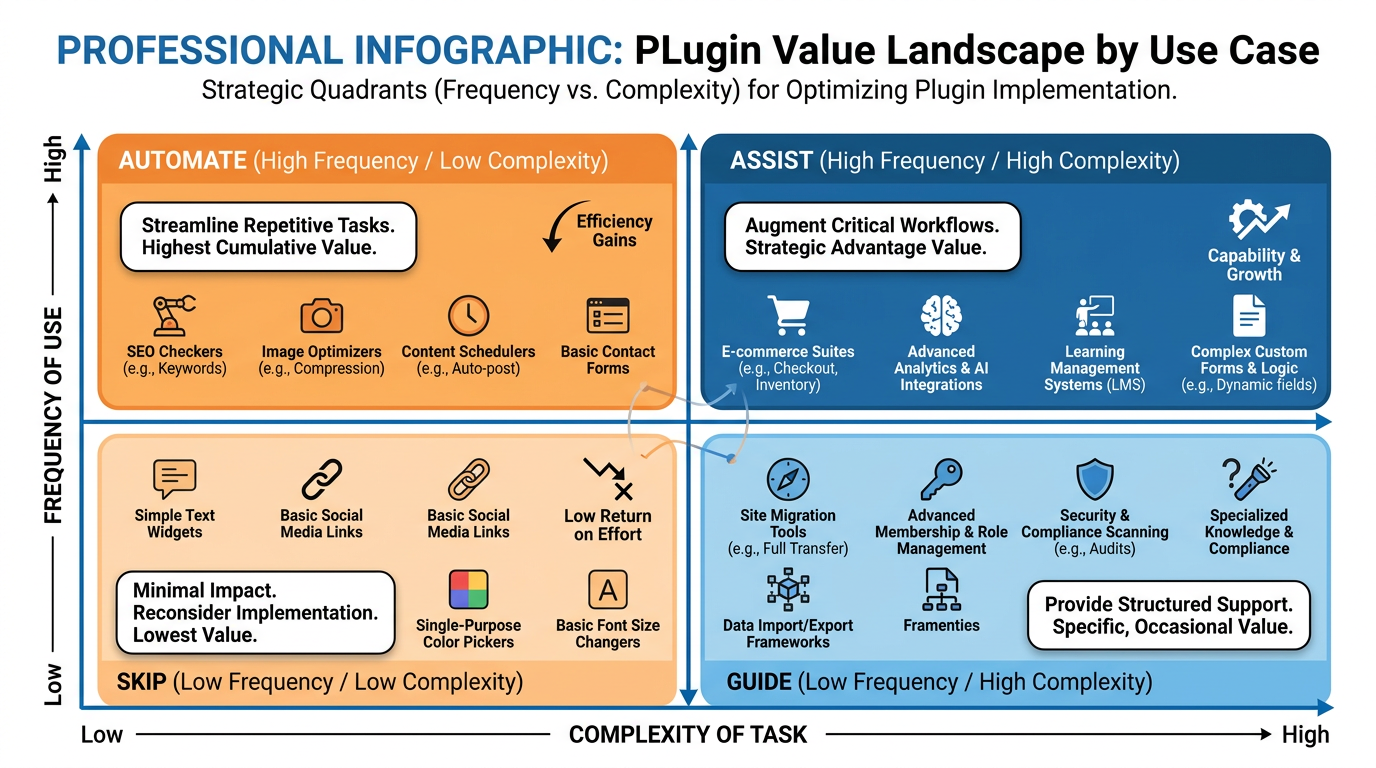
Figure 6:The Value Map — High frequency and high complexity is where plugins deliver the most. Start there and work outward.
One configuration consideration worth making: most plugins ask for more permissions than they strictly need. During authentication, you will see a list of what the plugin is requesting access to. Read it. If a note-taking plugin is asking for access to your contacts and calendar, that is worth questioning. Grant the permissions the plugin genuinely needs for the capabilities you want. Decline the ones that feel like overreach.
This is the same judgment you exercise with any app on your phone. It should be second nature.
A word on maintenance: plugins break. Tool providers update their APIs, change their authentication methods, or deprecate features. A plugin that worked perfectly last month may behave unexpectedly today. Build the habit of periodically testing your most important plugins — especially before you rely on them for something consequential. A two-minute test before a big client presentation is better than discovering mid-conversation that your CRM plugin stopped working.
When a plugin breaks, the fix is almost always straightforward: disconnect and reconnect, re-authenticate, or update to the latest version. The plugin providers maintain documentation for common issues. And if all else fails — ask Claude to help you troubleshoot. Paste the error message and ask what to do. It will almost always know.
The Plugin That Changes Everything
Every professional who builds a serious AI workflow eventually hits a moment where one specific plugin changes the nature of their work entirely. Not improves it — changes it.
For a consultant, it might be the moment a research plugin gives them real-time access to industry data that used to require a library subscription and two hours of digging. For a sales leader, it might be the moment a CRM plugin means every conversation with a client is informed by every interaction that has come before. For a marketer, it might be the moment a social listening plugin surfaces what their audience is actually talking about — live, in the conversation — instead of in a weekly report that is already three days stale.
You will know when you hit that moment. It does not feel like a productivity gain. It feels like the work became fundamentally different.
The path to that moment is the same for everyone: install the obvious plugins first, use them consistently, pay attention to where you still feel friction, and keep building toward the moment when the friction you care most about is gone.
Building Your First Plugin
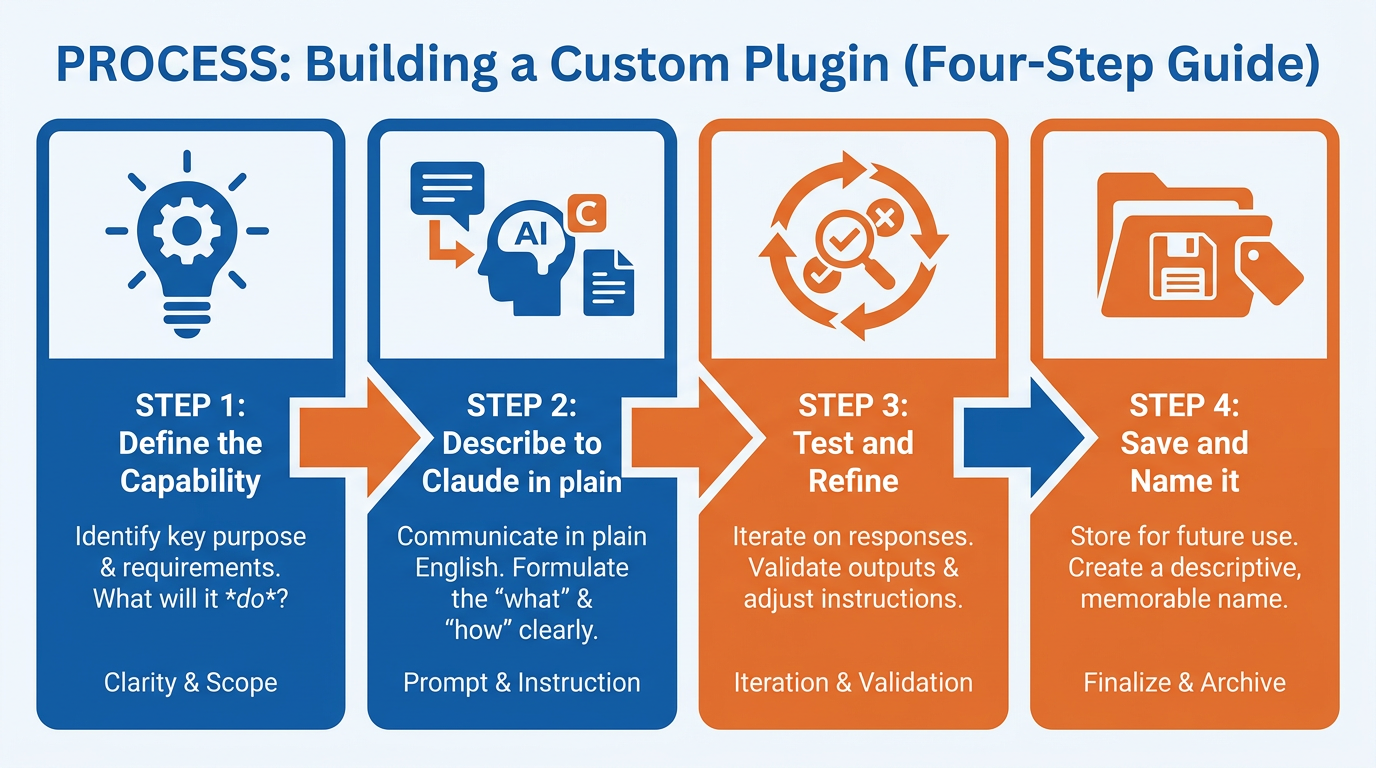
Figure 7:Building a Plugin — When what you need does not exist in the marketplace, you build it. With Claude helping you write it, the barrier is lower than you think.
Here is a moment that shifts how you see the relationship between yourself and your tools.
The marketplace contains what someone else decided to build. Your specific work — the particular combination of tools, data, and workflows that is unique to your role and your industry — may not be covered. When it is not, you can build it yourself.
This sounds more intimidating than it is.
A plugin, at its core, is a set of instructions that tells your AI how to interact with a specific tool or data source. You define what the plugin does, what it takes as input, and what it produces as output. Claude can help you write every part of this.
Step 1: Define the capability. What does this plugin do? What tool or data source does it connect to? What would you type to use it — and what would you expect to get back? Write these three things down in plain English before you touch anything technical.
Step 2: Let Claude write it. Open Claude Desktop and say:
“I want to build a custom plugin for [tool name] that [describe the capability]. When I use it, I will provide [describe the input]. It should return [describe the output format]. Here is the relevant documentation from the tool’s website: [paste the relevant section]. Write me the plugin specification.”
Claude will produce a specification. Review it. Ask it to adjust anything that does not match what you need.
Step 3: Test with real inputs. Before declaring the plugin finished, run it against at least three real examples from your actual work. Not hypothetical examples — real ones. The first will reveal gaps. The second will confirm fixes. The third will show you whether the output is consistently useful.
Step 4: Save, name, and document. Name the plugin clearly. Write one sentence describing what it does and when to use it. Store this somewhere you will find it. In six months, when you have a library of custom plugins, you will want clear documentation of what each one does — especially the ones you built yourself for specific purposes.
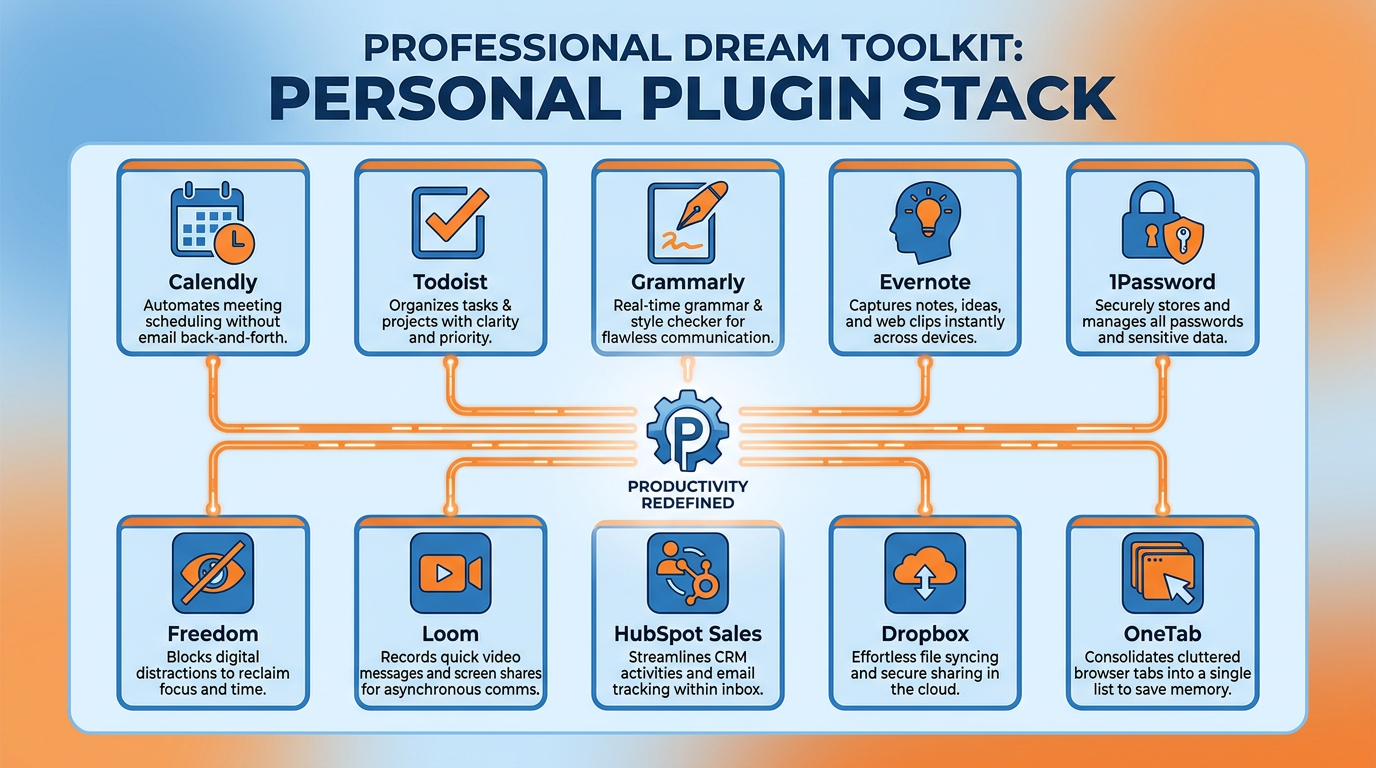
Figure 8:Your Plugin Stack — The ideal starter set. Not all of these will apply to your specific work — but this is what a complete, well-considered plugin library looks like.
Case Study: The Integration Crossroads at Meridian Capital Group
Background
Meridian Capital Group is a mid-sized private equity and asset management firm headquartered in Atlanta, Georgia, with approximately 340 employees and $4.2 billion in assets under management. The firm operates across three divisions — deal origination, portfolio management, and investor relations — each with distinct information workflows and tool ecosystems. In early 2025, Meridian’s Chief Operating Officer, Diana Forsythe, launched what she called the “Intelligent Workflow Initiative,” a structured effort to embed AI into the firm’s daily operations.
The initiative was not born from enthusiasm about technology. It was born from a specific bottleneck. Meridian’s deal analysts were spending an estimated 90 minutes per day manually moving information between systems — pulling market data from Bloomberg terminals, copying deal pipeline updates from Salesforce, summarizing board memos from SharePoint, and pasting all of it into a shared document before weekly deal committee meetings. The process was tedious, error-prone, and deeply resistant to the firm’s growing deal velocity. Forsythe hired a small internal AI task force — three analysts and an IT architect named Rafael Mendez — to evaluate options.
Mendez’s team began by cataloging the firm’s existing tool stack: Salesforce for CRM, Bloomberg for market data, SharePoint for document management, Slack for internal communication, and a proprietary portfolio analytics platform built in-house seven years earlier. The question was not whether to extend their AI capabilities. Claude Desktop had already been provisioned firm-wide for six months, and basic Gemini access was available through the firm’s Google Workspace contract. The question was how — through plugin installation, MCP server configuration, or custom-built skill definitions — and with what level of control.
What complicated the decision was Meridian’s regulatory environment. As a registered investment adviser, the firm operated under SEC oversight, with strict obligations around data governance, access controls, and audit trails. Any AI integration that touched client data, portfolio positions, or deal flow records had to satisfy the firm’s compliance team, led by Chief Compliance Officer Sylvia Park. Park had a single, non-negotiable requirement: any AI integration with client-facing or deal-sensitive data must produce a log of every query and every response, accessible to her team on demand. Convenience was not her concern. Accountability was.
The Situation
Mendez’s team identified three viable paths. The first was to install available marketplace plugins — Salesforce, Google Workspace, and Slack connectors were all available in the Claude plugin ecosystem — and accept the convenience they offered at the cost of reduced visibility into what permissions those plugins held and how queries were logged. The second path was to build MCP server connections directly to each tool, which would give the firm full configuration control, detailed logging capabilities, and the ability to scope permissions precisely — but required two to three weeks of setup per integration and ongoing maintenance. The third path was hybrid: install plugins for low-sensitivity workflows (web search, general research), build MCP connections for anything touching deal or client data, and use skills to codify the analytical processes the deal team ran repeatedly, so that AI behavior was consistent and auditable regardless of which data source it drew from.
The tension Forsythe and Mendez faced was not simply technical. It was organizational. The deal analysts wanted speed — they had been promised a tool that would reduce their 90-minute daily overhead, and they were watching that promise recede with every week of planning. The compliance team wanted control. The IT team wanted a solution they could maintain. And Forsythe wanted a decision that the firm could grow into rather than one it would have to undo in eighteen months. The three paths each optimized for a different stakeholder’s priorities, and no path satisfied all of them simultaneously. Choosing among them required a framework — not just for this decision, but for how Meridian would make AI integration decisions going forward, as the marketplace matured and new options continued to emerge.
Discussion Prompt
Using the architectural distinctions developed in this chapter — plugins, MCP servers, and skills as fundamentally different layers of AI extension — evaluate Meridian’s three integration paths against the competing organizational constraints the firm faces. Which approach best balances the control-versus-convenience tradeoff given Meridian’s regulatory obligations, and how does the concept of permission management as governance (rather than as a technical configuration step) change the strategic calculus? What signals in this case suggest where Meridian sits on the organizational maturity curve for AI adoption, and how should those signals influence the sequencing of their integration decisions?
Discussion Guidelines
Initial Post (due before class)
Minimum 400 words
Directly address the discussion prompt using concepts from this chapter
Include at least one APA-formatted citation — from the course text or a peer-reviewed source
Avoid summary; demonstrate analysis and original thinking
Peer Responses (minimum 2)
Minimum 250 words each
Each response must include at least one APA-formatted citation
Engage substantively — build on, challenge, or offer a contrasting perspective grounded in evidence
“I agree” or “Great post” responses do not meet the requirement
Maintain a professional and respectful academic tone
Applied Exercise: Install Three Plugins This Week
This exercise ends with three plugins installed, tested, and integrated into your daily workflow — one for real-time information, one for a tool you use constantly, and one you build yourself.
Track A — Claude Desktop
Plugin One: Web Search
Find and install a web search plugin for Claude Desktop or Gemini (search “Claude web search plugin” or “Gemini search extension” for the current options — these evolve quickly). Once installed, test it with a question that requires current information:
“What are the three most significant AI announcements from the last seven days that are relevant to [your industry]?”
Notice what changes: your AI is no longer limited to what it knew at training time. Current information is now part of every conversation where you need it.
Then push further. Ask it to research a competitor who released a press release this week. Ask it to find the latest pricing information for a tool you are evaluating. Ask it to surface news about a client’s industry that you could reference in tomorrow’s conversation. Every question that used to require a tab switch now has an answer inside the conversation. The experience of not having to leave — of your AI being genuinely current — is more significant than it sounds until you have felt it.
Plugin Two: Your Most-Used Business Tool
Identify the one external tool you reference most often during your work — your CRM, your project management tool, your calendar, your note-taking system. Find its plugin or integration with Claude and install it.
Test it with a question that requires real data from that tool:
“What are the three most important things I need to do today based on my [tool name] data?”
The first time you ask your AI a question and it answers using your actual live data — not data you described, not data you pasted, but the live system — is a moment worth paying attention to. That is the tool becoming genuinely useful.
Plugin Three: Build One
Identify a small, specific capability you wish your AI had but that does not exist in any marketplace. Something narrow. Something useful. Something you would use at least twice a week.
Use the four-step process from this chapter to build it. Have Claude help you write the specification. Test it on real work. Refine once. Save it.
After completing all three, write two sentences:
What is the most impactful thing these plugins changed about how you work? And what is the next plugin — built or installed — that would create similar impact?
The bigger picture:
Your plugin library is a living system. It grows with your work, your tools, and your ambitions. Every time you find yourself switching tabs, copying and pasting between systems, or manually fetching information that your AI should already have — that friction is a plugin waiting to be installed or built.
Most professionals tolerate that friction. They adapt to the inconvenience. They build workarounds. They accept that “using AI” means working in two worlds at once — the conversation and the tab-switching outside it.
The professionals who build serious AI workflows refuse that trade. They see every friction point as a solvable problem. They install the plugin. They build the connection. They eliminate the gap.
Over a year of this practice, the accumulated effect is dramatic. Not a 10% improvement in how fast you work — a fundamental change in how your work feels. Information appears when you need it. Tools respond to natural language. Workflows run without you manually connecting the dots.
That is the promise of the connected workshop. And plugins are the layer that makes it real.
Stop tolerating friction. Build the plugin.
Track A Your Submission: Run the plugin on a real professional task you actually need done today — not a test. Copy the full output into a document. Write two sentences: (1) what you asked and why the plugin was necessary (what would have been missing without the live connection), and (2) what you plan to use this plugin for every week going forward. Submit the output + two sentences.
Track B — Claude Code inside Antigravity IDE
Open Antigravity 2.0 IDE → Editor surface → integrated terminal → Claude Code (claude> prompt ready).
At the claude> prompt, type “/mcp” and press Enter. Review the list of available integrations.
Install a web search integration first — it is the most universally useful. Find it in the /mcp list and follow the exact command syntax Claude Code displays. Authenticate in the browser window that opens. Confirm it shows as active in the /mcp list.
Run a real professional query using web search: “What are the three most significant competitive developments in [your specific industry] in the last 30 days? For each one, give me: (a) what happened, (b) why it matters for someone in [your role], and (c) one specific action I should consider in response. Cite your sources with dates.” Read the output and verify Claude Code is citing real, recent, specific sources.
In the Antigravity IDE file browser, right-click and create a new file called “industry-intel.md.” Ask Claude Code to save the web search output to that file. Watch it appear and populate in the file browser.
Now install a second integration — one that connects to a tool you use daily. Use /mcp to find options: a file reader for your documents folder, a calendar connector, GitHub, or a project management tool. Follow the same process: find it, authenticate, confirm active.
Run a real query using the second integration. If you connected a file reader: “List and summarize the five documents I have modified most recently in [your folder path]. For each one, tell me its topic and whether there is anything I should act on.” If you connected a calendar: “What external meetings do I have this week? For each one, tell me the attendees, the meeting purpose, and one thing I should prepare.”
Save this second output as a new file in the IDE file browser.
Now design and run a combined workflow using both integrations: “Using web search and [second integration], [describe a task that requires both — for example: ‘check my calendar for client meetings this week, search the web for recent news about each client’s company, and produce a one-page briefing for each meeting with the news context included’].”
Watch the Antigravity IDE file browser as Claude Code works through the combined task. Files appear and update in real time. The final combined output saves as a file you can open and share directly from the IDE.
Your Submission: Compile into one document: (1) your web search output with sources cited, (2) your second-integration output, (3) your combined-workflow output. Write two sentences: (1) which integration produced the most immediately useful result and why, and (2) describe one specific workflow you want to build this week that combines two of your installed integrations and name the professional problem it solves. Submit three outputs + two sentences.
Track C — Gemini + Antigravity 2.0 IDE
Open Gemini (gemini.google.com) and sign in. Find the Extensions menu (look for a settings icon, plug icon, or “Extensions” in the sidebar or settings).
Enable the Google Workspace extension. This connects Gemini to your actual Gmail, Google Drive, Google Calendar, and Google Docs. Approve any permission prompts — you are granting Gemini read access to your own Google account.
Test the Gmail connection with a real question: “Find the three most important emails in my inbox from the last 48 hours that require a follow-up from me. For each one: who sent it, what do they need from me, and draft a one-sentence response I could send.” Read the response and note when Gemini cites a real subject line or sender name from your actual inbox.
Test the Drive connection: “Find any documents in my Google Drive related to [a project you are currently working on]. For each document, tell me its title, what it contains, and whether there is anything I should review before my next relevant meeting.” Verify Gemini is reading real document titles and content.
Test the Calendar connection: “What external meetings do I have this week? For each one, who are the attendees and what should I prepare?” Confirm Gemini is reading your real calendar entries.
Now open a second browser tab and try the same Gmail and Calendar questions in a plain Gemini chat with no extensions enabled. Compare the responses — without extensions, Gemini has none of your data and produces generic advice. With extensions, it cites your real emails and events.
Open Antigravity 2.0 IDE and press CMD+E (Mac) / CTRL+E (Windows) to switch to Agent Manager. Create a new Project or open an existing one.
In the Project, add a web search tool extension — this is Antigravity’s own tool layer, separate from Gemini’s Google extensions. Click the tools/extensions option in the Project settings and connect web search.
Start a new Agent task: “Search the web for the five most significant recent developments in [your industry]. For each development: what happened, why it matters, and one specific action a business professional in [your role] should consider taking. Produce this as a one-page intelligence briefing.” Submit the task.
While the Antigravity agent runs in the background, return to Gemini and ask a follow-up question that uses the Google Workspace data you already retrieved — connecting the insights from your personal data with the broader industry picture.
Your Submission: Compile three outputs into one document: (1) the Gemini Gmail/Drive analysis showing your personal data, (2) the Gemini vs. no-extensions comparison from Step 6, (3) the Antigravity web intelligence Artifact. Write two sentences: (1) what surprised you most about what Gemini found in your own Gmail or Drive, and (2) describe a combined workflow that uses both your Google personal data (Gemini) and the public web (Antigravity) and the specific professional problem it would solve. Submit three outputs + two sentences.
Reflection
After completing the plugin work in any track, write two sentences:
What is the most impactful thing these plugins changed about how you work? And what is the next plugin — built or installed — that would create similar impact?
If you ran more than one track: Did the same friction point feel solvable in every surface, or did one surface make a particular integration obvious and another make it awkward? Your answer is a map of where to invest your integration time next quarter.