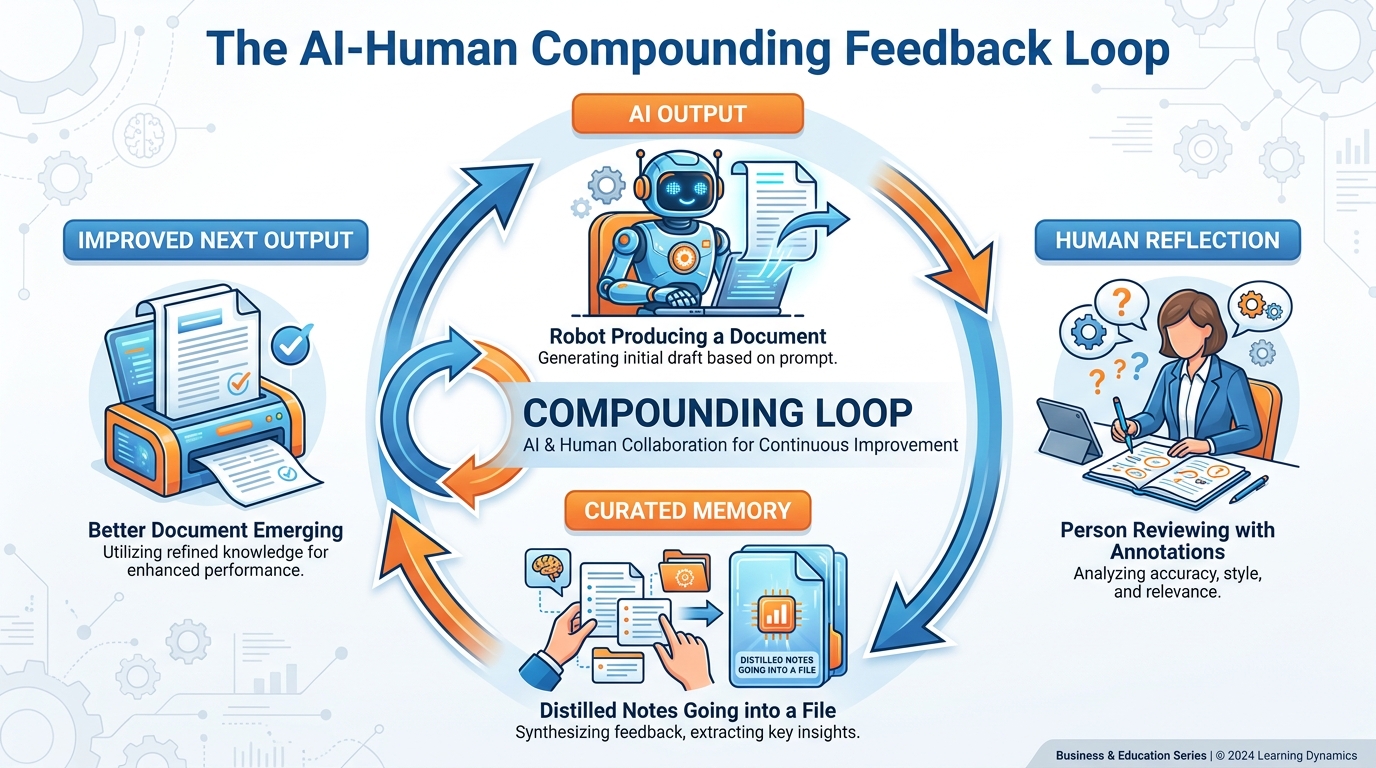
Figure 1:The Compounding Loop — Each session produces lessons. Lessons get curated into memory. Curated memory shapes the next session. The next session is sharper than the last. This is how an AI workflow learns.
Twelve sales reps. Same training. Same tools. Same AI access.
They were all hired into the mid-market team at a B2B software company in the same quarter. They all went through the same onboarding. They all got Claude Desktop and the same starter prompts. Their accounts were assigned by industry and roughly balanced for size. By any measure that mattered on day one, they were running the same race with the same shoes.
Six months later, half of them have AI assistants that feel eerily well-tuned to their accounts. The AI knows their customers’ procurement quirks. It writes follow-ups in their voice. It catches things in call notes the rep would have missed. The other half? Still getting generic outputs. Still re-explaining themselves at the start of every session. Still asking “why isn’t this thing as smart as people say?”
Same tool. Same access. Wildly different results.
The difference is not talent. It is not intelligence. It is not even effort, in the hours-worked sense. The difference is that half the reps built a loop — a small, almost invisible discipline — that captured what they learned from each AI interaction and fed it back into the next one. The other half treated every session as a fresh start.
Chapter 7 taught you how AI memory mechanically works. This chapter is about what you build on top of it. Memory is the substrate. The system that compounds on top of it is the architecture. And the architecture is what turns a smart tool into a personal advantage that grows every week.
The Compounding Loop
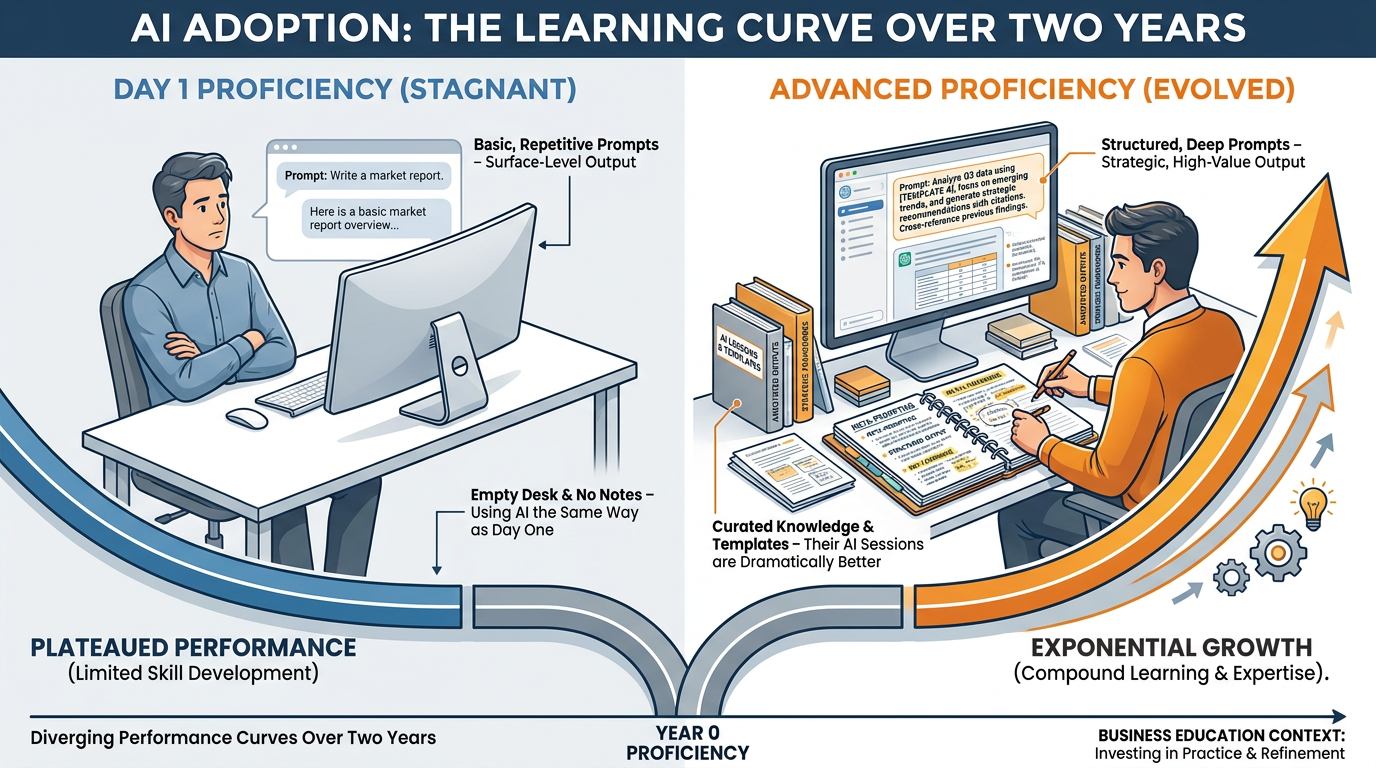
Figure 2:Two Consultants, Two Years Later — Same talent. Same firm. One looks like a genius. The difference is twenty minutes after every project.
Picture two consultants at the same firm.
They join the same year. They have the same degree from the same school. They get the same training, the same mentors, the same kinds of projects. Their reviews after the first year are nearly identical.
But one of them does something the other does not. After every project — every single one — she spends twenty minutes at the end writing down what she learned. What worked. What did not. What the client actually wanted versus what they said they wanted. What she would do differently if she ran this engagement again.
The other consultant skips this step. He is busy. There is always a next project. Reflection feels like overhead.
Two years pass.
By year three, the gap is no longer subtle. The first consultant walks into client meetings already pattern-matching to her own private library of three hundred captured lessons. She knows that procurement teams in regulated industries always raise the same three objections. She knows that CFOs at family-owned businesses read the executive summary and skip the rest. She knows which kinds of recommendations land and which ones quietly die in the appendix.
The second consultant is still learning these things one at a time, the slow way.
By year five, the first consultant has a reputation as someone who “just gets it.” Senior partners ask for her on strategic accounts. Promotions arrive ahead of schedule. People assume she is unusually talented.
She is not. She is unusually disciplined about reflection.
This is the compounding loop, and it is the most underrated mechanism in professional development. Memory plus reflection plus curation equals exponential growth in capability. Not linear growth. Exponential. Because each lesson does not just add to your skill — it shapes how you absorb the next lesson. Pattern-matching gets faster when you have more patterns to match against.
Your AI can do the same thing. If you set up the loop.
There is a B2B software company in Austin where this principle showed up in a way nobody planned. A regional sales director named Mara started keeping what she called a “deal post-mortem” file. After every closed deal — won or lost — she pasted the highlights of her AI conversations from that deal cycle into one document, along with a paragraph at the bottom: what the AI got right, what it got wrong, and what she wished it had known up front. After six months, that document was twenty-two pages. She pruned it down to four. Those four pages became the context brief she pasted into every new deal conversation. Her win rate against the team average went up by eleven points. Nobody on the team could replicate it — because nobody on the team had built the loop.
The compounding is not in the AI. The compounding is in the loop you build around it.
This is a hard idea for people raised in a software mindset. We are used to thinking of tools as having fixed capabilities. A spreadsheet is a spreadsheet. A word processor is a word processor. You learn its features, you use them, and the tool stays the same while your skill grows. AI is the first business tool in a generation that does not work this way. The capability you have access to is not just the model — it is the model plus the context you have accumulated. Two people using the same model, with the same training, on the same kinds of problems, can have wildly different effective capabilities. The difference is invisible from the outside. It lives entirely in the context.
Which means the loop is the asset. Not the AI. The loop.
The Reflection Pattern
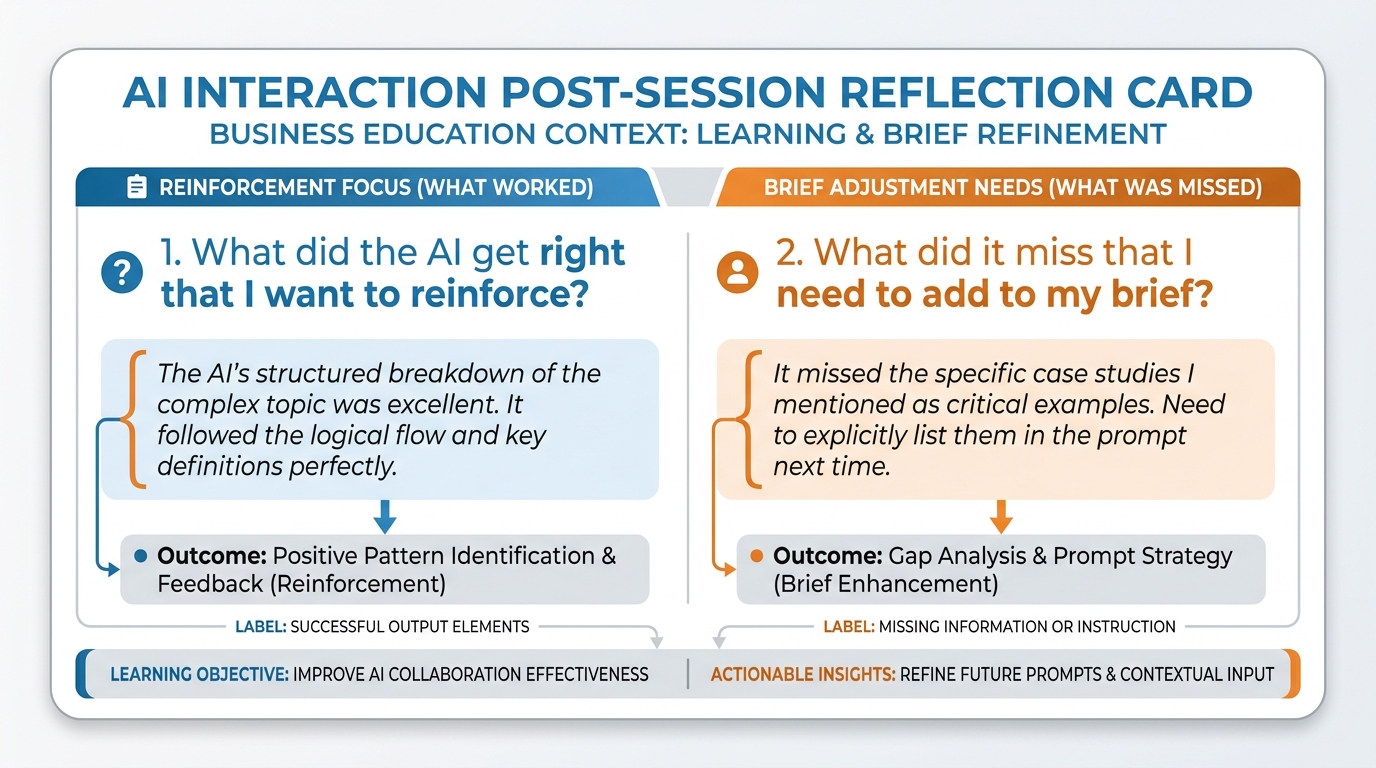
Figure 3:The Reflection Pattern — Two questions. Five minutes. The mechanism by which everything you do becomes something you can do better.
The compounding loop sounds abstract until you understand the simple mechanism that drives it. The mechanism is a habit. The habit is a question.
After any significant task with your AI — a proposal draft, an analysis, a series of client emails, a research synthesis — you pause. You ask two questions:
What worked? What should I do differently next time?
Then you write down the answers.
That is the entire pattern.
It sounds too simple to matter. It is not. The act of pausing to articulate what worked forces you to notice things you would otherwise let slide past. The act of articulating what to do differently transforms a vague feeling of dissatisfaction into a concrete instruction you can use later. And the act of writing the answers down is what converts a passing thought into accumulating capital.
The instinct most professionals have is to skip this step. The work is done. The deliverable is out the door. The next thing is already pressing. Stopping to reflect feels like stopping to think about the past when you should be thinking about the future. This instinct is wrong, and it is the single biggest reason most people’s AI workflows stay stuck at the level of a clever stranger.
Reflection is not thinking about the past. Reflection is programming the future.
Here is what good reflection looks like in practice. You finish drafting a quarterly board update with Claude’s help. The draft is solid — eighty percent of what you wanted. Before you close the conversation, you type:
“Before I wrap, two quick reflections. First — the framing you used for the cost section was sharper than what I usually do; I want to remember that. Second — you over-indexed on revenue narrative early and I had to redirect; next time I’d prefer you lead with the strategic context, not the numbers. Capture both of those as notes I can use in future board update sessions.”
Claude will produce a short note. You copy it into the document where you keep your standing context for board updates. Total time spent: maybe four minutes.
Now multiply that by every significant AI task you do for the next six months. By month three, the standing context for your most common workflows has been refined dozens of times. The AI’s outputs in those workflows have shifted from generic to highly calibrated. Not because the AI changed. Because the instructions surrounding it got progressively sharper.
A useful refinement: not every task deserves a deep reflection. Routine work that produced exactly what you expected does not generate new learning. Save reflection for the tasks where something surprised you — good or bad. The surprise is the signal that there is something worth capturing.
There is a marketing director at a healthcare company who runs this practice religiously. She keeps a single text file open in the corner of her screen all day. When something surprises her in an AI conversation — a phrasing that nailed it, an instruction she had to repeat three times, a tone she had to keep correcting — she types one sentence into the file. End of day, she has eight or twelve sentences. End of week, she has forty. End of month, she reads the file, distills the lessons, and updates her standing prompts. Her team thinks she has unusually good AI luck. She has a notebook.
The reflection pattern is the smallest unit of self-learning. Everything else in this chapter is built on top of it.
One more thing worth saying about this habit. It works best when you do it inside the conversation, while the work is still fresh. Closing the session and intending to reflect later is the version that does not happen. The instinct that reflection is a separate activity — something you sit down and do at the end of the week — is correct for the curation stage but wrong for the capture stage. Capture is in the moment. It costs almost nothing when the context is right there in front of you, and it costs almost everything once you have moved on to the next task and lost the sharpness of what just happened. Reflect in the room. Curate on the weekend.
Curating Learning Memory
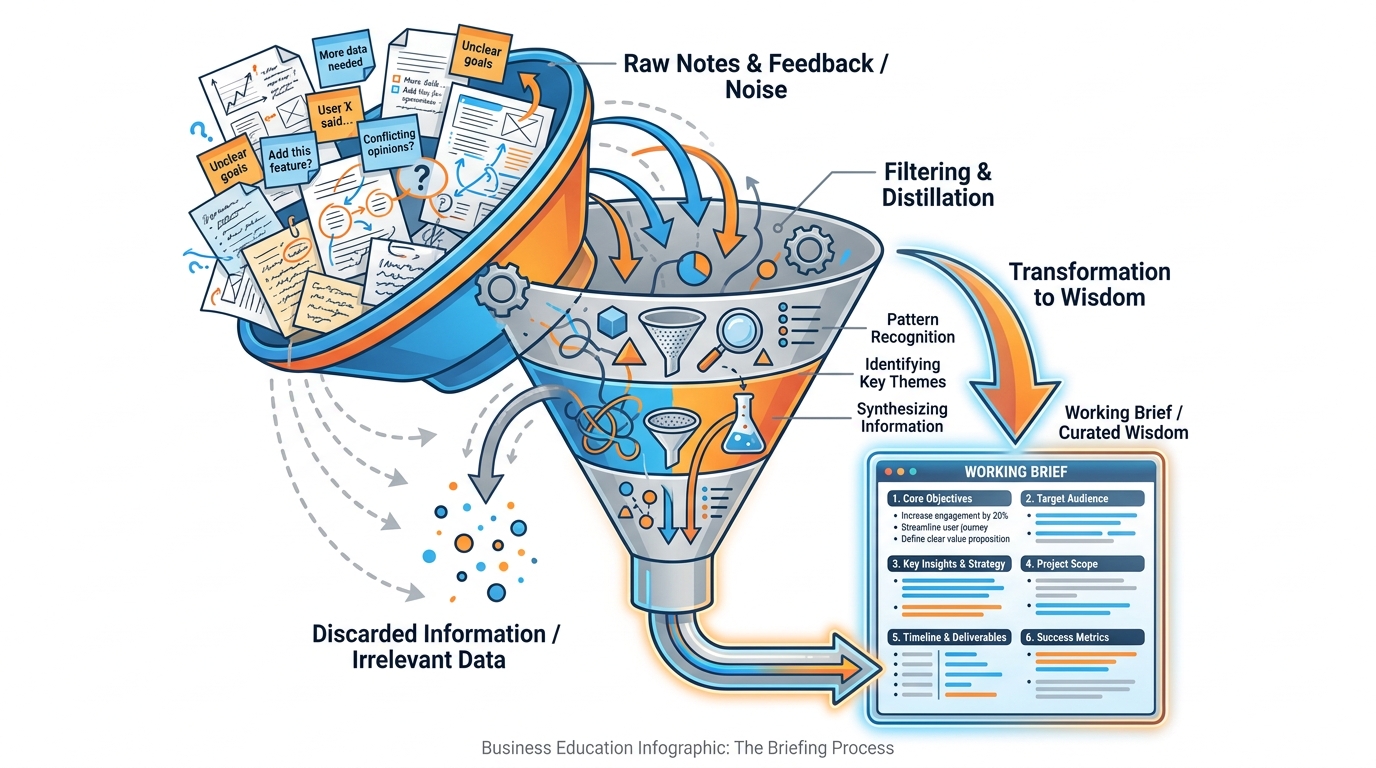
Figure 4:Raw to Distilled — Notes are not wisdom. Wisdom is what is left after you throw most of the notes away.
There is a difference between writing things down and remembering them.
A pile of raw notes is not a memory system. It is an archive. Archives are useful for lookup, but they do not shape behavior. A curated learning memory is different — it is the set of distilled lessons that actively guides how your AI works for you, every session, without you having to look anything up.
The reflection habit produces raw material. Curation is what turns raw material into something usable. And curation, more than capture, is where most people’s self-learning systems fall apart.
Here is the problem. Once you start writing things down after every task, the volume grows fast. Two months in, you have a hundred notes. Some of them are sharp. Most are situational. A few contradict each other. If you paste all of it into your AI’s context, you have not improved the AI’s understanding — you have buried the signal in noise. The AI now has to wade through a pile of half-relevant scraps to find the few instructions that actually apply to the current task. That is worse than no notes at all.
Curation solves this. Curation is the discipline of regularly reviewing your raw notes and asking: which of these lessons are durable enough, recurring enough, and important enough to belong in my standing context? The rest get archived or deleted. Not kept. Not buried. Removed.
Three layers help you think about this:
The journal — Raw, time-stamped notes from your reflections. Append-only. You add to it but rarely read it. This is where everything lands first.
The lesson file — A small set of distilled, recurring lessons that have proven themselves across multiple tasks. Maybe a dozen entries. Written in instruction form, not narrative form. (“When drafting client emails, lead with the ask before the context. The reverse pattern produces emails I always have to rewrite.”)
The standing brief — Your core context document, the one that goes into every important session. This already has your role, priorities, and key relationships from Chapter 7. Now it also has a small section of operational rules drawn from your lesson file.
The progression is one-directional. Journal feeds lesson file. Lesson file feeds standing brief. Standing brief shapes every session. Each step is a distillation — fewer items, sharper wording, broader applicability.
Pruning is harder than it sounds. There is a real reluctance to delete a hard-won lesson. It feels wasteful. The reluctance is misplaced. A lesson that no longer applies to your current work is not preserved by being kept in your standing brief — it is buried alongside the lessons that do apply. The right place for an outdated lesson is the journal, where it can be found if needed, not the standing brief, where it actively interferes with current work.
A useful test for any item in your standing brief: if I deleted this, would I notice the AI’s outputs get worse? If yes, keep it. If no, it does not belong. Most items, on honest inspection, fail this test and should be moved to the journal or removed entirely.
There is an operations leader at a logistics company who runs his curation cycle once a month. The first weekend after month-end, he spends ninety minutes reviewing his journal, updating his lesson file, and pruning his standing brief. He calls it his “AI hygiene” session. After eighteen months of this practice, his standing brief is shorter than it was a year ago — but every line in it has been tested against dozens of sessions and earned its place. His AI workflows on supply chain analysis are now noticeably sharper than his peers’ on the same team, working with the same data, using the same tools.
The most valuable artifact in his system is not the volume of notes he has captured. It is the focus of what he has kept.
A second test, useful when the first one fails to settle a question, is the recency test. When was the last time this lesson actually applied to something I did? If the answer is “this month,” it belongs in the standing brief. If the answer is “I cannot remember,” it belongs in the journal, where it lives quietly until the situation that produced it comes around again. The standing brief is for active wisdom. The journal is for dormant wisdom. Both have a place. Only one of them shapes every session.
The Weekly Review Practice
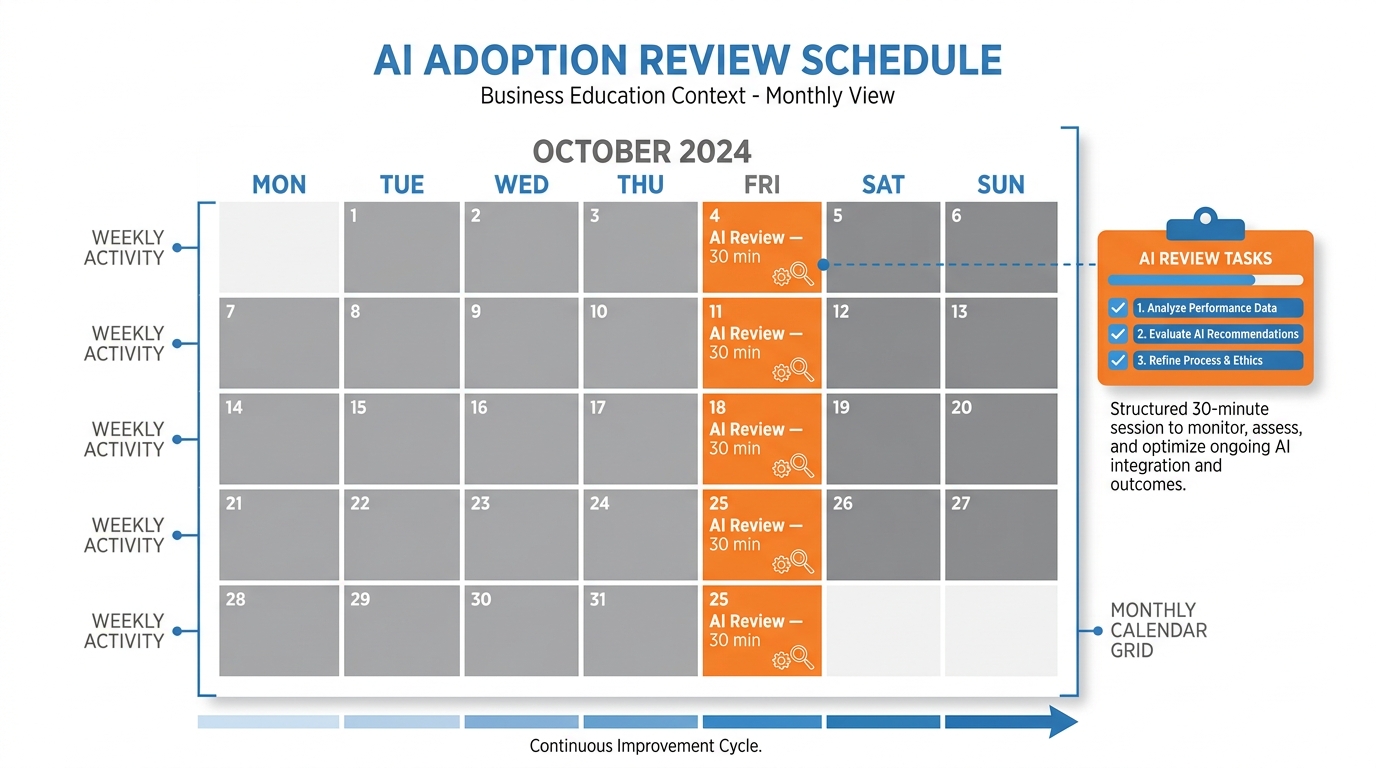
Figure 5:Friday, 4:00 PM — Thirty minutes. Every week. The single most important meeting you have with yourself.
Reflection is in-the-moment. Curation is monthly. Between the two sits the practice that holds the whole loop together: the weekly review.
The weekly review is a thirty-minute block, ideally on Friday afternoon, where you do three things and only three things.
First, you scan the AI outputs you actually used that week. Not all of them — the ones that mattered. The deliverables that went out the door. The analyses that influenced a decision. The conversations that shaped a meeting. You re-read them with a different eye than you had when you produced them: you look for patterns.
Second, you identify failure patterns. Where did you have to redirect the AI multiple times to get to a usable output? What kinds of outputs did you reject? What instructions did you keep having to repeat across different conversations? These are not isolated annoyances. They are signals about the gap between what your standing context says and what your work actually requires.
Third, you update your standing context. Even one line. Even a clarification. The point is not to overhaul your brief every week — it is to keep it alive. A standing context that has not changed in two months is a context that has stopped learning. A context that gets one small update every Friday is a context that is compounding.
That is the whole practice. Thirty minutes. Three steps. Nothing fancy.
The cost is laughably small. The compound interest is enormous.
Consider what happens over a year. Fifty weekly reviews. At an average of two refinements per review — sometimes one, sometimes three — you make a hundred small improvements to your standing context. Each improvement makes the AI’s outputs slightly more aligned with your actual work. The improvements stack. The brief gets sharper. By month nine, you are no longer fighting the AI to produce work in your style — your style is encoded in the brief, and the AI produces work in it by default.
People who skip the weekly review are not just running a slower learning curve. They are running no learning curve at all. Their AI on January 1 of next year is the same AI it was on January 1 of this year, doing the same things at the same level of generic helpfulness.
There is a sales leader at a mid-market SaaS company who built her entire AI advantage on this single practice. Every Friday at 4:00 PM, regardless of what else is happening that week, she does her review. After two years of this discipline, her standing context brief is the most-requested document in the sales organization. New reps ask if they can read it. Her director asks if they can systematize it. The brief is not unusually clever — most of its lines are obvious in hindsight. What is unusual is that it has been refined every Friday afternoon for a hundred weeks. That is the compounding.
The weekly review is where the loop gets its torque. Reflection without review is data without analysis. Review without reflection is analysis without data. You need both — and the rhythm is what makes it stick.
Personal Memory vs. Organizational Memory
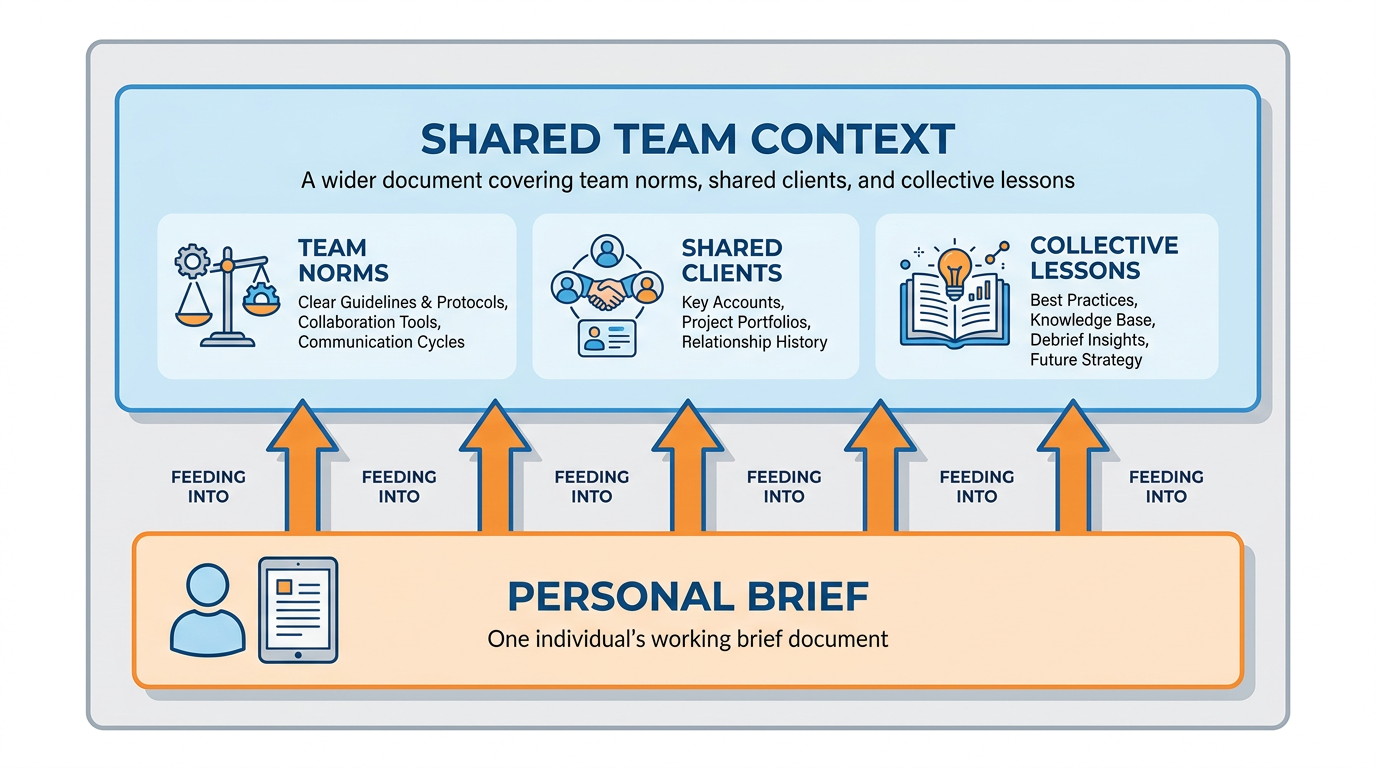
Figure 6:Two Memories, One System — What you learn alone. What the team learns together. Both compound. They compound in different ways.
Everything in this chapter so far has been about you. Your reflections. Your lessons. Your standing brief. That is where any serious AI learning system has to start — at the individual level, with one person building the discipline.
But the practice does not stop there.
The same loop that makes one person’s AI workflows sharper can be applied at the team level, and when it is, the effect changes character entirely. Individual learning compounds within one person’s work. Organizational learning compounds across an entire group’s work — and the compounding is much harder for competitors to replicate.
Here is what a team-level learning system looks like in practice.
A shared context file lives somewhere everyone on the team can read and edit — a wiki page, a shared document, a repo. It contains the operational lessons the team has accumulated about how to work effectively with AI on the team’s specific work. Not personal preferences. Not individual styles. The patterns that apply broadly: which prompts have worked well for which kinds of tasks, what the team’s customers tend to react to, what the team’s voice sounds like, what the team has tried and learned does not work.
When a new rep joins the team, this shared file is part of their onboarding. They paste it into their standing context, alongside their personal brief. From day one, their AI has access to two years of team-accumulated learning. They start their first month at a level that took the team’s veterans two years to reach.
This is institutional knowledge in its purest form — and it is the most under-deployed concept in AI adoption today.
Most teams do not do this. Each rep, each analyst, each manager builds their own private context, learns their own private lessons, and takes them with them when they leave. The organization invests millions in AI tools and captures zero of the collective learning those tools produce. When a top performer leaves, their AI advantage walks out the door with them.
A team that builds a shared learning loop avoids this. The loop captures the team’s collective wisdom in a form that survives turnover, that accelerates onboarding, and that makes the team progressively harder to compete with.
The team-level loop needs a curator. One person — not necessarily the most senior, but the most disciplined — who takes responsibility for the shared brief. They run a monthly review the way an individual runs a weekly review: scanning what the team produced, identifying patterns, distilling what is broadly applicable, and updating the shared document. The curator role is small. The leverage is enormous.
There is a customer success team at a financial services company that ran this experiment for twelve months. Twelve reps. Twelve individual briefs. One shared team brief, curated monthly by a senior analyst named Ravi. By the end of the year, the team’s customer satisfaction scores were the highest in the firm — but more striking was the consistency. New hires reached productivity benchmarks in their first quarter that used to take a full year. Ravi’s monthly curation hour was the highest-leverage time anyone on the team spent.
This is what organizational AI learning looks like in practice. Not a training program. Not a center of excellence. A shared document, a curator, and a discipline.
Why This Is the Real Moat
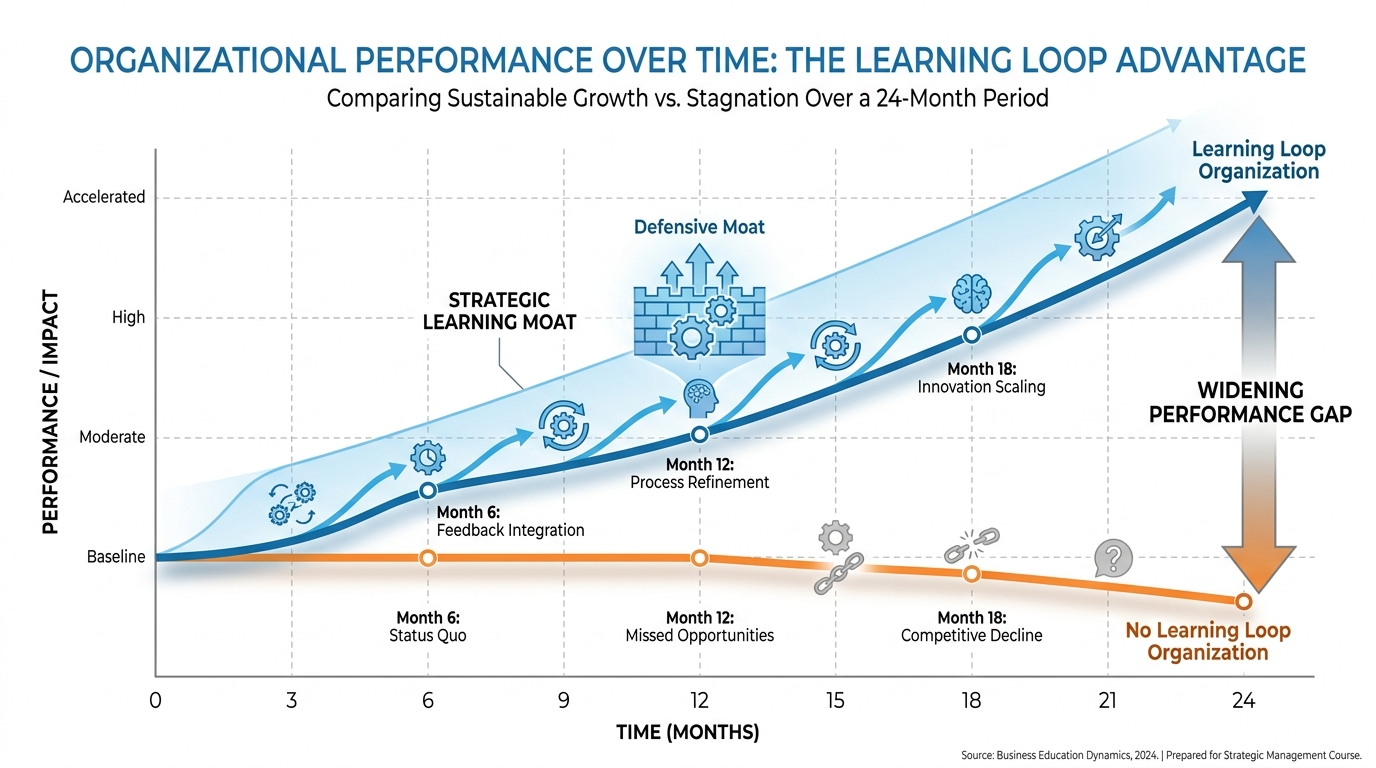
Figure 7:The Widening Gap — Two organizations at month one. Two organizations at month thirty-six. Same starting tools. Wildly different positions. The only difference is the loop.
A consultant friend asked me last year what the durable competitive advantage in AI was going to be. He listed the usual candidates — proprietary data, in-house models, hiring the best engineers, exclusive partnerships. He was looking for the thing he could acquire that would give his clients a defensible moat.
None of those things are durable. Proprietary data gets matched by competitors who collect their own. In-house models get leapfrogged by frontier labs every six months. Engineers leave. Partnerships get replicated. Every advantage on his list has a clock on it.
But there is one advantage that does not have a clock — and it is the one nobody on the list was talking about.
It is the loop.
An organization that has spent two years building, curating, and refining its team-level AI learning loops is in a structurally different position from one that has not. The accumulated context is not a single document — it is dozens of small documents across functions, each one shaped by hundreds of small refinements, each one encoding lessons that the team learned the hard way and will never forget. Onboarding is faster. Output quality is more consistent. The compounding pulls further ahead every quarter.
A competitor cannot acquire this. They cannot poach it from one defector. They cannot copy it by buying the same tools. The loop is not a thing — it is a practice, sustained over time, embedded in habits, and accumulated in context. Replicating it requires building the same loop, running it for the same number of months, and accumulating the same lessons through the same kinds of work. There is no shortcut.
This is what economists mean when they talk about path-dependent advantage. The value is not in the artifact — it is in the path that produced the artifact. And paths take time. Lots of time.
The strategic implication is this. If you are leading an organization right now and you are thinking about AI strategy, the highest-leverage thing you can do is not pick the right vendor, not negotiate the right enterprise license, not stand up a center of excellence. It is to build the discipline of capture and curation into the workflows of the teams that use AI most. Embed the reflection habit. Mandate the weekly review. Designate the curators. Pay attention to the shared briefs the way you pay attention to your CRM data.
In ten years, the organizations that did this will be structurally ahead of the ones that did not — and the gap will be invisible to anyone looking only at tools and headcount. The advantage will be sitting in a set of small, carefully curated documents that nobody outside the organization has ever seen.
That is the real moat.
It is not built from technology. It is built from discipline. And the time to start building it is now, while most of your competitors are still treating AI like a vending machine.
Case Study: The Velocity Gap at Astoria CloudWorks
Background
Astoria CloudWorks is a mid-market B2B SaaS company headquartered in Denver, Colorado, with approximately 240 employees and roughly $58 million in annual recurring revenue. The company sells a workflow automation platform to operations teams at mid-sized manufacturers and logistics providers. Its sales organization is structured into three regional pods — East, Central, and West — each staffed by twelve account executives reporting to a regional director, with all three directors reporting to VP of Sales Tessa Iyer.
In the first quarter of 2025, Astoria rolled out Claude Desktop and a custom GPT environment to the entire sales organization. Every AE received the same provisioning, the same starter prompt templates, and the same two-hour training session led by the company’s RevOps team. The rollout was deliberately uniform. Iyer wanted to be able to measure the impact of AI on sales productivity without confounding variables — same tools, same training, same data access across all thirty-six reps.
By the end of the third quarter, Iyer’s measurement effort was producing a result she had not anticipated. The AI was helping — but the help was wildly uneven. The top five performing reps showed dramatic gains: shorter deal cycles, higher win rates against incumbents, more polished customer communications. The bottom ten showed almost no measurable improvement at all. Some had effectively stopped using the AI after the first month, complaining that it produced generic outputs that needed too much editing to be useful. The middle twenty-one fell somewhere in between, with no clear pattern.
When RevOps interviewed the top performers to understand what they were doing differently, a consistent pattern emerged. Every one of them had built — informally, on their own time — some version of a personal learning loop. One kept a running notes file with lessons from every deal. Another updated her standing prompt every Friday afternoon. A third maintained a “voice file” of her best customer emails that he used as reference material for new outreach. None of them had been trained to do this. They had each invented it independently, because it was the obvious thing to do.
The Situation
Iyer’s question to her leadership team was direct: how do we systematize what the top performers are doing, without flattening the individual styles that make them effective in the first place?
The tension was real. The natural instinct — write up the top performers’ practices into a corporate playbook, mandate it across the team — risked turning a personal discipline into a compliance exercise. The top performers’ files worked precisely because they were individually curated, written in each rep’s own language, calibrated to each rep’s own accounts. A centralized “Astoria sales context document” pushed down from corporate would likely produce generic outputs across the team — the same problem the bottom ten were already experiencing.
But doing nothing was not viable either. Iyer was sitting on a measurable productivity gap of more than thirty percent between her top and bottom reps. The board wanted to know what the AI investment was returning. The bottom ten reps were not lazy — they had simply not been given the architectural understanding of how to build the loop. The top performers had figured it out by accident, but accidents were not a scalable training strategy.
Iyer convened her three regional directors, the head of RevOps, and her two highest-performing AEs for a working session. The question on the table: what was the right balance between shared organizational learning and individual personal learning — and how should that balance be operationalized so that every rep was running some version of the compounding loop, calibrated to their own work and their own voice?
Discussion Prompt
Using the distinction between personal memory and organizational memory developed in this chapter, design the architecture Astoria should adopt. Specifically: what belongs in a team-level shared brief versus what should remain in each individual rep’s personal brief, and how should the curation responsibilities be distributed across roles? Apply the chapter’s argument that the learning loop is a path-dependent moat to evaluate the strategic implications of Astoria’s current thirty percent productivity gap — does the gap represent a temporary onboarding problem that will close on its own, or a structural advantage that will widen over time if not addressed? Justify your position with reference to the chapter’s framing of why this kind of advantage compounds rather than degrades.
Discussion Guidelines
Initial Post (due before class)
Minimum 400 words
Directly address the discussion prompt using concepts from this chapter
Include at least one APA-formatted citation — from the course text or a peer-reviewed source
Avoid summary; demonstrate analysis and original thinking
Peer Responses (minimum 2)
Minimum 250 words each
Each response must include at least one APA-formatted citation
Engage substantively — build on, challenge, or offer a contrasting perspective grounded in evidence
“I agree” or “Great post” responses do not meet the requirement
Maintain a professional and respectful academic tone
Applied Exercise: Build Your Reflection Loop This Week
Estimated time: 25–30 minutes. You will produce a personal reflection template, a refreshed standing brief, and a recurring Friday review block on your calendar.
Track A — Claude Desktop
Self-learning systems sound exotic. The loop underneath them is not. It is do the work, judge the work, write down the lesson, paste the lesson next time. You can run that loop today in a single Claude Desktop tab.
Open Claude Desktop (claude.ai/download) or claude.ai in your browser.
Ask Claude to do a real recurring task you actually need done — a status email, a weekly summary, a one-page analysis, a customer reply draft.
Read the output and give explicit feedback, out loud, in the chat: “This was good because X. This missed Y. Next time, do Z instead.” Be specific. Vague feedback teaches nothing.
Ask Claude to revise the task using your feedback. Read the second version. Confirm the lesson stuck.
Copy that feedback into a plain text note titled with the task name — email-drafts-memory.txt, weekly-summary-memory.txt. The next time you run this task, paste the memory note at the top of a fresh conversation before your request.
That is the entire self-learning loop: produce, judge, encode, recall. The systems in this chapter automate the encoding and recall. You are doing it by hand — and that is the right place to start.
Your Submission: Your submission is your feedback loop in three parts: (1) Claude’s original output on the real recurring task you chose, (2) the explicit feedback you gave — what was good, what missed, what to do differently, (3) Claude’s revised output after incorporating the feedback. Copy all three into one document. Write one sentence: what specific instruction in your feedback produced the biggest visible improvement in the revised output? Submit the three-part document + one sentence.
Track B — Claude Code
Claude Code is the terminal-based agent that gives you the most direct access to file-based context. If you have not set it up, follow the quickstart at https://
In Claude Code, open your existing standing context document (the one you built in Chapter 7, or a fresh one if you skipped that exercise). Ask Claude: “Review the last five conversations we had this week. Identify any moments where I had to redirect you more than once, or where the output needed substantial editing. What patterns do you see?” Read what comes back without arguing with it.
Based on those patterns, ask Claude to propose three to five candidate refinements to your standing brief — written as direct instructions, not narrative. For example: “When drafting client emails, lead with the ask before the context.”
Review the candidates. Accept the ones that match a recurring pattern you have noticed. Reject the ones that feel situational. Add the accepted ones to a new section of your standing brief called “Operating Rules.”
Ask Claude to generate a reusable reflection prompt you can paste at the end of any significant task. It should ask the two-question pattern from this chapter — what worked, what to change — and write the answers to a journal file. Save that prompt where you can find it.
Create a recurring calendar event for every Friday at 4:00 PM titled “AI Learning Review — 30 min.” In the event description, paste the three-step weekly review process from this chapter: scan outputs, identify failure patterns, update standing brief. Set it to recur weekly with no end date.
Your Submission: Your submission is the updated CLAUDE.md that Claude Code refined based on the session review, plus the output from the first session after the update that showed the refinement working. Copy both into one document. Write one sentence: what was the most important change you made to the CLAUDE.md and what specific improvement did it produce? Submit the updated CLAUDE.md + test output + one sentence.
Track C — Antigravity 2.0 IDE
Antigravity 2.0 IDE gives you the Agent Manager surface, where artifacts produced by agents are reviewable at a glance. If you have not set up Antigravity, the overview at https://
Open the Antigravity IDE and press CMD+E (Mac) or CTRL+E (Windows) to switch to the Agent Manager view. You will see a timeline of recent agent tasks and the Artifacts each one produced this week.
In a new conversation in the Agent Manager, type: “Review the markdown and diff artifacts produced in this workspace over the last seven days. Identify recurring patterns where my instructions needed to be repeated or where output required substantial revision. Summarize as a short list of failure patterns.”
From that summary, identify two or three project-level rules that would prevent the patterns from recurring. Open the workspace’s project rules file (or create one if it does not exist) and add the rules as plain-English instructions.
Ask the Agent Manager to generate a “Friday review template” artifact — a short checklist you will run every Friday that walks through scanning the week’s artifacts, identifying patterns, and updating the project rules. Save it as a permanent artifact in the workspace.
Block a recurring 30-minute window every Friday at 4:00 PM on your calendar. Title it “Antigravity Review.” Link the review template artifact in the calendar event so you can open it with one click when the time arrives.
Your Submission: Your submission is the updated Project Description (after the feedback loop) plus the Artifact from the re-run task that showed improvement. Copy both into one document. Write two sentences: (1) what specific instruction you added to the Project Description produced the biggest improvement, and (2) if you tracked the quality of this task over 12 weeks of the self-learning loop, what metric would you use to measure whether the system is actually getting better? Submit the updated Project Description + improved Artifact + two sentences.
Reflection
After completing your track, write two or three sentences. What surprised you about the patterns the AI surfaced in your recent work? Were they the patterns you would have identified yourself, or did the AI’s review reveal something you had been blind to? Save this reflection — it is the first entry in your journal.