What Is a Large Language Model, Really?
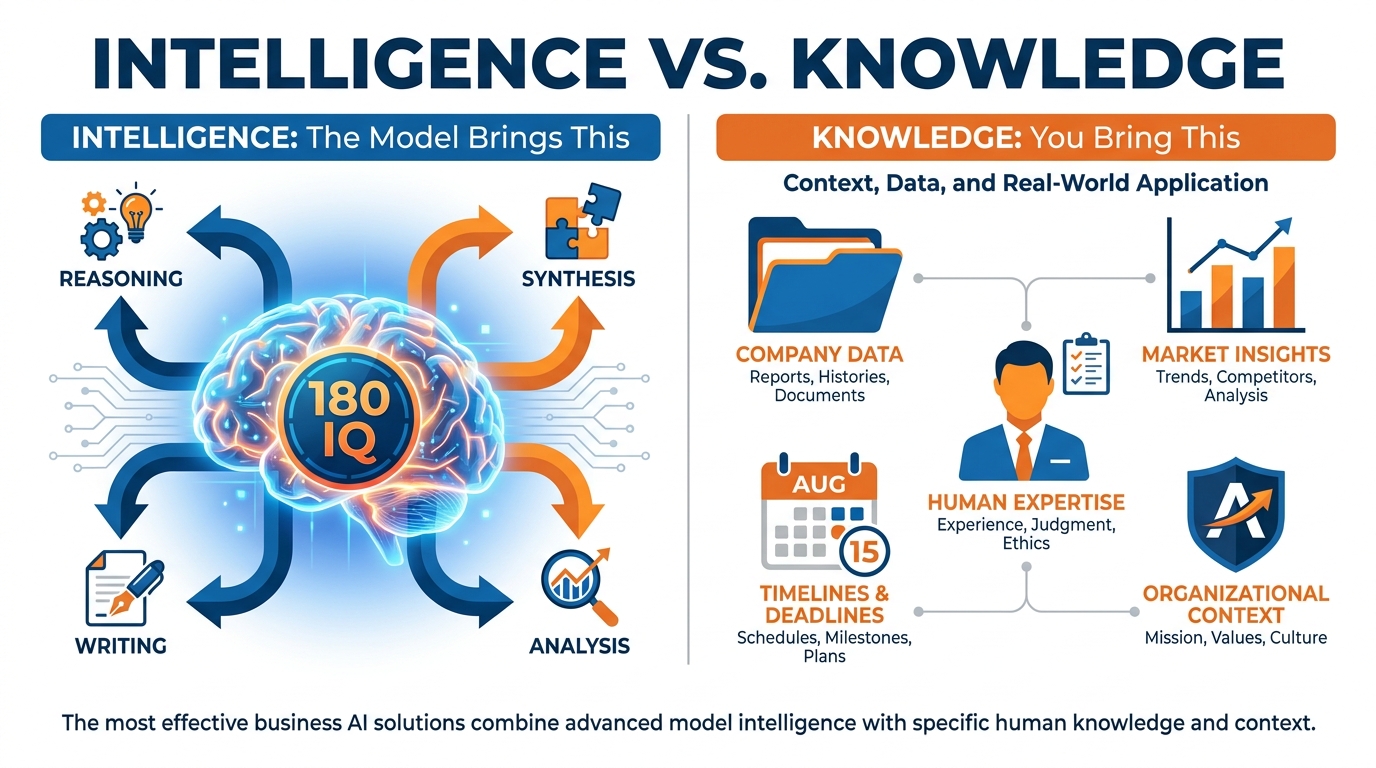
Figure 1:The Intelligence vs. Knowledge divide — what the model brings, and what only you can provide.
Here is a question nobody asks.
If you could hire the most brilliant analyst who ever lived — someone with an IQ of 180, who has read every business book, every legal brief, every medical journal, every line of code ever published — how much would you pay them?
Millions. Obviously.
Now here is the part that should stop you cold.
You already have access to exactly that. For twenty dollars a month.
That is a large language model. Not a chatbot. Not a glorified autocomplete. A reasoning engine trained on an almost incomprehensible slice of human knowledge, available to you right now, on the device in your pocket.
But there is a catch. And this catch is everything.
This analyst — brilliant as they are — walks into your office on their first day knowing absolutely nothing about your company, your customers, your competitors, or what you actually need done today. They are extraordinary at thinking. They are completely in the dark about your world.
This is not a flaw. It is the design. And once you understand it, everything about AI becomes clear.
The Most Important Concept in This Entire Book
Stop here for a second.
Intelligence is the ability to reason, synthesize, compare, explain, generate, and solve. The LLM brings this in extraordinary abundance.
Knowledge is the specific information needed to apply that intelligence to a real problem. The LLM brings general knowledge from training — but it does not have your knowledge: your company’s strategy, your client’s history, today’s date, your industry’s current dynamics, or your personal goals.
The moment you internalize this distinction, AI tools stop being mysterious and start being manageable. Poor outputs are almost never caused by a “dumb” model. They are caused by a well-informed model being asked to operate in the dark.
What the Model Has
A large language model is trained on a massive corpus of text — books, websites, code repositories, academic papers, and more. Through that training, it develops:
| Capability | What It Means for You |
|---|---|
| Language understanding | Reads and interprets any text you give it, including ambiguous, complex, or jargon-heavy content |
| Reasoning | Can follow multi-step logic, identify contradictions, make inferences |
| Generation | Produces fluent, well-structured text in nearly any format or style |
| Pattern recognition | Recognizes analogies, structures, genres, and common business frameworks |
| World knowledge | Has broad familiarity with history, science, business, law, medicine, and technology up to its training cutoff |
This is genuinely remarkable. You are not using a glorified autocomplete (we will address that characterization shortly). You are interacting with a system that has compressed an enormous slice of human knowledge into a high-dimensional reasoning engine.
What the Model Does NOT Have
Just as critical is what the model lacks. And this list is predictable — which means it is fixable.
This is not a flaw in the technology. It is a design boundary. The model was trained on general-purpose text; it was not trained on your organization. Closing that gap is exactly what this book teaches you to do.
Why “Autocomplete” Is Technically Correct and Emotionally Misleading
You may have heard critics dismiss LLMs as “just autocomplete.” This is technically accurate at a very low level: models do predict the next most likely token given prior tokens. But calling a large language model “just autocomplete” is like calling a commercial aircraft “just controlled falling.” It is technically defensible and practically useless as a description.
The emergent behavior of predicting tokens across billions of parameters, trained on trillions of words, produces something that functions — in every practical sense — as genuine reasoning. It drafts arguments it has never seen before. It adapts to new constraints mid-task. It recognizes when a question is ambiguous and asks for clarification.
Use the autocomplete framing to understand the underlying mechanics if you find it helpful. But do not let it lower your expectations of what these systems can do. The evidence of what they produce speaks louder than the metaphor.
The Vague Question Problem
Here is a simple demonstration of the intelligence vs. knowledge gap in action.
Ask an LLM: “What should I do with my business?”
You will receive a thoughtful, well-structured, completely generic answer. It may discuss reviewing your value proposition, analyzing your customer segments, or revisiting your pricing strategy. All of it will be reasonable. None of it will be actionable for your specific situation.
Now give the model context: your industry, your current revenue, your biggest challenge, the decision you are trying to make this week. Ask the same question.
The output transforms. Same intelligence. Radically different result. The only thing that changed was the knowledge you provided.
This pattern — intelligence applied to supplied knowledge — is the engine behind every practical use case in this book.
The Model Tiers: Not All 180 IQs Are Equal
Different models from the same provider are trained differently and optimized for different tasks. Think of them the way you think of smartphone tiers: Pro Max, Pro, and Standard. Each runs the same underlying architecture but with different levels of capability, speed, and cost.
The strongest “frontier” models (Claude Opus 4.7, GPT-5.5, Gemini 3.1 Pro) are your heavyweight reasoners — best for complex analysis, nuanced writing, and multi-step problem solving. Faster, lighter models (Claude Haiku, Gemini Flash) are optimized for speed and volume. Chapter 1.3 gives you the full tour.
For now, understand that even the most capable model is limited not by its intelligence ceiling but by the quality of what you give it to work with.
Summary
The Flashlight Theory: Why Context Is Everything
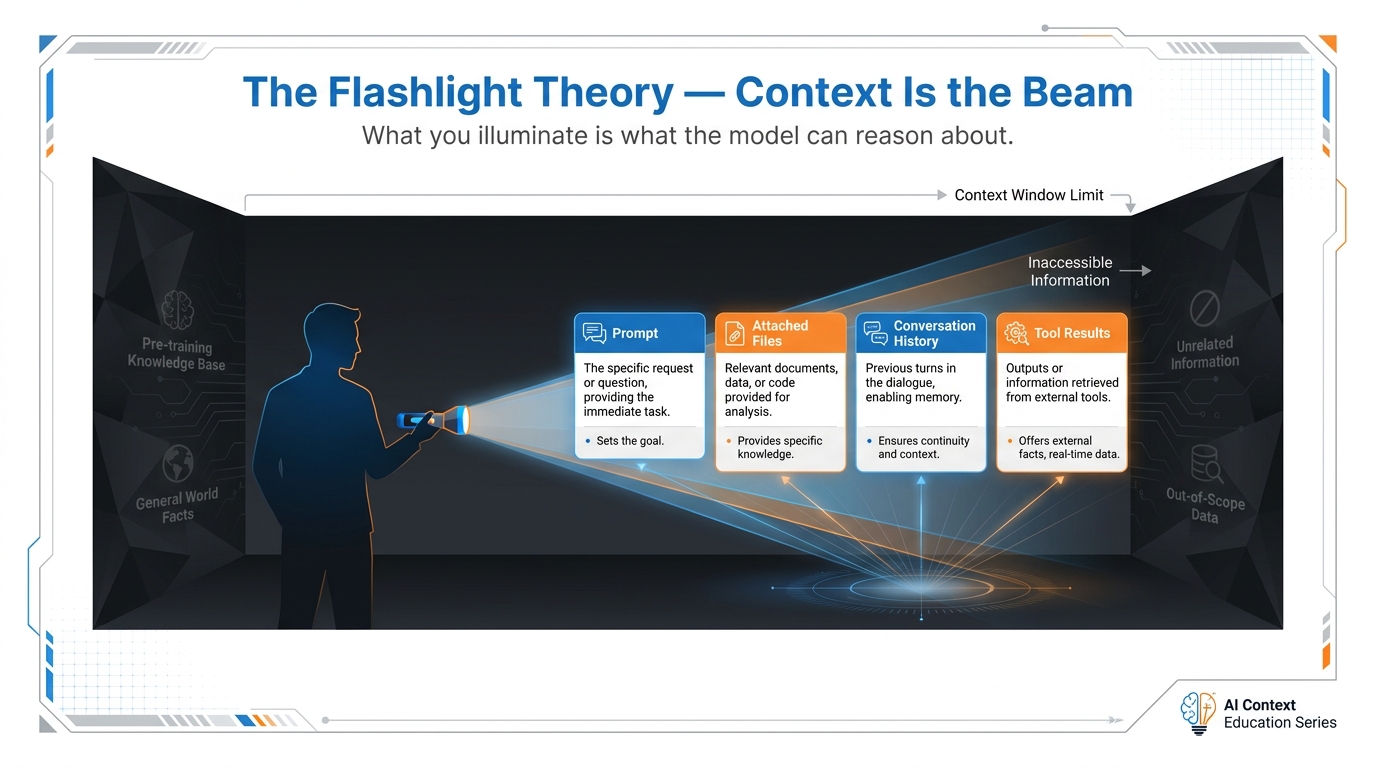
Figure 2:The Flashlight Theory: context is the beam. What you illuminate determines what the model can reason about.
Picture a 180-IQ mind locked in a pitch-dark room. No windows. No light. The mind is extraordinary — it can reason about anything, synthesize any information, answer any question — but only about what it can see. Now you hand it a flashlight.
Whatever that flashlight illuminates, the mind can work with brilliantly. Whatever stays in the dark might as well not exist. The quality of the mind is fixed. The quality of your results depends entirely on where you aim the beam.
This is the Flashlight Theory, developed by Matty Squarzoni, and it is the most useful mental model for understanding how to work with AI. Context is the flashlight. Every technique in this book — every strategy, pattern, and framework — is a way to aim the beam more precisely.
The Room Is Dark by Default
When you open a new conversation with an AI, the room is dark. The model has its training — its 180-IQ intelligence, its general world knowledge — but it has no visibility into your specific situation.
Your flashlight starts empty. You have to build the beam.
Each of these is a surface the flashlight can sweep over. The more relevant surfaces you illuminate, the more precisely the model can reason.
Why “The AI Is Bad at This” Is Almost Always Wrong
When an AI gives you a poor output, the first instinct is often to blame the model. It doesn’t understand my industry. It gives generic answers. It missed the point.
The Flashlight Theory dissolves this complaint almost entirely.
The model isn’t bad at your task. The room is dark.
When an AI gives a generic answer, it’s because it received a generic prompt with no illumination of your specific context. When it “misses the point,” it’s because the point was not inside the beam. When its advice doesn’t apply to your situation, it’s because your situation was never made visible.
This reframe is powerful because it moves you from a passive stance (“the AI failed me”) to an active one (“I need to aim the flashlight better”). That shift in agency is where productivity gains live.
The Page-and-Prompt Pattern
The single most effective basic technique in this book follows directly from the Flashlight Theory. We call it the page-and-prompt pattern.
The pattern is simple:
Find the page — identify the relevant document, reference, data, or text that the model needs to see
Paste it in — place it in the conversation before your question
Ask your question — now the model has both the illuminated reference and your specific task
You: “What does Claude’s API documentation say about rate limits?”
Result: A general answer based on the model’s potentially outdated training knowledge.
You: [Paste the actual documentation page] “Based on this documentation, what rate limits apply to my use case if I’m sending batch requests?”
Result: A precise, accurate, specific answer grounded in the actual current documentation.
The page-and-prompt pattern works because you are literally expanding the flashlight beam to include the exact information the model needs.
What Lives Inside the Beam Right Now
At any moment in a conversation, the flashlight beam contains everything that has been loaded into the context window — the model’s working memory for this session. Here is a practical map of what can be in that beam:
The Flashlight Beam: What Can Be Illuminated
Source | What It Contains | How to Add It |
|---|---|---|
System prompt | Standing instructions, persona, rules for this session | Set at session start (in tools like Claude Projects) |
Your messages | Questions, tasks, instructions you have typed | Type them in |
Attached files | Documents, spreadsheets, PDFs, images | Attach or paste |
Conversation history | Everything said so far in this session | Accumulates automatically |
Tool results | Search results, database queries, API responses | Via connected tools (RAG, MCP) |
Pasted documentation | Reference pages, specs, guidelines | Copy-paste directly |
Mastery of this book means learning to populate each of these sources intelligently — knowing what to include, what to exclude, and in what order.
The Hierarchy of the Beam
Not everything in the context window carries equal weight. Research on how models process long contexts suggests a rough hierarchy:
Recency bias — content near the end of the conversation tends to be weighted more heavily
Explicit instruction — direct, clearly stated instructions outweigh implied ones
Specificity — specific information tends to be prioritized over general background
Repetition — things stated multiple times across the context get more attention
This has a practical implication: if something matters, say it clearly, say it near your question, and say it specifically. Don’t bury the most important instruction three messages ago in a long paragraph of background.
Applying the Theory: The Claude Documentation Example
One of the best demonstrations of the Flashlight Theory is with technical documentation. AI models are often criticized for giving outdated or inaccurate information about rapidly evolving tools. This is a flashlight problem.
The model’s training has a cutoff date. Anything that changed after that date is in the dark. But if you paste in the current documentation — you have solved the problem.
Claude’s developer documentation lives at https://
This is the flashlight in action: you extended the beam to include today’s documentation, and the model’s intelligence went to work on accurate, current information.
Summary
Meeting the Models: A Tour of the Family
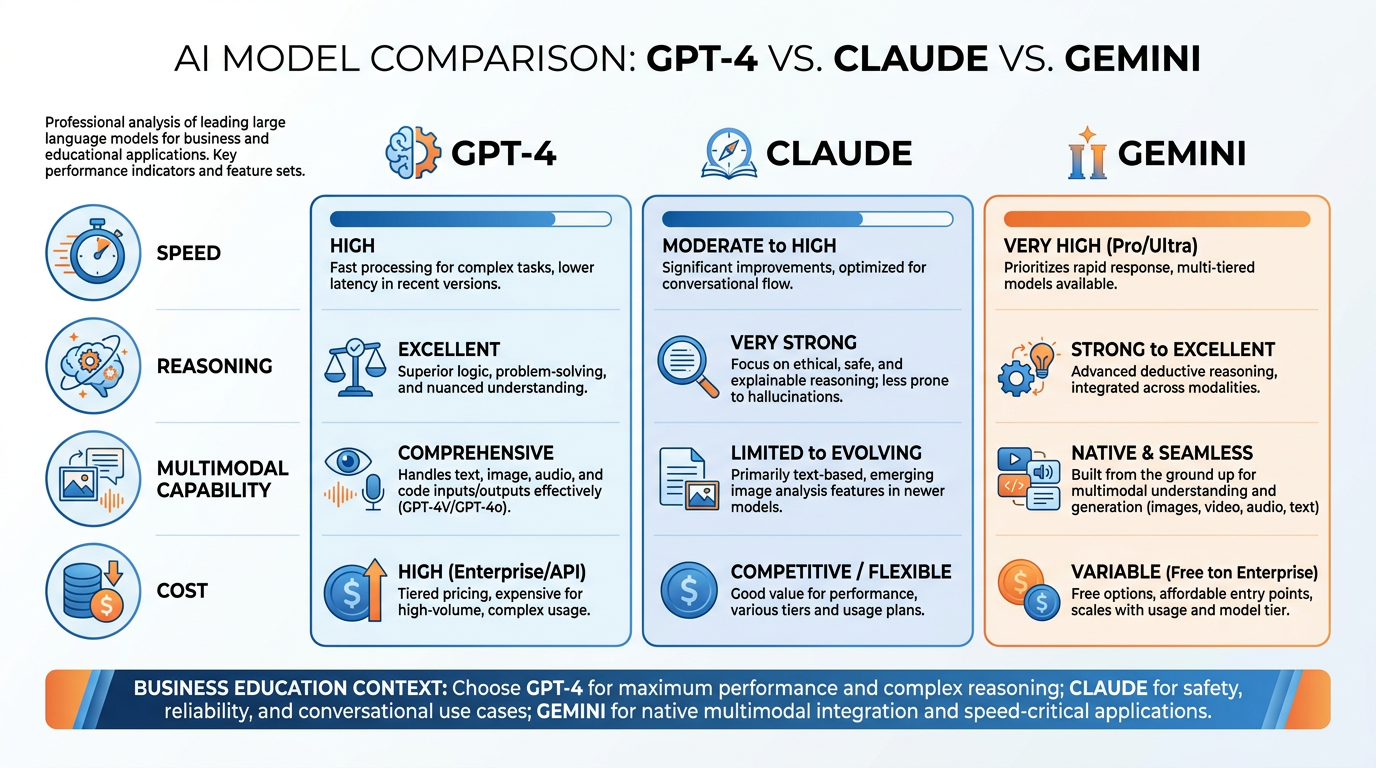
Figure 3:The AI model landscape: major families, capability tiers, and when to reach for each.
All frontier AI models have extraordinary intelligence. But they are not identical. Just as two people with the same IQ can have very different personalities, cognitive styles, and areas of strength, different models have different temperaments — different tendencies in how they reason, what they emphasize, and where they shine.
Choosing the right model for a task is not a technical decision. It is a practical one. Understanding the landscape helps you reach for the right tool without overthinking it.
A Note on Version Numbers
Before we go any further: the specific model versions named in this chapter will be outdated within months. AI providers release new versions constantly, and the version numbers you see here — Opus 4.7, Gemini 3.1, and others — will have successors by the time you read this.
The principles do not change. The versions do.
For the current model map — including which models are available today, what they cost, and which are recommended for which tasks — visit drleee.io. That resource is maintained in real time.
Read this chapter for the framework of how to think about model selection. Use drleee.io for the current roster.
The Smartphone Analogy
Think of model tiers the way you think about smartphone lines. Apple sells the iPhone Pro Max, the iPhone Pro, and the standard iPhone. All three make calls and run apps. But the Pro Max has more capability, more processing power, and a higher price. You do not reach for the Pro Max for every task — you use the standard model for most things and the Pro Max when the stakes justify the cost.
AI models work the same way. Every major provider offers a tiered lineup:
| Tier | Analogy | Use Case |
|---|---|---|
| Frontier / Max | iPhone Pro Max | Complex reasoning, nuanced writing, deep analysis |
| Balanced / Pro | iPhone Pro | Daily professional work, most business tasks |
| Fast / Standard | iPhone Standard | High volume, quick lookups, speed-sensitive tasks |
The Claude Family (Anthropic)
Claude is built by Anthropic with a strong emphasis on careful reasoning, nuanced instruction-following, and long-context performance. It is widely regarded as the best model for complex writing, structured analysis, and tasks requiring sustained coherence across long documents.
Access: claude.ai — Free tier available; Pro plan ($20/month) unlocks Sonnet and Opus.
The Gemini Family (Google)
Gemini is Google’s flagship model family, deeply integrated with Google Workspace. If you live in Google Docs, Sheets, Gmail, or Drive, Gemini has native access to that ecosystem in ways that other models currently do not.
Access: gemini.google.com — Free tier available; Gemini Advanced ($20/month) in Google One.
Differentiator: If you already pay for Google Workspace Business, Gemini may be included. Check your organization’s plan before subscribing separately.
The GPT Family (OpenAI)
OpenAI’s GPT series is the lineage that launched the current AI wave. GPT-5.5 is the current flagship — multimodal (text, images, audio), fast, and deeply capable. OpenAI also operates the world’s largest ecosystem of third-party plugins and integrations.
Access: chatgpt.com — Free tier (GPT-5.5 limited); Plus plan ($20/month).
Grok (xAI)
Grok is Elon Musk’s xAI model, trained with a distinctive voice — direct, sometimes irreverent, with real-time access to X (formerly Twitter) data. This makes it uniquely suited for tasks involving social media trends, current events on X, or contexts where a more candid, unfiltered tone is appropriate.
Access: x.ai/grok or within the X platform.
Open-Weight Models (Run Locally or via API)
A growing class of models are released with open weights — meaning the underlying model parameters are publicly available. This allows them to be run on your own hardware, customized for specific domains, or deployed without sending data to a third-party cloud.
Major Open-Weight Families
Family | Provider | Notable Strength |
|---|---|---|
Llama | Meta | Broad capability; widely supported; runs locally |
Mistral | Mistral AI (France) | Efficient; strong for European language tasks |
Qwen | Alibaba | Strong multilingual; excellent for East Asian language tasks |
Phi | Microsoft | Small but capable; optimized for edge/local deployment |
Open-weight models are most relevant for organizations with strict data privacy requirements, developers building customized applications, or power users who want to run AI without subscription costs.
Where to Compare Models Side by Side
The fastest way to develop model intuition is to run the same prompt through multiple models simultaneously.
arena.ai — The best current platform for side-by-side model comparison. Run the same prompt through two or more models at once and compare outputs instantly. No setup required; free to use.
Use Arena to:
See which model handles your specific task better
Develop personal intuition about tone and reasoning style differences
Quickly benchmark a new model you haven’t used before
How to Choose
For most business professionals, the decision is simpler than it looks:
Use Claude Sonnet or Opus for anything requiring nuanced reasoning, long-document work, or careful writing.
Use Gemini when your work lives in Google Docs, Sheets, or Gmail — native integration is the differentiator.
Use Haiku or Flash when you need fast, lightweight processing of many small tasks.
Summary
Tokens: The Atoms of Machine Language
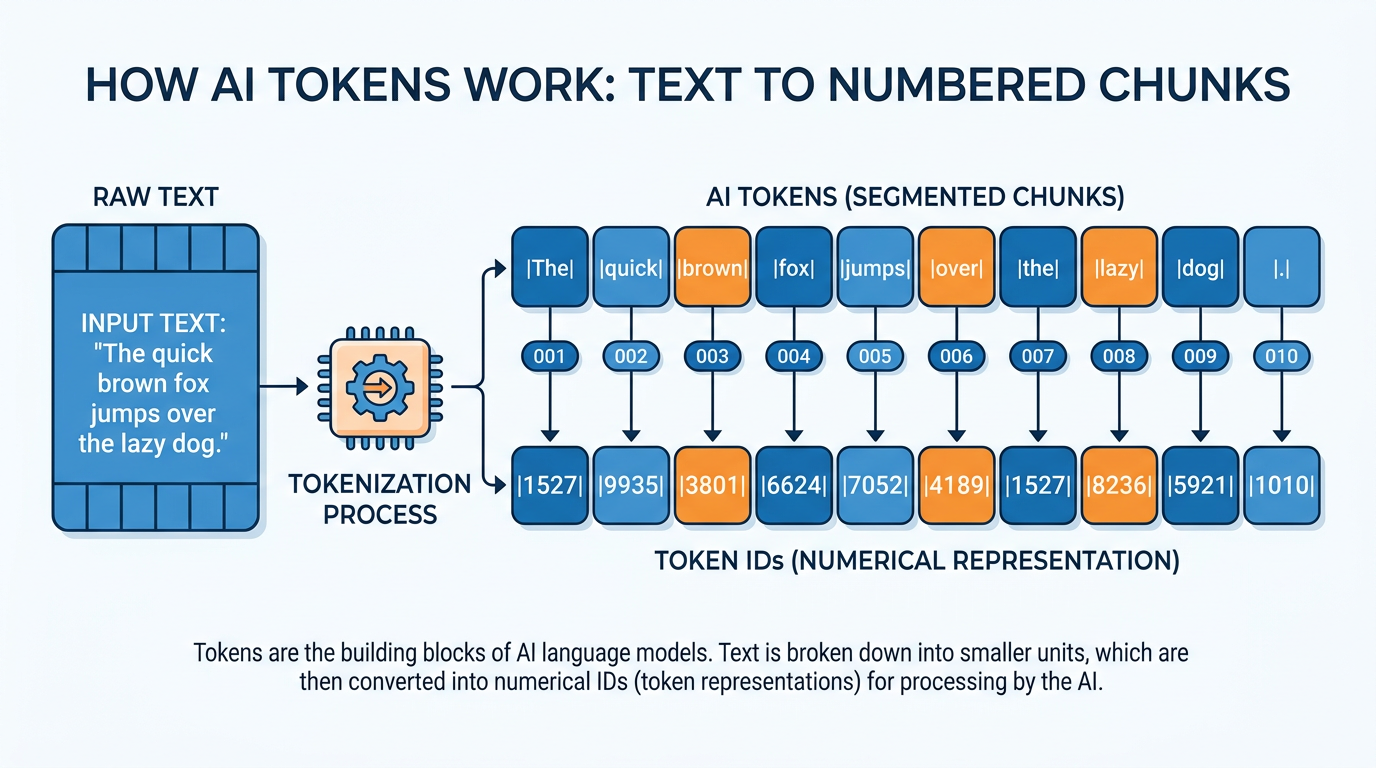
Figure 4:Tokens are the atoms of machine language: not words, not characters, but chunks that models actually process.
The word “understanding” does not mean anything to a language model. Neither does “business” or “strategy.” What the model actually processes is a sequence of numbers — each number representing a small chunk of text called a token.
This distinction sounds technical, but it has immediate, practical consequences for how you write prompts, estimate costs, and understand what the model is doing when it responds to you.
What a Token Is
A token is roughly 3–4 characters of text, on average. That works out to approximately three-quarters of a typical English word. It is not a word. It is not a letter. It is a statistical chunk that the model’s vocabulary was trained to recognize as a meaningful unit.
In practice, common words tend to be single tokens. Unusual, long, or compound words often split into multiple tokens. Punctuation, spaces, and special characters each consume tokens too.
Here is a rough rule of thumb that will serve you throughout this book:
This approximation will not be exact for every document — code, tables, and non-English text tokenize differently — but it is close enough for planning and cost estimation.
The Strawberry Problem
For a period, language models famously failed a simple test: counting the letters in the word “strawberry.” A model would confidently state that “strawberry” contains two R’s when it contains three.
This was a tokenization artifact. The model does not read “s-t-r-a-w-b-e-r-r-y” as individual letters. It reads it as one or two tokens — a chunk — and was not directly processing the character-level content the way a human would when counting.
Modern frontier models have improved significantly on character-level tasks, partly through chain-of-thought reasoning that effectively makes the model “spell out” what it is analyzing. But the underlying tokenization architecture remains.
Why Tokens Are Your Business Unit
Tokens are how AI providers measure and charge for usage. You are not paying per question. You are paying per token — for every token sent to the model (input) and every token the model generates in response (output).
This reframes how you think about your prompts. A prompt is not just a question — it is an expenditure. A conversation is not just a dialogue — it is a running tab.
Token Cost Awareness — Rough Reference Points
Content | Approximate Words | Approximate Tokens |
|---|---|---|
A tweet | 30 | 40 |
A business email | 200 | 270 |
A one-page brief | 500 | 670 |
A 10-page report | 2,500 | 3,300 |
A full book chapter | 5,000 | 6,700 |
A typical contract (15 pages) | 7,500 | 10,000 |
None of these figures should alarm you — at current pricing, even 10,000 tokens costs less than a dollar. But the pattern matters as your usage scales, and understanding the unit helps you make informed decisions about prompt length, document inclusion, and conversation management.
Tokens Across Languages
One important nuance: tokenization is not language-neutral. English text is typically the most efficient — it was heavily represented in the training data that shaped most tokenizers. Other languages, particularly those with non-Latin scripts (Chinese, Arabic, Japanese, Korean), often require more tokens to represent the same amount of information.
A sentence in English might consume 15 tokens. The equivalent sentence in Japanese might consume 30–50 tokens, depending on the model and tokenizer.
If you are doing significant work in non-English languages — or with multilingual documents — factor this into your token estimates. The cost per unit of meaning will be higher.
Seeing Tokens in Action
The fastest way to build an intuition for tokenization is to see your own text broken apart. OpenAI’s tokenizer tool lets you paste any text and watch it get chunked in real time — with each token highlighted in a different color.
This is not an abstract exercise. Once you have seen how your own sentences tokenize, you start to develop a feel for what makes prompts efficient — and which habits (unnecessary preambles, redundant restatements, verbose throat-clearing) are burning tokens without adding value.
Summary
The Token Economy
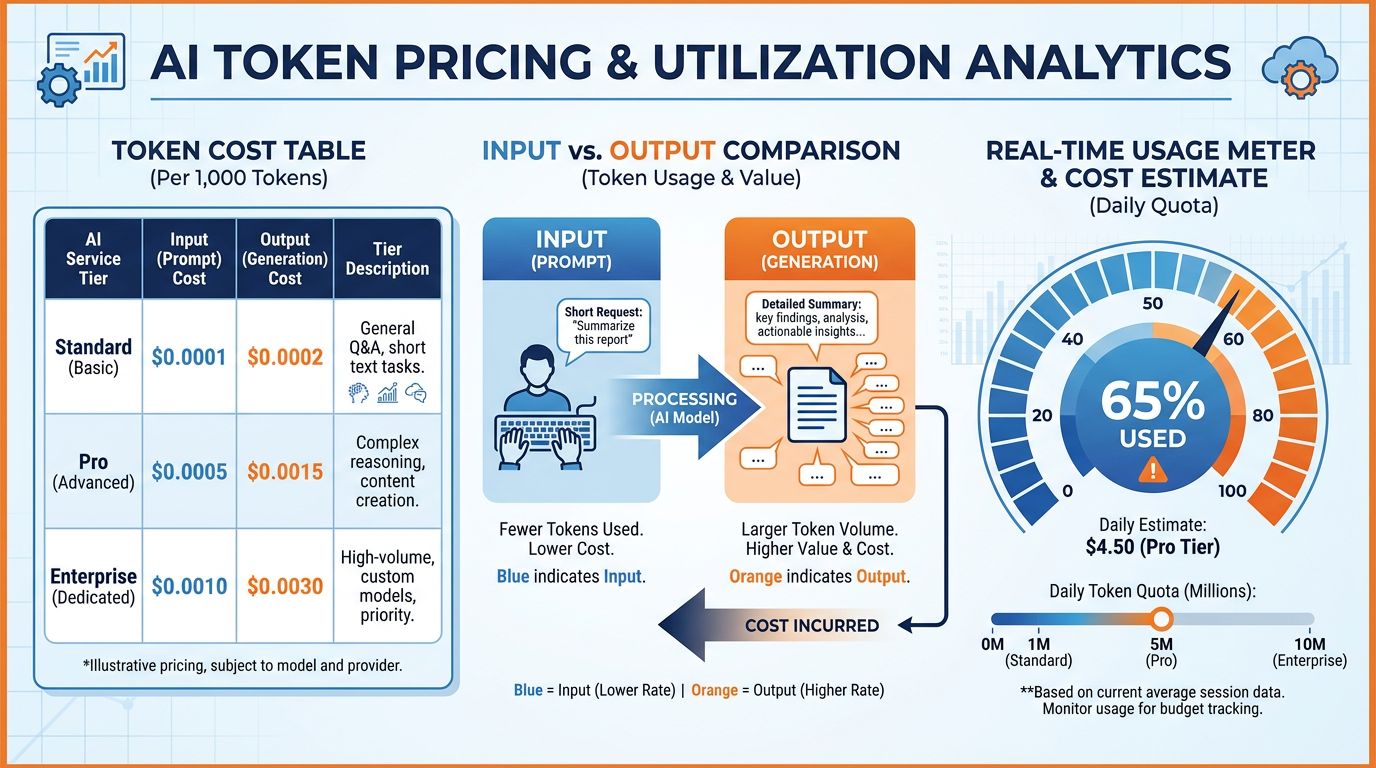
Figure 5:The token economy: think Uber, not a movie ticket — you pay per mile of text processed, not per conversation started.
Think of AI pricing like a taxi meter, not a flat fare. The meter starts running the moment the trip begins. Every mile — every token — adds to the total. You are not paying for the question; you are paying for the processing.
This changes how you think about conversations, prompt length, and the business economics of working with AI at scale.
Input Tokens vs. Output Tokens
The most important pricing distinction in AI is one most new users miss: input tokens and output tokens cost different amounts, and output tokens are consistently more expensive.
Why? Generating text is computationally more intensive than reading it. When the model processes your prompt (input), it runs a single forward pass through the network. When it generates a response (output), it runs a separate, iterative generation process — one token at a time — which is significantly more resource-intensive.
This asymmetry is your cost lever. If you want to reduce AI costs at scale:
Write efficient prompts — be specific, not verbose; eliminate throat-clearing preambles
Constrain output length — instruct the model to be concise when you don’t need depth
Use cheaper models for output-heavy tasks — when you need a lot of generated text and the task doesn’t require frontier reasoning, use a faster, cheaper model
The Re-Send Problem
Here is the most counterintuitive fact about how AI conversations work: every message you send re-sends the entire conversation history.
When you are ten messages deep into a chat, and you type message eleven, the model does not receive just message eleven. It receives the full transcript — messages one through ten, plus your new message — all over again. Every. Single. Turn.
This happens because language models are stateless. They have no persistent memory between API calls. Each call is a fresh inference — and to have any sense of conversational continuity, the entire prior context must be included in each new request.
The practical consequence: long conversations become expensive quickly, because the input token count grows with every exchange. A 20-message conversation does not cost 20× a single message — it costs much more, because each message carries the full preceding history as its input.
The Three Cost Levers
Once you understand how tokens work, three practical habits make your usage more efficient:
Write tight prompts. Cut preambles like “I was wondering if you could help me with...” Just state the task. Every unnecessary word is a real — if tiny — cost.
Tell the model how much output you need. “In three bullet points” or “In under 200 words” meaningfully reduces generation cost and often improves quality.
For distinct tasks, start fresh conversations rather than continuing a long thread. This resets the re-send accumulation. Use long conversations only when continuity genuinely adds value.
When to Be Verbose, When to Be Efficient
Cost efficiency does not mean always being brief. Sometimes more context — more tokens — is worth it. The decision depends on the task:
Verbose vs. Efficient: When Each Wins
Situation | Approach | Why |
|---|---|---|
Complex analysis requiring nuance | Verbose context — provide all relevant background | The model needs the full picture; skimping on context produces shallow output |
Routine, well-defined task | Efficient prompt — minimal context, clear instruction | The task doesn’t benefit from extra tokens; you’re just running up the meter |
Output is long by necessity (report, draft) | Accept the output cost; consider a cheaper model tier | Output length may be unavoidable; optimize the model, not the output |
Quick lookup or simple question | Short prompt + short output constraint | Both sides of the cost equation can be minimized here |
The professional discipline is knowing which situation you are in before you start typing.
Practical Cost Awareness
At current pricing for frontier models (~$15 per million output tokens), here is what various tasks actually cost:
Drafting a 500-word email: less than $0.01
Analyzing a 10-page report and generating a summary: $0.05–$0.15
Processing 100 customer emails with response drafts: $1–$3
Running a complex multi-document research task: $0.50–$2.00
For individual professional use, AI costs are almost negligible compared to the productivity gains. The economics only become materially significant at scale — thousands of automated tasks, large document corpora, or high-frequency batch processing.
Knowing this helps you calibrate: don’t be so obsessed with token efficiency that you hobble your prompts. At $20/month for a pro subscription, you have substantial capacity before usage caps become a concern.
Summary
Context: The Working Memory of the AI
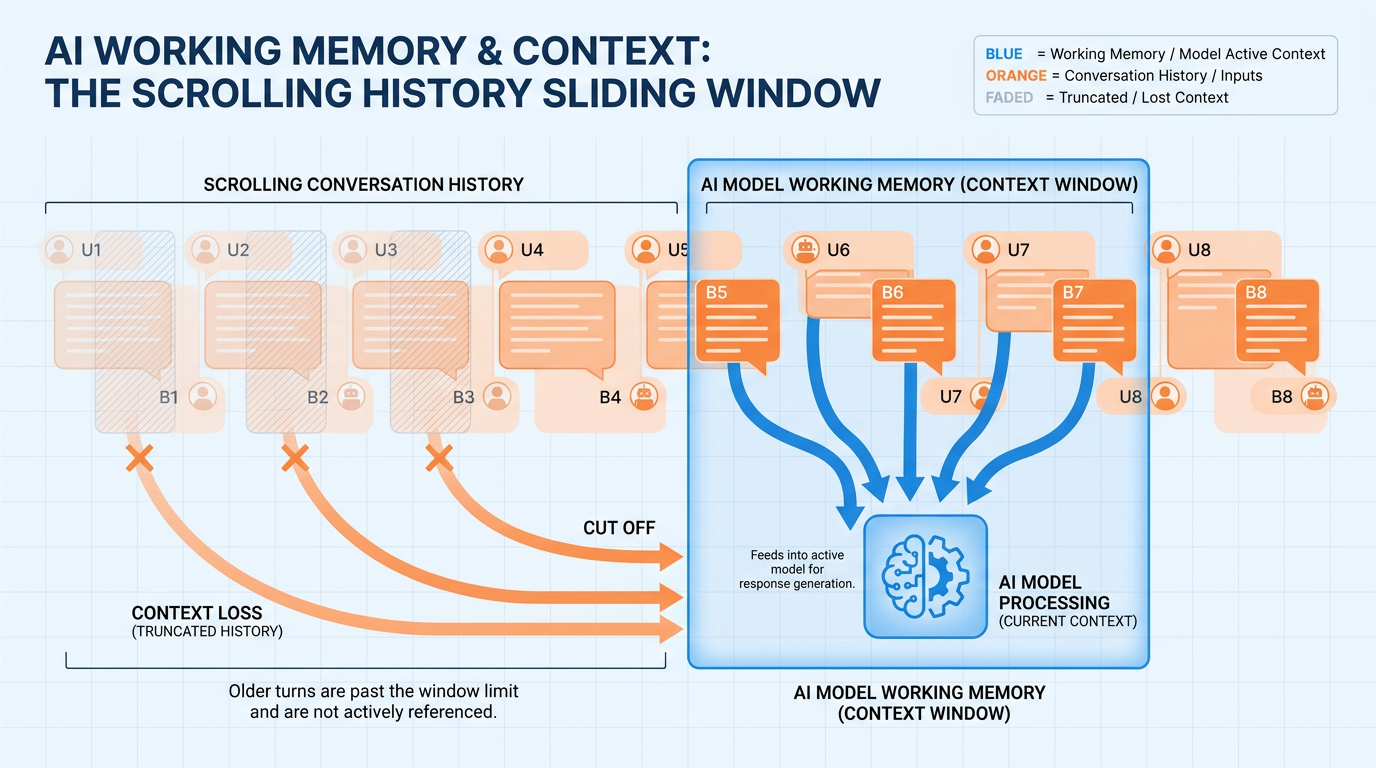
Figure 6:Context is the AI’s working memory: everything the model can see right now, structured in layers.
In Chapter 1.2, you met the Flashlight Theory — context is the beam, and the model can only reason about what the beam illuminates. Now it is time to open the flashlight and look inside.
Context is not a vague concept. It is a specific, structured collection of information that gets loaded into the model’s working memory for a given session. Understanding what it contains — and what controls each layer — is what separates casual users from professionals.
The Model Does Not Remember. It Re-Reads.
This is the most important thing to understand about how AI memory works: the model has no persistent memory between sessions. When you close a conversation and open a new one, the model starts with a completely blank slate.
What feels like memory — the model knowing what you discussed earlier in a conversation — is not memory in the human sense. It is re-reading. Every time you send a message, the model reads the entire conversation history from the beginning, as if seeing it for the first time.
This has a practical implication that most users miss: context is not automatic continuity. It is deliberate construction.
What Lives Inside the Context
At any given moment in a conversation, the model’s context contains some combination of the following layers:
Standing instructions that set the model’s role, behavior, tone, and rules for the session. In tools like Claude Projects or custom GPTs, this is set once and persists across all conversations in that project. You don’t see it in the chat, but the model does.
Everything that has been said in the current session — your messages and the model’s responses — in sequence. This grows with every exchange.
Documents, spreadsheets, PDFs, images, or code files you have explicitly added to the conversation. These are parsed and added to the context in full.
When the model has access to external tools — search, database queries, connected services via MCP — the results of those tool calls are also injected into the context.
Everything in this list is part of the beam. Everything outside it is darkness.
A Practical Example: The Analyst and the Report
An analyst is preparing a quarterly business review. She needs the model to reason about her company’s Q3 performance data. Without context, the model knows nothing — it has no access to her company’s numbers, her industry benchmarks, or her internal targets.
She uploads the Q3 report (50 pages, pasted as text into the conversation). Immediately, the model can reason about Q3 data. She also pastes in a competitor’s public earnings release. Now the model can compare. She adds a note specifying that her audience is the executive team and that she needs the tone to be direct and data-forward.
The context now contains:
Her role and the output goal (typed instruction)
The Q3 internal report (attached file)
The competitor earnings release (pasted text)
The audience and tone specification (explicit instruction)
The output she receives is specific, comparative, and appropriately styled — because the flashlight beam is fully illuminated.
The Hierarchy of Context: What Gets Prioritized
Not all context elements carry equal weight in how the model processes them. Research and practical experience suggest a rough priority order:
Context Priority Hierarchy
Priority | Element | Practical Implication |
|---|---|---|
Highest | Explicit instructions stated clearly and near the current message | Put your most important requirements close to your question |
High | System prompt (if set) | Use project-level system prompts for standing rules and role definitions |
Medium | Recent conversation history | Recency matters — things said recently carry more weight than messages far back |
Lower | Early conversation history and large attached documents | Critical information buried in the middle of long contexts may be underweighted |
Variable | Tool results | Depends on placement and how the tool result is formatted in context |
This hierarchy is not absolute — frontier models are increasingly sophisticated about long-context processing — but it is a reliable guide for structuring important information in your prompts.
Context as a Design Problem
Here is the shift that changes how you work: stop thinking of a conversation as a dialogue and start thinking of it as a document you are constructing for the model to read.
When you design a conversation this way, different questions arise:
What does the model need to see to give me the best output?
Is the most important information near the top, or buried in a long preamble?
Have I specified my role, my goal, and my constraints explicitly?
Are the documents I’ve included actually relevant, or am I cluttering the beam?
This design mindset — the editor’s mindset — is the subject of Chapter 1.8 (Context Engineering). For now, hold the core idea: context is something you construct, not something that happens automatically.
Summary
The Context Window
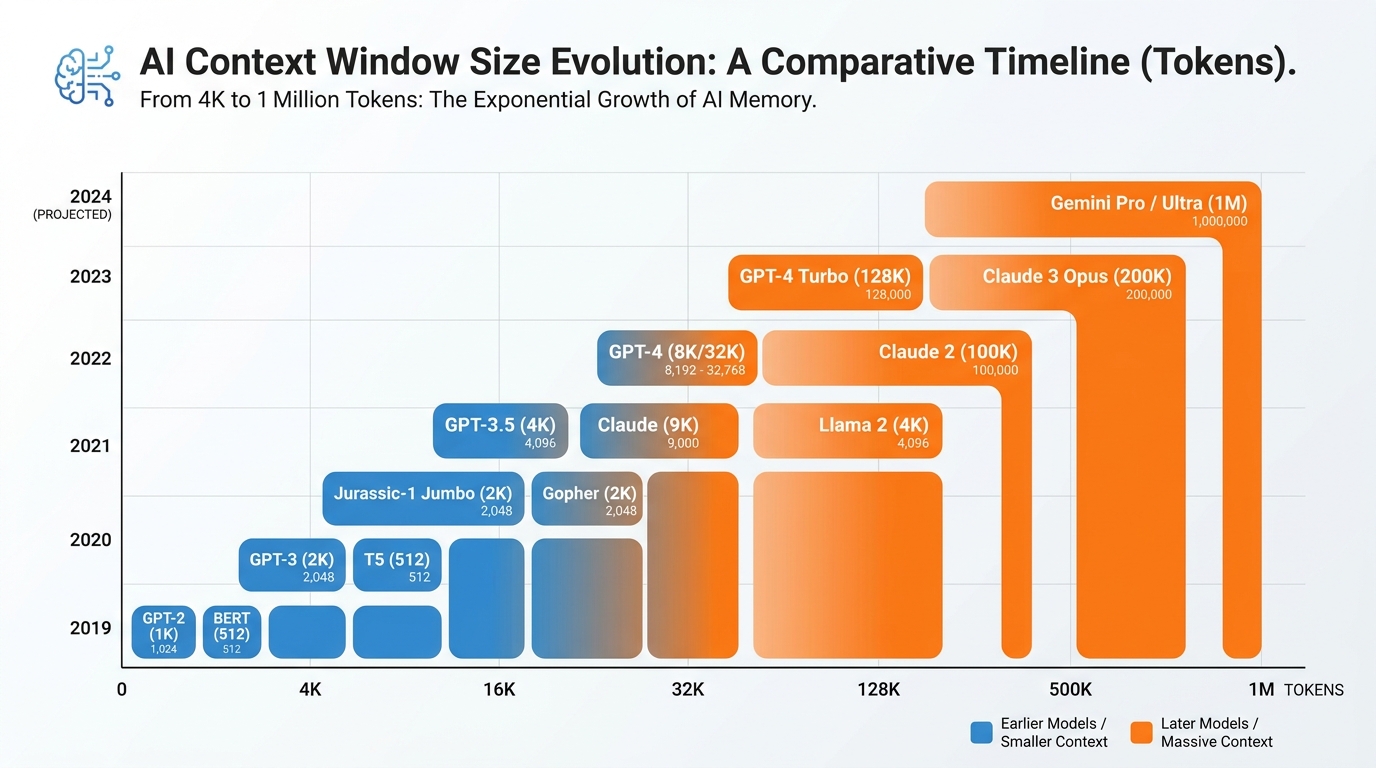
Figure 7:The context window as a desk: finite surface area, with attention clustering at the edges and fading in the middle.
Imagine your desk at work. It has a finite surface area. You can spread out documents, notes, and reference materials — but only so many before things start falling off the edges or getting buried under other papers. Whatever is on the desk is what you can work with. Whatever is not on the desk might as well be in storage.
The context window is the AI’s desk. It is the maximum amount of information the model can hold in working memory at one time — measured in tokens.
The Hard Ceiling
Every model has a maximum context size — a hard ceiling on how many tokens can exist in a single conversation before the model can no longer process the entire history. When that ceiling is hit, one of two things happens: either the model begins silently dropping the oldest content (a rolling window), or the system returns an error.
Current frontier models have dramatically larger context windows than even two years ago:
Context Window Sizes — Representative Current Models
Model | Context Window | Real-World Equivalent |
|---|---|---|
Claude (extended context) | Up to 1,000,000 tokens | Roughly the entire Lord of the Rings trilogy |
Gemini 3.x | Up to 2,000,000 tokens | Multiple full-length novels simultaneously |
GPT-5.5 | 128,000 tokens | ~96,000 words — a full business book |
Claude Haiku / Sonnet (standard) | 200,000 tokens | ~150,000 words — a long novel |
These numbers represent extraordinary progress. For almost any individual business task, you will never approach the ceiling. But “the ceiling is high” does not mean “more is always better.”
Size Is Not the Whole Story: Lost in the Middle
Here is a counterintuitive finding from AI research: models do not attend equally to all parts of a long context. They tend to weight content near the beginning and near the end more heavily than content in the middle.
This phenomenon is sometimes called the “lost in the middle” problem. If you paste a 200-page document into a conversation and ask a question that depends on information in chapter 11 — roughly the middle — the model may give you a weaker answer than if that same information were at the beginning or end.
This finding also explains why context engineering (Chapter 1.8) matters even when the context window is large enough to hold everything. You are not just managing capacity — you are managing attention.
The Edges Have More Weight
Think of the context window like a piece of paper being read by someone in a hurry. They read the top closely, skim the middle, and read the bottom closely before responding.
This is a useful — if simplified — mental model for prompt design:
Put your most important instructions at the top (the beginning of the conversation or the beginning of your message)
Put your most critical document section near the end of what you paste in, just before your question
Avoid burying key information in long preambles or in the middle of a large document paste
The model will “see” everything in the window — but seeing and attending to are different.
What Happens When the Window Fills
When a conversation grows long enough that older content begins to fall outside the effective attention range, quality degrades in predictable ways:
The model repeats itself, forgetting it already covered a topic
It contradicts instructions given early in the conversation
It loses track of the original goal stated at the start
It begins making assumptions based on recent context rather than the full picture
These are all symptoms of context rot — a related problem covered in detail in Chapter 1.9. For now, recognize them as signals that the desk has gotten too crowded.
When Size Matters
There are genuine tasks where large context windows provide enormous value:
Full-document analysis — reviewing an entire contract, report, or manuscript for issues
Codebase review — examining a full codebase for architectural problems
Multi-document synthesis — comparing several long documents simultaneously
Long project continuity — keeping a detailed project brief active across a long working session
For these use cases, Claude’s extended context is a genuine differentiator. Being able to paste an entire 200-page report and reason across the whole thing — without chunking, summarizing, or losing continuity — is a significant capability advantage over approaches that require breaking documents into pieces.
Summary
Context Engineering
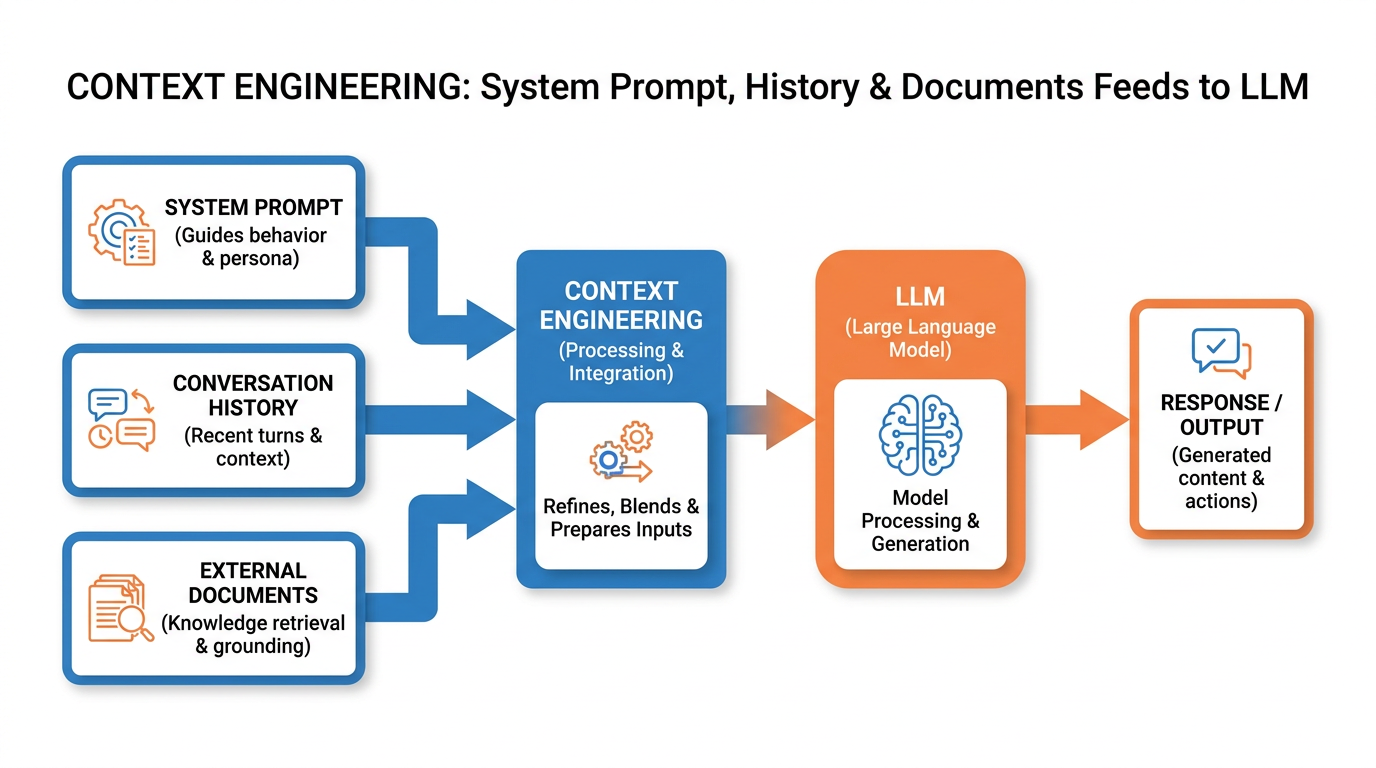
Figure 8:Context engineering: signal-to-noise curation, the three rules, and the editor’s mindset.
Everyone focuses on the prompt. The better leverage is in everything around the prompt.
Prompt engineering — crafting clever, well-structured questions — is a real skill. But it is downstream of something more important: what information you have placed in the context before asking. You can write the world’s best question and still get a mediocre answer if the model is looking at the wrong documents, missing your constraints, or drowning in irrelevant background.
Context engineering is the discipline of deciding what goes in, what stays out, and in what order — before you even start typing your question.
The Signal-to-Noise Problem
Adding more context is not the same as adding better context. The model has to process everything you put in front of it. Irrelevant, redundant, or poorly organized material does not just fail to help — it actively dilutes the quality of the response by competing with what actually matters.
The goal is high signal-to-noise ratio. Every element in the context should be there for a reason. If you cannot articulate why a document or paragraph is included, cut it.
The Three Rules of Context Engineering
These three principles will improve the quality of your AI outputs immediately. Apply them before any complex or important task.
The most important information — your goal, your constraints, the most critical section of a document — goes first. Not after a long preamble. Not buried. First.
If a document, paragraph, or background section would not meaningfully change your own understanding of the task, it will not meaningfully help the model either. Remove it.
State what success looks like before you dive into background. The model should know where it is going before it starts reading.
These rules map directly to the lost-in-the-middle findings from Chapter 1.7. The model attends most strongly to what appears early and what appears close to the question. Structure your context accordingly.
The Editor vs. the Prompter
Here is the most useful reframe in this entire chapter:
The person who gets the best AI outputs is not the best prompt writer. It is the best editor.
An editor does not just know how to ask good questions. An editor knows what to include, what to cut, and how to organize material so that the most important things are visible. An editor reads the full context before sending it, the way you would read a brief before handing it to a colleague.
The checklist takes 30 seconds. For important tasks, it routinely produces better outputs than any prompt-engineering trick.
A Practical Rewrite
Here is a before-and-after that demonstrates the three rules in action.
“Hi! I’m working on a strategic planning document for my company. We’re a mid-size SaaS company in the HR tech space. We’ve been around for about 7 years. We have about 85 employees. Last year was tough because of the market. Anyway, I was wondering if you could help me think through some things. Here is a very long document I’ve been putting together... [2,000 words of disorganized notes]. Based on all this, what should my Q4 priorities be?”
"Goal: I need clear Q4 strategic priorities for my SaaS HR tech company.
Context: 85 employees, 7-year-old company, difficult 2024 due to market contraction.
Constraints: Output should be three priorities max, written for the executive team, with one-sentence rationale for each.
Below is the relevant section of our current strategy doc:
[Excerpt: the 300 most relevant words, not the full 2,000]*
Given this, what are the three highest-leverage Q4 priorities?"
Same underlying information. Dramatically different quality of output — because the context is curated, ordered, and constrained.
When Context Engineering Is Worth the Effort
For quick, simple tasks — “summarize this paragraph” or “fix the grammar in this sentence” — context engineering is overkill. Just ask.
For tasks that matter — strategic documents, important communications, complex analysis, anything you would normally spend significant time on — the investment in context engineering pays dividends. Five minutes of curation before a complex prompt often saves thirty minutes of iterating on mediocre outputs.
The rule of thumb: if you care about the output quality, spend time on the input quality first.
Summary
Context Rot
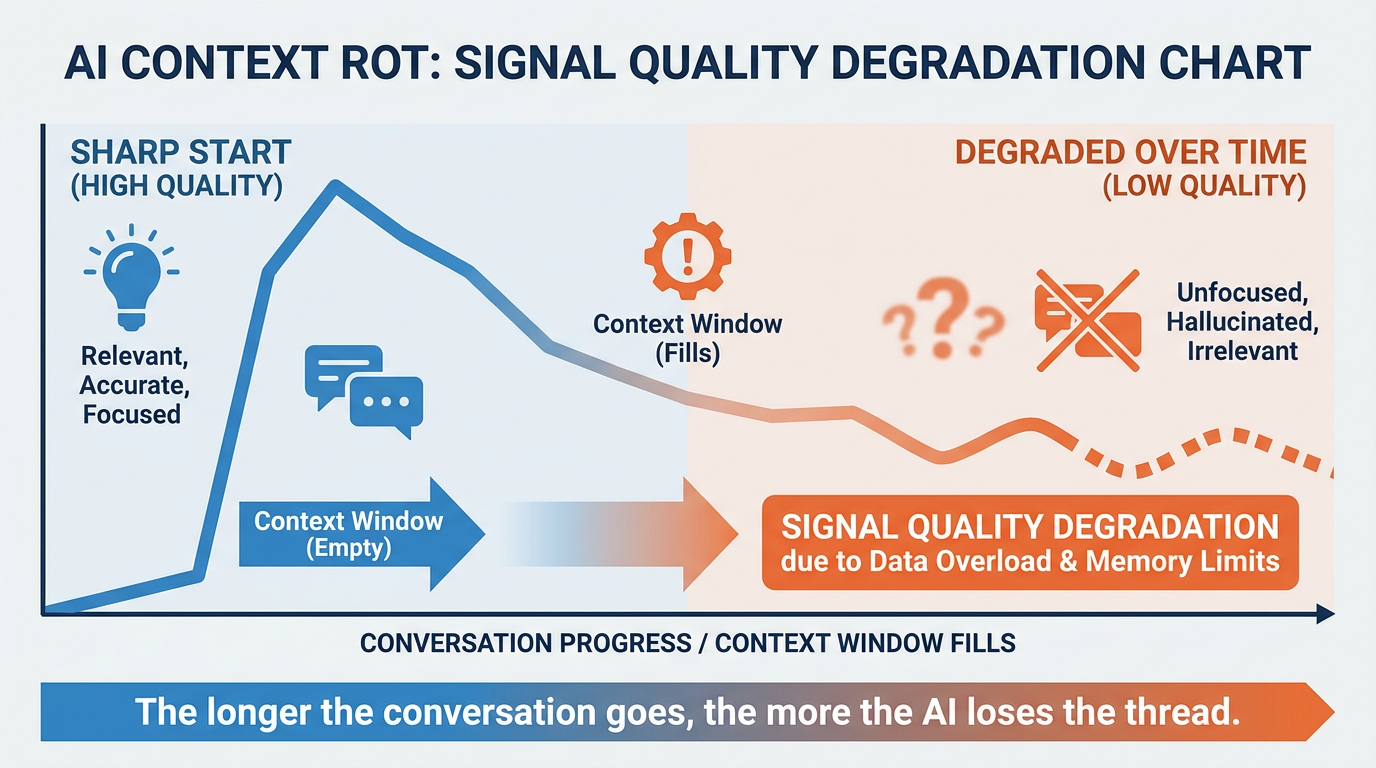
Figure 9:Context rot: as the whiteboard fills up, readability collapses — knowing when to erase and start fresh is a core professional skill.
Imagine a whiteboard in a busy conference room. Early in the session, it is clean and organized — the key points are clear, the structure is legible. As the meeting goes on, someone adds more notes. Then more. Then someone writes over old material. By the end, the board is covered in overlapping text, crossed-out sections, and notes that contradict each other.
Nobody can read it anymore. But everyone is still trying to use it.
This is context rot.
What Context Rot Is
Context rot is the gradual degradation of output quality that occurs as a conversation grows longer. It is not a bug in the model. It is a predictable consequence of how context accumulates over a long session.
Here is what happens mechanically:
Attention dilution — the longer the context, the more tokens the model must attend to with each generation step. Critical early instructions compete with a growing volume of later content.
Accumulated assumptions — early in a conversation, you and the model establish a shared frame. As the conversation evolves, new assumptions layer over old ones, sometimes inconsistently.
Conflicting instructions — you may have specified your tone or format in message one, then shifted requirements in message twelve. The model now has two different instructions and must guess which takes precedence.
Goal drift — long conversations often start with one objective and gradually shift to another. The model’s understanding of what you want becomes a blurry average of all the objectives, rather than a clear focus on the current one.
Warning Signs That Rot Has Set In
Context rot does not announce itself. You have to recognize it from symptoms. These are the most reliable indicators:
The model starts repeating itself — offering the same suggestions it already gave, re-explaining things it explained earlier. It has lost track of what has already been covered.
The model gives advice that directly contradicts something it said, or something you specified, earlier in the conversation. Conflicting instructions are producing inconsistent outputs.
The model’s responses no longer seem aligned with your actual current goal. It is reasoning toward an older objective, or producing an average of several objectives.
Responses get noticeably shallower, more generic, or less precise — even for questions that were producing excellent outputs earlier in the conversation.
When you see two or more of these symptoms together, the whiteboard is too crowded. It is time to erase.
The Fresh Conversation Discipline
The professional response to context rot is simple: start a new conversation.
This feels counterintuitive. You have built up a long conversation with a lot of useful context — why throw it away? But “starting fresh” does not mean losing everything. It means distilling.
Before closing a rotted conversation, spend two to three minutes writing a clean summary of:
The current goal — what you are actually trying to accomplish right now
The key decisions made — what has been established so far that matters
The relevant constraints — your requirements, your audience, your format
Open a new conversation. Paste that summary at the top. You now have a clean whiteboard with all the essential context, none of the noise, and a fresh attentional slate.
Rot vs. Depth: Knowing the Difference
Not every long conversation has context rot. Some tasks genuinely benefit from extended dialogue — exploring a complex problem, iterating on a document across many drafts, building up a nuanced understanding of a situation over time.
The question is not “how long is this conversation?” but “is the quality still high?”
A well-managed long conversation stays high quality because the participants (you and the model) are maintaining a clear current goal, and the context remains coherent and well-organized. A rotted conversation loses quality not because of length but because of accumulated noise and drift.
If you are regularly refreshing the explicit goal statement — “To be clear, what I need right now is X” — and the model is still producing sharp outputs, you do not have rot. You have depth.
The Professional Habit
High-performing AI users develop a simple discipline: they open a new chat when the quality drops.
They do not keep pushing on a rotted conversation hoping it will get better. They do not try to “fix” it with increasingly complex prompts. They distill, reset, and restart.
This habit is surprisingly hard to build, because there is a psychological cost to “losing” a long conversation. It feels like throwing away work. In practice, you are not throwing away the insights — you are discarding the noise that was obscuring them.
The two minutes you spend writing a clean summary are almost always returned tenfold in the quality of the fresh session.
Summary
Voice Changes Everything
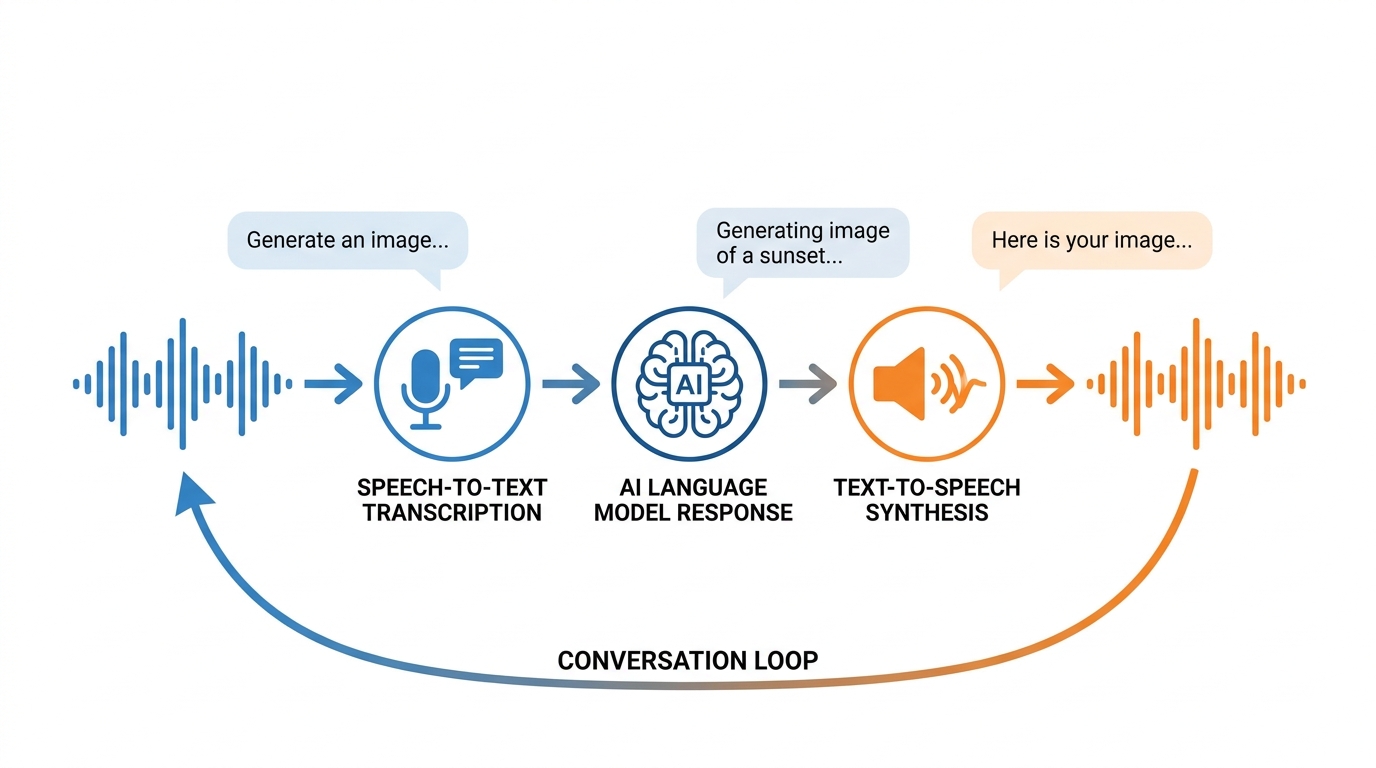
Figure 10:The voice-to-AI loop: speak naturally, transcribe instantly, receive expert-level responses — the fastest input method for serious AI work.
Something shifts when you stop typing your questions and start speaking them.
It is not just speed — although the speed difference is significant. It is something subtler: the quality of your thinking changes when you talk through a problem rather than type through it. Spoken language carries tone, emphasis, and the natural flow of thought in ways that typed prompts rarely do. When you dictate to an AI, you think differently — and you often ask better questions.
This chapter is about closing the gap between how you think and how you interact with AI.
Why Voice Changes the Dynamic
There is a well-documented phenomenon in professional communication: people who dictate tend to produce longer, richer, more nuanced content than people who type. This was true for business executives decades before AI — it is the reason dictation tools have existed since the 1900s. The constraint of typing slows thinking and compresses expression. Voice removes that constraint.
Applied to AI, this has a concrete benefit: your prompts get better when you voice them.
There is also the anthropomorphization effect. When you speak to something, you naturally communicate with it more the way you would communicate with a person — with context, with tone, with the implicit assumption that your interlocutor needs to understand your situation. This instinct produces richer prompts.
Anthropomorphization of AI tools is often treated as a cognitive bias to be corrected. For the purpose of productive AI work, it is a feature. Speaking to the model as if it is a thinking partner produces more natural, more useful interactions than treating it as a search interface you are filling out a form for.
The Tools: SuperWhisper and Wispr Flow
Two tools dominate the voice-to-AI workflow for business professionals. Both work by capturing your voice, transcribing it with high accuracy in near-real-time, and routing the text wherever your cursor is — into any application, browser, or text field.
A macOS-native voice transcription app powered by OpenAI’s Whisper model. Best-in-class accuracy for English. Activates with a keyboard shortcut — press it, speak, release, and your text appears wherever your cursor is. Works in any app including Claude, ChatGPT, Gemini, and your email client.
Best for: Mac users who want a dedicated, always-available voice layer over their entire workflow.
A cross-platform voice input tool with AI-powered clean-up — it transcribes your speech and also lightly formats and cleans up filler words and false starts. Available on Mac and Windows.
Best for: Users who want polished transcription output without editing, or who need Windows support.
Both tools are designed for the same use case: making voice input as frictionless as typing, but faster and more expressive.
Setting Up the Voice-to-AI Loop in Under Five Minutes
Here is the complete setup process:
Step 1: Download either SuperWhisper (superwhisper.com) or Wispr Flow (wisprflow.ai). Both have free tiers sufficient for daily use.
Step 2: Follow the two-minute setup — grant microphone access, set your activation shortcut.
Step 3: Open Claude, ChatGPT, or any AI interface in your browser.
Step 4: Click in the chat input field, activate your voice tool (keyboard shortcut), and speak your prompt.
Step 5: Release the shortcut — your spoken words appear as text in the chat. Review and send.
That is the entire loop. From setup to first voice prompt: five minutes or less.
Voice as a Thinking Tool
The most underrated use of the voice-to-AI loop is not prompt delivery — it is thinking out loud.
Complex problems benefit from verbalization. There is strong cognitive science evidence that speaking through a problem activates different reasoning processes than writing it down silently. When you dictate a problem to an AI — not asking for an answer yet, just narrating the situation, the constraints, and what you are trying to figure out — you often achieve clarity before the model even responds.
The model’s role in this mode is reflective: it listens to your narration, identifies the key tensions you described, and reflects them back in a structured form. This is a fundamentally different — and often more valuable — interaction pattern than query-and-response.
The Speed Case
Speaking is roughly three to five times faster than typing for most people. For a 200-word prompt that takes two minutes to type, voice takes under 45 seconds. For a daily professional who is interacting with AI tools dozens of times per day, this compounds to a meaningful time savings.
But the deeper benefit is not time saved — it is that the lower friction means you prompt more. Users who type every interaction tend to be selective about what they bring to the AI, compressing and simplifying to reduce the effort of typing. Voice users tend to bring more of their actual, nuanced thinking — and get better results for it.
Summary
Case Study: The Analyst Who Knew Everything — Except What Mattered
Background
Meridian Advisory Group is a mid-sized management consulting firm headquartered in Atlanta, Georgia, with 340 employees and annual revenue of approximately $62 million. The firm specializes in operational efficiency engagements for regional healthcare systems and mid-market manufacturing companies. In early 2025, Meridian’s Managing Partner, Dr. Camille Vance, approved a firm-wide initiative to integrate large language models into the consulting workflow — beginning with the research and deliverable-drafting functions performed by its analyst and associate teams.
The initiative was championed by Jordan Elias, Director of Knowledge and Innovation, who had spent the prior year piloting AI tools with a small group of senior associates. Jordan’s hypothesis was straightforward: if Meridian’s analysts could use AI to accelerate the research synthesis and slide-drafting phases of an engagement, the firm could serve more clients simultaneously without proportionally increasing headcount. Initial pilot results were encouraging. The senior associates who worked with Jordan reported 30–40% reductions in time spent on first drafts.
The firm rolled out access to Claude Sonnet 4.6 across all analyst-level staff in February 2025. Each analyst received a two-hour orientation covering basic prompting, file attachment, and output review. Within six weeks, however, Dr. Vance began receiving complaints from engagement managers. The pattern was consistent: analyst-generated AI drafts were starting strong — well-organized, grammatically polished — but were producing outputs that felt generic, misaligned with the specific client, or simply “wrong in ways that are hard to explain.” One engagement manager described it bluntly: “It reads like a McKinsey deck written for a company that doesn’t exist.”
Jordan audited a sample of twenty analyst conversations with the AI tool. What he found was instructive. Most analysts were using the AI the way they might use a search engine — asking short, general questions without supplying client-specific documents, strategy memos, or engagement context. In several cases, analysts had been using the same ongoing conversation thread for work across multiple different clients, treating the AI as a persistent assistant rather than a session-based reasoning tool. In other cases, conversations had grown to forty or fifty exchanges long, with early client-specific instructions buried beneath layers of accumulated turns. The tool was performing exactly as designed. The workflows surrounding it were not.
The Situation
Jordan now faces a strategic decision that is as much architectural as it is managerial. The AI tool itself is not the problem — its reasoning capability is genuine. The problem is structural: analysts are deploying a powerful reasoning engine without systematically supplying the knowledge it needs to apply that reasoning to real clients. The flashlight is on, but nobody is aiming it. Conversations that started with a specific purpose have drifted — context has accumulated without curation, and early client-specific instructions are competing with dozens of later turns for the model’s attention. In several cases, Jordan suspects that the model’s outputs reflect a blurry average of multiple clients rather than the sharp focus of one.
The firm must now decide how to redesign analyst workflows to address three distinct failure modes simultaneously: the absence of adequate client context in prompts, the degradation of output quality in long, multi-purpose conversations, and the lack of any systematic discipline around when to start a fresh session versus continue an existing one. Jordan has proposed a “Context Brief Protocol” — a structured, client-specific template that every analyst would populate at the start of each engagement and paste as the opening message of any new conversation. Dr. Vance is supportive but concerned about adoption friction and whether the protocol addresses all of the underlying issues. The engagement managers want better outputs; the analysts want a workflow that does not add significant overhead.
Discussion Prompt
Drawing on the intelligence vs. knowledge distinction, the Flashlight Theory, context engineering principles, and the concept of context rot as developed in this chapter, analyze the core failure modes in Meridian’s analyst workflow and evaluate Jordan’s proposed Context Brief Protocol as a solution. Does the protocol address the structural causes of output degradation, or does it treat symptoms while leaving deeper workflow problems intact? What specific design principles from this chapter would you incorporate into a more comprehensive redesign of Meridian’s AI workflow — and what trade-offs would that redesign require the firm to accept?
Discussion Guidelines
Initial Post (due before class)
Minimum 400 words
Directly address the discussion prompt using concepts from this chapter
Include at least one APA-formatted citation — from the course text or a peer-reviewed source
Avoid summary; demonstrate analysis and original thinking
Peer Responses (minimum 2)
Minimum 250 words each
Each response must include at least one APA-formatted citation
Engage substantively — build on, challenge, or offer a contrasting perspective grounded in evidence
“I agree” or “Great post” responses do not meet the requirement
Maintain a professional and respectful academic tone
Chapter 1 Applied Exercise: Build Your Personal Context Brief
Estimated time: 25–30 minutes. You will produce one reusable artifact: a context brief that instantly illuminates every AI conversation you open from this point forward.
Step 1 — Compare Three Models Side by Side (5 minutes)
Go to arena.ai in your browser. No account required.
Click Battle Mode in the top navigation (the head-to-head comparison interface).
Select three models from the dropdowns — use Claude, GPT-5.5, and Gemini 3.1 Pro if available.
In the shared prompt box, type exactly:
“I’m a business professional with no AI background. In three bullet points, what would you need to know about me to give genuinely useful advice — not generic advice — about my work?”
Click Send to run the same prompt through all three simultaneously.
Read the responses. Note which model asked the sharpest, most specific questions. That model’s instinct about what context matters is directly relevant to Step 3.
Step 2 — Map Your Intelligence vs. Knowledge Gap (5 minutes)
Open a blank document or notes app. Answer these three questions in writing — one to three sentences each:
What does the AI already know that applies to my work? (Industry norms, common frameworks, writing conventions in my field)
What does the AI NOT know that I will need to supply every time? (My role, my company, my current projects, my audience, my constraints)
What is one task I do at least weekly that involves reading, summarizing, comparing, or drafting — and that currently takes longer than it should?
Your answer to question 2 is the raw material for your context brief.
Step 3 — Write Your Personal Context Brief (10 minutes)
In the same document, write a 150–250 word context brief. Use this exact structure — fill in the brackets:
## Who I Am
[Your role, industry, and what your work actually involves day-to-day — 2 sentences]

## What I'm Currently Working On
[Your main project or focus right now — 2–3 sentences]

## My Communication Style
[How you prefer outputs: formal or direct, short or thorough,
bullet points or prose, specific format preferences]

## My Standing Constraints
[Who your audience typically is; any non-negotiable requirements
— e.g., "always appropriate for executive review"]

## What I Need Most From AI
[Your 2–3 most common use cases — e.g., drafting, analysis, decision support]
Write this as if briefing a highly capable new colleague on their first day.
Step 4 — Test the Flashlight (5 minutes)
Go to claude.ai. Sign in or create a free account if you do not have one. (Free tier is sufficient for this exercise.)
Click New chat to open a fresh conversation.
Paste your completed context brief into the message field as the very first message. Do not add anything else yet — just send the brief.
After Claude acknowledges it, send this follow-up in the same conversation:
“Based on everything I just shared, suggest three specific AI-assisted workflows that would save me meaningful time each week. Be concrete — name the task, the tool, and what I would actually do.”
Read the response. Then open a second new chat — do not paste the brief — and ask the exact same follow-up question with no prior context.
Compare the two responses. The difference in specificity is the flashlight in action.
Step 5 — Tokenize Your Brief (5 minutes)
Go to platform
.openai .com /tokenizer in your browser. The tool loads directly — no login required. Paste your context brief into the text field. The token count updates live as you type.
Note the number. This is the “entry cost” — in tokens — every time you start a conversation with this brief.
Now open claude.ai/pricing in a new tab. The current Pro plan is $20/month (billed monthly) or $17/month (billed annually). A free tier is also available.
Mental math: at current API pricing for Claude Sonnet (roughly $3 per million input tokens as of this writing — verify current rates at anthropic
.com /pricing), a 200-token context brief costs approximately $0.0006 per conversation. You can start 1,600 contextualized conversations for $1.
Step 6 — Set Up Voice Input (5 minutes)
Choose one tool based on your device:
If you are on macOS or Windows:
Go to superwhisper.com and download the free version.
Install and open it. Grant microphone access when prompted.
In the app, note your activation shortcut (default is typically
⌘ + Shift + Spaceon Mac).Open Claude in your browser. Click in the chat input field.
Hold your activation shortcut, speak one sentence about your work, release the shortcut. Your words appear in the field.
That is the full loop. Push to talk → speak → release → text appears.
If you prefer cross-platform (Mac/Windows/iOS/Android):
Go to wisprflow.ai and download Wispr Flow.
Follow the same setup: install, grant microphone access, set your activation shortcut.
Wispr Flow automatically removes filler words and cleans up false starts — the output is polished text, not raw transcript.
Test it: Dictate the following prompt into Claude using your voice tool (do not type it):
“Based on my context brief, what’s the single highest-leverage thing I could start doing differently with AI this week?”
Notice the length and naturalness of what you spoke versus what you would have typed.
Deliverable
Save your context brief somewhere you can access it in one click — a pinned note, a text snippet app, or a clipboard manager. Every time your work focus shifts, update it. This document is your flashlight. Everything in the chapters ahead teaches you to aim it better.
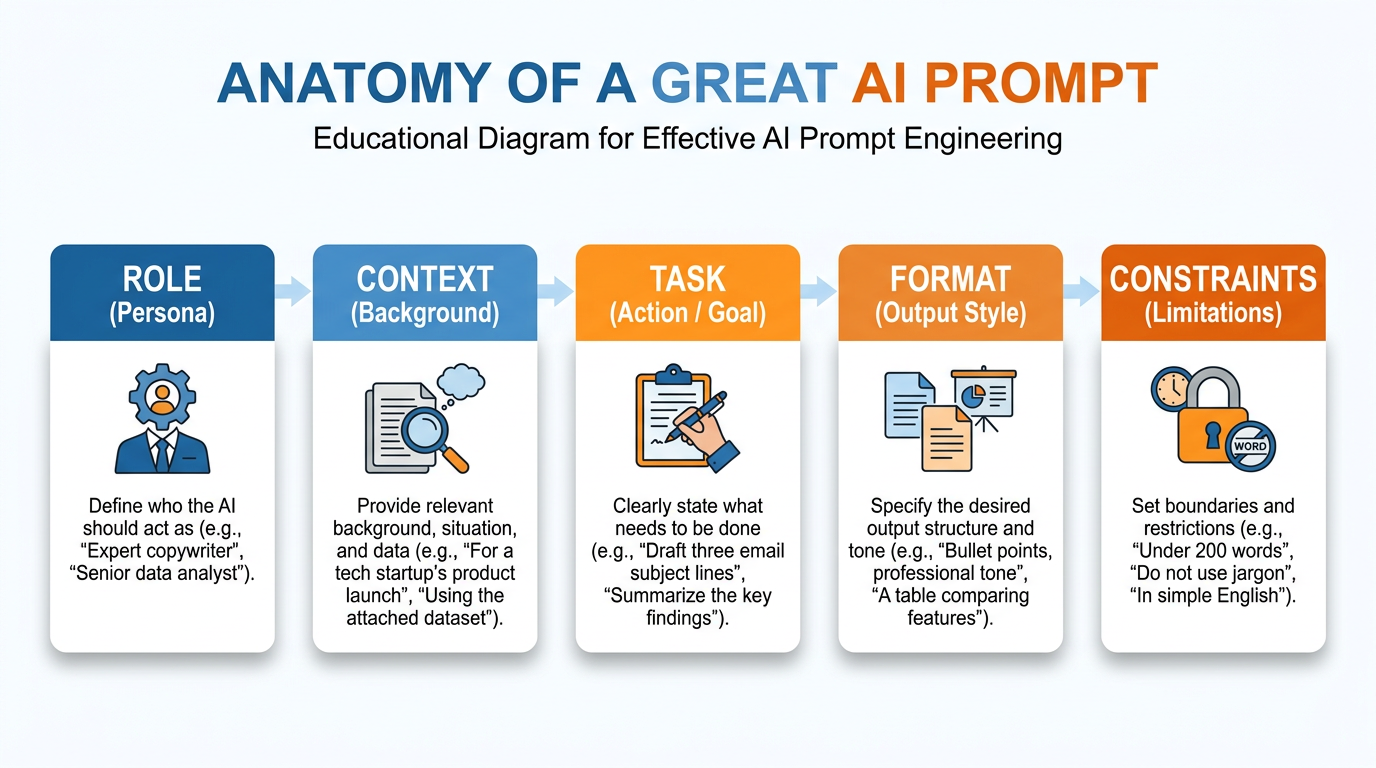
Figure 11:Prompt Anatomy — Role, context, task, format, constraints: the five parts of a prompt that works.
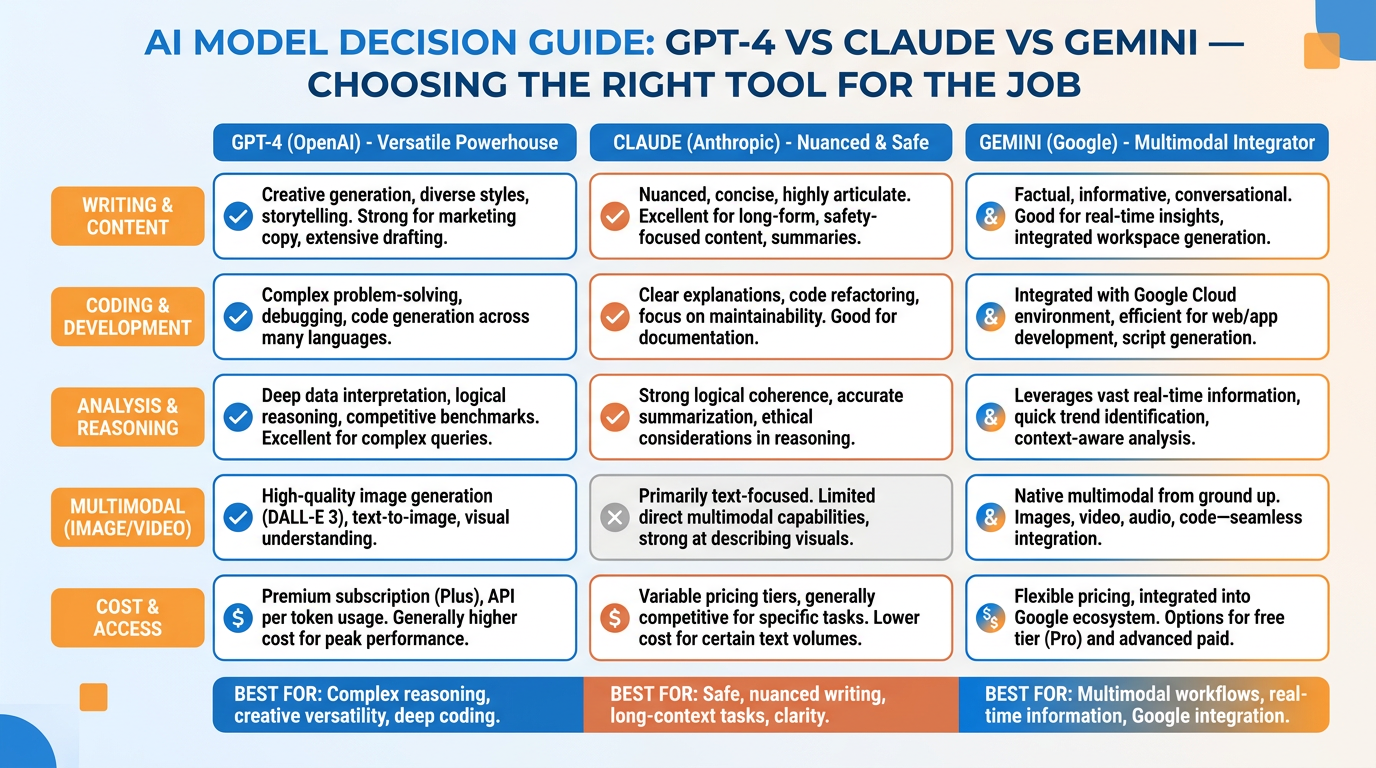
Figure 12:Choosing Your Model — GPT-5.5, Claude Opus 4.7, and Gemini 3.1 Pro compared across the tasks that matter to business people.