When Machines Learned to Sweat
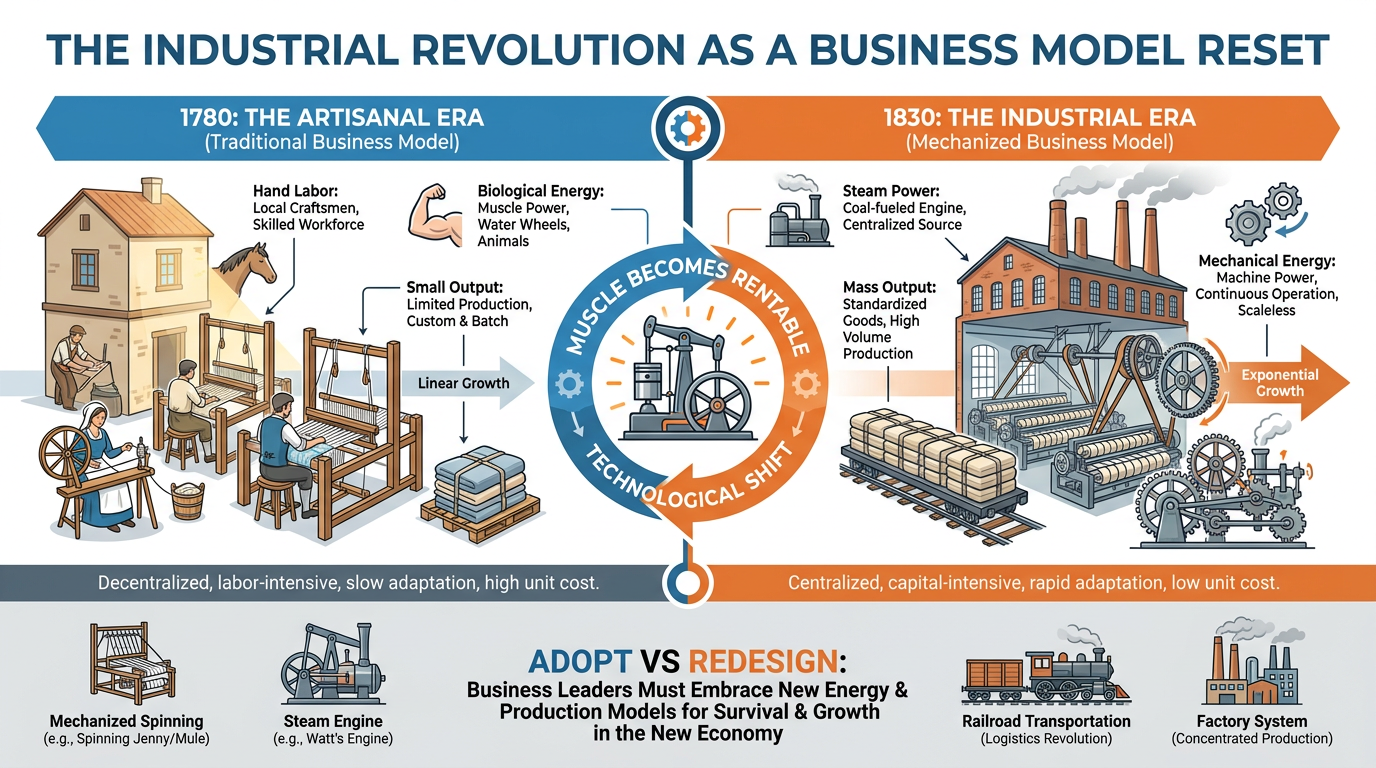
Figure 1:Module 0.1 — The Industrial Revolution and the AI Revolution: two eras, one pattern. (Image coming during chapter write.)
“The factory owners who thrived in 1830 were not the ones who marveled at steam engines. They were the ones who redesigned their entire operation around what steam engines made possible.”
The Textile Worker, the Mill, and the Question That Changed Everything
Picture a workshop in northern England, 1780.
Twelve women sit at wooden frames, each pulling thread by hand, each producing perhaps two yards of cloth per day. They are skilled. They are proud of their work. The cloth they make is some of the finest in Europe. And they will never see it coming.
Three miles away, a mill owner named Richard Arkwright is not marveling at his new water-powered spinning frame. He is asking a different question. Not “what can this machine do?” but “how do I redesign my entire operation around what this machine makes possible?”
Fifty years later, one mill in Manchester produces more cloth in a day than Arkwright’s entire county produced in a month. The twelve women at the wooden frames are not slower than before. They are simply irrelevant to an economy that has reorganized around a new kind of leverage.
This is the story of every economic revolution. And right now, it is happening again.
Renting Muscle: The Industrial Revolution in Three Sentences
Before the Industrial Revolution, human economies ran on biological energy. Crops grew, goods were carried, wheels turned, metal was hammered — all of it powered by human backs, animal legs, and the wind and water you happened to live near. If you wanted more output, you needed more bodies.
The Industrial Revolution changed one thing: it made mechanical muscle rentable.
For the first time in history, you could separate physical output from human labor. A steam engine pulling a load of ore up a mine shaft was doing the work of forty men — and it never got tired, never needed to eat, and never asked for a raise. The key insight was not the machine itself. The key insight was the business model: you could now rent power from a machine instead of hiring it from a person.
That one shift — muscle becoming a utility, a rentable commodity — rewrote the map of commerce.
The Four Leverage Points That Rewrote the Economy
The Industrial Revolution was not one event. It was four compounding leverage points arriving in rapid succession:
The first universal engine. Not dependent on proximity to water. Power could now go wherever there was coal and a boiler.
Mass production of strong, predictable materials. Machines could be built to precision. Factories could scale.
The distribution network. Steam power applied to logistics. For the first time, a product made in Manchester could reach London in hours, not days.
The organizational model. Concentrated labor, standardized processes, specialized roles. The workshop replaced by the system.
Each of these alone was interesting. Together, they were irreversible. The economy did not slowly absorb the change. It reorganized around it.
The Phrase That Matters: “Rent Muscle from Machines”
Most people think of the Industrial Revolution as a story about labor displacement — and that is true, but it is the wrong frame if you want to understand the pattern.
The more useful frame is this: the Industrial Revolution was a story about leverage becoming accessible.
Before 1800, if you wanted to move ten tons of ore, you needed fifty men. After 1820, you needed a steam engine and three operators. The fifty men’s labor had not disappeared from the world — but the economic advantage of owning it had collapsed. Power had become a commodity. And the people who won the next fifty years were not the ones who argued against the machines, or the ones who merely adopted them as tools. They were the ones who reorganized their entire business model around the new leverage.
The mill owners who thrived were not the best weavers. They were the best at asking: now that muscle is rentable, how do I redesign everything?
The Winners Did Not Admire the Machines
Here is the thing most people miss when they study this history.
The business leaders who came to dominate the 19th-century economy were not, in the main, the most technically sophisticated people in the room. They were not the engineers who designed the steam engines. They were not the metallurgists who refined the steel.
They were the operators who asked a deceptively simple question: “Now that this new kind of leverage exists, how do I restructure my operation to use it better than anyone else?”
This is the crucial distinction between adopting a technology and reorganizing around a technology.
Adopting: you add the steam engine to your existing workshop. Output goes up. Costs go down somewhat. Competitors catch up within a decade.
Reorganizing: you rethink the entire business. What used to require fifty skilled craftsmen now requires five overseers and one engineer. The product you could only make in small batches can now be produced at scale. The market you could only reach by horse-cart can now be reached by rail. Everything changes.
The difference between these two responses — adding vs. redesigning — was the difference between surviving the Industrial Revolution and winning it.
And right now, the exact same fork in the road is in front of every business on earth.
The Short Story: Two Mill Owners, One Machine
Imagine two mill owners in Manchester, 1835.
Thomas hears about the new power loom. He visits a demonstration, is impressed, and orders six machines for his existing floor. He assigns his best weavers to operate them. Production increases by 40%. He is pleased. His investors are pleased.
George visits the same demonstration and asks a different question. Not “how many can I buy?” but “if I had one hundred of these, how would I redesign everything?” He spends three months reorganizing. He tears out the old floor plan. He restructures supply, distribution, and sales around the new throughput. He hires two engineers instead of thirty weavers.
By 1845, George’s operation produces twelve times what Thomas’s does. Thomas is still adding machines to his old structure. George has built a new structure around the machines.
This story repeats in every economic revolution. The pattern is always the same: the machines become the leverage, but the redesign is the advantage.
A Business Model Reset, Not a Technology Event
This is the framing that will run through the rest of this book.
The Industrial Revolution was not fundamentally a story about steam engines. It was a story about what becomes economically possible when mechanical force is no longer scarce.
Before: muscular effort was scarce and expensive. Economic advantage came from owning it or organizing it efficiently.
After: muscular effort was cheap and abundant. Economic advantage came from deciding which outputs to pursue and how to organize the abundant power.
The scarce resource shifted. And when the scarce resource shifts, the entire economy reorganizes around the new scarcity.
Hold that pattern tightly. It is about to happen again.
The Preview: From Muscle to Mind
The Industrial Revolution made muscular effort rentable.
The AI Revolution is making cognitive effort rentable.
Right now, for roughly $20 per month, you have access to reasoning capability that, by any conventional measure, exceeds what the finest-trained human analyst could bring to a task at a comparable cost. Summarization. Classification. Drafting. Extraction. Pattern recognition. Hypothesis generation. Synthesis.
These are no longer scarce. They are commodities. Rentable. Accessible.
And just like 1830, there are two kinds of people staring at this:
Those who are adding the tool to their existing operation and hoping for a 40% lift.
Those who are asking the deeper question: “Now that cognition is rentable, how do I redesign everything?”
The rest of this book is for the second kind.
Applied Exercise
Before you read Chapter 0.2, take five minutes with this:
The redesign question:
Think of one workflow in your work — something you do weekly, something that currently requires significant human thinking, review, or synthesis.
Now ask yourself: “If the cognitive effort in this workflow were essentially free — if I could apply unlimited reasoning capacity to every step — how would I redesign it?”
Don’t think about the tools yet. Don’t think about prompts or models. Just think about the redesign. What would the process look like if the limiting factor were no longer human attention?
Write 100 words. Not a polished answer — just a raw sketch.
That sketch is the beginning of what this book is building toward.
When Machines Learned to Think
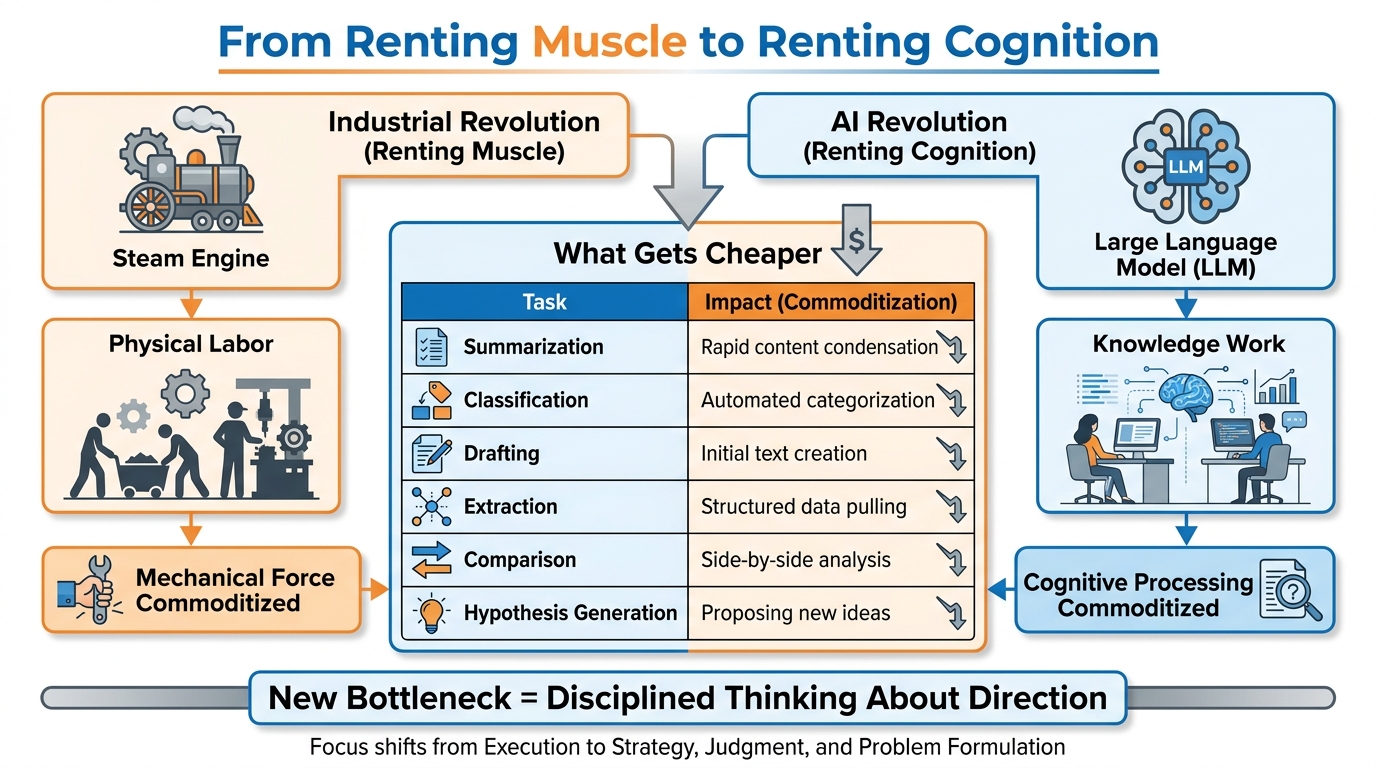
Figure 2:Module 0.2 — Two revolutions. Two commodities. One pattern. (Image coming during chapter write.)
“We used to pay analysts to read reports and extract the signal. Now the expensive part isn’t reading — it’s knowing what signal to look for.”
The Analyst, the Dataset, and the Deadline
It’s 2019. A strategy analyst named Maya is sitting at her desk at 11 PM. She has a 9 AM presentation to the executive team on competitive positioning, and she is four hours into trying to manually read 200 pages of earnings transcripts, press releases, and market reports.
She is smart. She is thorough. She works hard. And she is about to miss something important in the 143rd document because she is tired and the words are blurring together.
Now replay the same scene in 2025.
Maya uploads all 200 documents to her AI in under two minutes. She types: “Identify the three most significant strategic shifts among our top five competitors over the last 18 months, with direct quotes.” Forty seconds later, she has a structured brief — with citations — that would have taken the 2019 version of her four more hours to produce. And she is not tired. She is thinking.
The task did not disappear. The expensive part of the task did.
The Shift: Renting Muscle, Then Renting Mind
In Module 0.1, we established the pattern: every economic revolution begins with a new kind of leverage becoming rentable.
The Industrial Revolution made muscular effort rentable. The steam engine commoditized the physical. Hauling, lifting, spinning, pressing — things that required human backs and animal legs suddenly required only coal and machinery.
The AI Revolution is making cognitive effort rentable. The large language model commoditizes the mental. Reading, summarizing, classifying, drafting, extracting, comparing — things that required human minds, education, and hours suddenly require a prompt and an API call.
This is not an incremental improvement. It is a category shift.
| Era | What Was Commoditized | What Became the Bottleneck |
|---|---|---|
| Pre-industrial | Nothing — both muscle and mind were expensive | Scale (couldn’t do enough of anything) |
| Industrial | Mechanical force | Logistics, distribution, capital |
| Digital | Information access | Attention, curation, interpretation |
| AI | Cognitive processing | Disciplined thinking about direction |
The bottleneck has always shifted when the previous constraint was lifted. And right now, the constraint being lifted is the cost of raw cognitive work.
What Gets Cheaper When Cognition Is Rentable
Let’s be specific. Here is what has already dropped — dramatically — in cost and time for anyone using current AI tools:
Reading 200 pages and pulling the key points used to take a skilled analyst a full day. Today it takes minutes.
Sorting thousands of customer feedback responses into categories used to require a team. Now it requires a prompt.
First drafts of memos, emails, proposals, reports, and presentations. The blank page problem is largely solved.
Pulling structured data from unstructured text — contracts, filings, call transcripts. Hours become seconds.
Side-by-side analysis of options, scenarios, documents, or proposals. What used to require two analysts can now be a single conversation.
Given this data, what might be true? Given this situation, what could we try? The ideation tax has been slashed.
Notice what is not on that list. Judgment. Values. Strategy. Relationships. Taste. The ability to ask the right question in the first place.
These are not cheaper. If anything, they are more valuable — because when the cheap cognitive work is automated away, the premium goes entirely to the work that cannot be automated: the direction in which the cognitive horsepower is pointed.
The New Bottleneck: Disciplined Thinking Around the Data
Here is the insight that most organizations are still missing.
For decades, the bottleneck in knowledge work was access and throughput. You needed smart people to read things, synthesize things, and produce outputs. The more of those people you had, the more cognitive work you could get done.
That bottleneck is gone.
The new bottleneck is not “can we process the information?” It is: “Do we know what we’re trying to do with it?”
The organizations that will win the next decade are not the ones with the most AI tools. They are the ones with the clearest sense of what question they are actually trying to answer — and the discipline to point their AI toward that question with precision.
This is what we mean when we say the shift is from renting muscle to renting cognition.
In the muscle era, the advantage was having more power. In the cognition era, the advantage is knowing what to think about.
Why “We Use AI” Is Already a Losing Strategy
Let’s say it plainly: “We use AI” is the 2025 version of “we have electricity.”
In 1895, saying “we have electricity” was a competitive differentiator. A factory with electric motors outperformed a factory with steam engines. But by 1910, every serious competitor had electric motors. Electricity had become infrastructure — a table stake, not an edge.
The same arc is happening with AI, but compressed from decades into years.
Right now, in 2025, “we use AI” still sounds like a strategy to some organizations. Within three years, it will sound the way “we use spreadsheets” sounds today — not impressive, just assumed.
The organizations that will be standing in a different place by 2028 are the ones that are not asking “how do we adopt AI?” but “how do we reorganize our work around AI?”
Adoption is a tool question. Reorganization is a strategy question.
This book is about the strategy question.
A Short Story: The Consultant Who Treated the Model Like a Search Engine
Carlos is a management consultant at a mid-size firm. He is smart, experienced, and has been using AI daily for eight months. He uses it to search for facts. He asks it questions like “What are the market share percentages for the top five players in commercial HVAC?” and gets answers back, which he pastes into his decks.
He is getting value. He is not getting leverage.
His colleague Priya uses the same model, but differently. Before every client engagement, she spends 20 minutes creating a context file: the client’s situation, their stated goals, the three questions the engagement needs to answer, the political dynamics she has observed. She pastes that document into every conversation.
Then she does not ask the model for facts. She asks it to think with her.
“Given everything in this context file, what assumptions in our current hypothesis are most likely to be wrong?”
“If you were the CFO of this company reading this recommendation, what would concern you most?”
“What are we not asking that we should be?”
The difference in output quality between Carlos and Priya is not a function of the model. It is a function of what they each bring to the conversation. Carlos brings a query. Priya brings a flashlight.
We will come back to the flashlight in the very next module. For now, just hold this: the model is not a search engine. It is a reasoning partner. And reasoning partners respond to disciplined input with dramatically better output.
The Strategic Lens for the Rest of This Book
Every module from here forward is a different angle on one underlying question:
“Now that cognition is rentable, how do we redesign work?”
Module 1 gives you the vocabulary — the technical building blocks you need to communicate fluently about what AI can and cannot do.
Module 2 gives you the workshop — the three-tool stack that handles 90% of business work better than any single tool can.
Modules 3 through 13 give you the leverage points — tools, techniques, and architectures that let you go from using AI to building around it.
Modules 14 through 16 give you the strategic frame — the competitive landscape that explains why this particular moment is different from every prior technology shift, and what it means for your career and organization.
The pattern is always the same. Leverage becomes available. The question is: who designs their operation around it first?
Applied Exercise
Pick one repeating cognitive task from your actual work life. Something you do at least weekly. Something that requires reading, summarizing, comparing, drafting, or classifying.
Write two paragraphs:
Paragraph 1: How you do it today. Every step. Honest about the time and effort.
Paragraph 2: How it would look if all the reading, summarizing, and first-draft work were free — if you could skip straight to the judgment call at the end.
That second paragraph is what redesigned work looks like. The rest of this book is how you get there.
The Builder’s Question
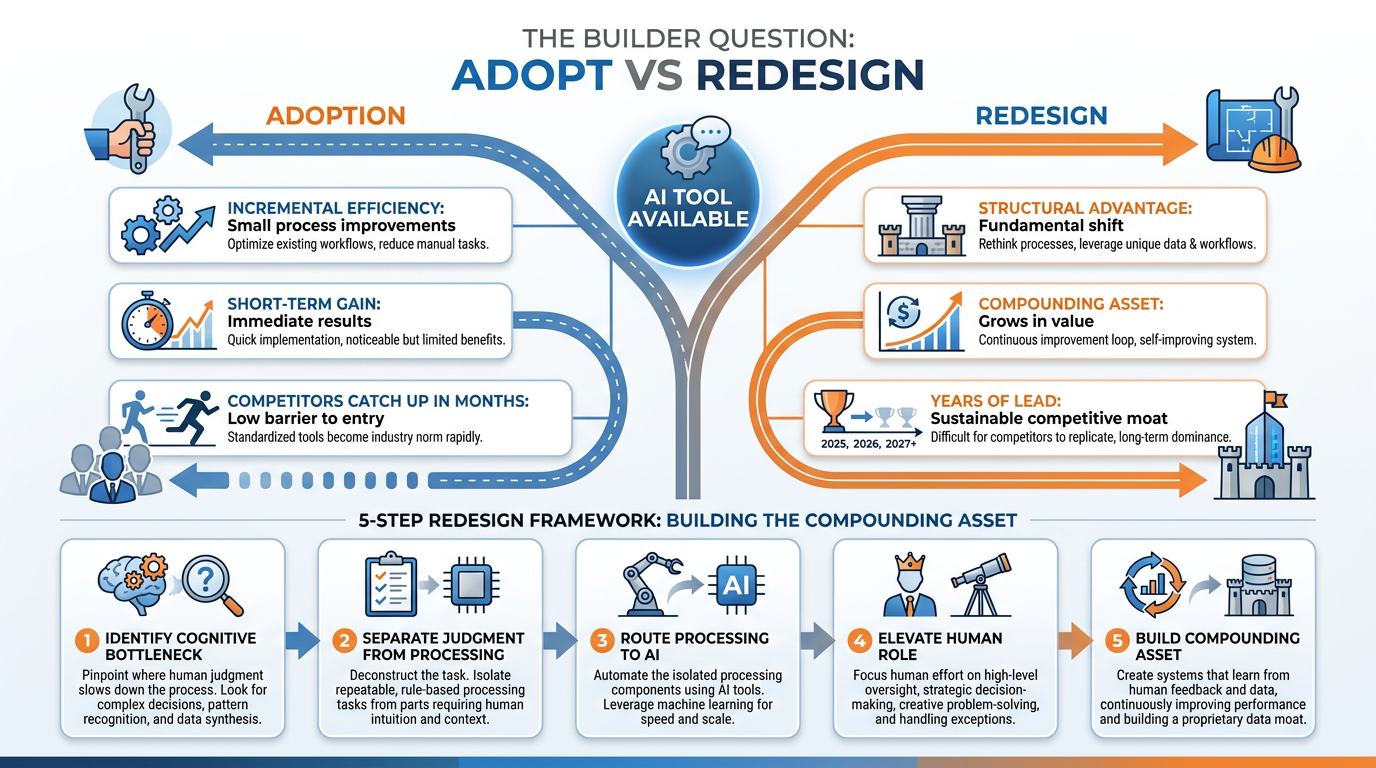
Figure 3:Module 0.3 — The fork in the road. Adopt vs. redesign. (Image coming during chapter write.)
“The question is not whether AI can help you work. It already can. The question is whether you are willing to redesign your work around what that help makes possible.”
Two Operators, One Tool, Two Futures
Meet two operations managers at competing logistics companies, 2025.
Operator A — Marcus gets access to an AI assistant in March. By April, he is using it daily. He drafts emails faster. He summarizes long reports in minutes. He asks it for data analysis on request. His personal productivity is up maybe 30%. His team is impressed. His boss is pleased.
Operator B — Yuki gets the same tool the same week. She spends the first week not using it for her existing tasks — she spends it mapping her existing tasks. Which parts of her team’s workflow are fundamentally about information processing? Where does cognitive work happen that isn’t judgment? Where do her people spend time doing things that could be described as “reading then writing”?
By May, Yuki has redesigned three core workflows. Her team’s weekly report, which previously required eight person-hours of data gathering and drafting, now takes ninety minutes — with better output. Her customer escalation triage, which used to require a senior analyst, now runs through a structured AI review before the analyst ever sees it. Her competitive intelligence process, which was previously informal and spotty, now generates a structured brief every Monday morning automatically.
By December, Marcus’s team is 30% more productive per person. Yuki’s team is handling twice the volume with 20% fewer headcount, while her people spend more of their time on the judgment calls that actually require human expertise.
Same tool. Same access date. Two completely different questions asked.
The Wrong Question (That Most People Are Asking)
Here is the question most organizations are asking right now:
“Can AI help us do what we already do, but faster?”
This is a reasonable question. The answer is almost always yes. And stopping there feels like success.
But it is the Thomas-the-mill-owner question. Add the machine, get a lift, move on. You are now 30% better at something your competitors will also be 30% better at within twelve months.
The window of advantage from mere adoption is closing. Not because AI is slowing down — it is accelerating — but because the availability of the tools is nearly universal. Anyone who wants access to a world-class AI reasoning partner can have one for $20 per month. The tool itself is no longer the moat.
The Right Question (That Most People Are Not Asking)
Here is the question the Yukis of the world are asking:
“Can we design work that produces better outcomes because AI is in the loop — not just faster, but structurally better?”
This is not a productivity question. It is an architecture question.
The difference is subtle but enormous:
Two Questions, Two Outcomes
The Adoption Question | The Builder’s Question | |
|---|---|---|
Asks: | Can AI help us do this faster? | Can we redesign this so AI makes it structurally better? |
Result: | Incremental efficiency | New capability or quality threshold |
Durability: | Months (competitors catch up) | Years (compounding advantage) |
Metaphor: | Adding a steam engine to the old floor plan | Building a new factory around the steam engine |
Example: | Writing emails faster | A triage system that routes customer issues before a human ever reads them |
The adoption answer is real. It produces real value. Don’t dismiss it.
But the builder’s question is where the durable advantage lives.
What “Redesigning Work” Actually Means
Let’s make this concrete, because “redesign” can sound abstract.
Redesigning work around AI means asking, for every significant workflow in your organization:
Step 1 — Identify the cognitive bottleneck. Where does this process slow down because human attention, synthesis, or judgment is required?
Step 2 — Separate judgment from processing. Which parts of the bottleneck are actual judgment (requiring experience, values, relationships, accountability) and which parts are cognitive processing (reading, summarizing, classifying, drafting, comparing)?
Step 3 — Route the processing to AI. The processing parts? Move them to an AI in the loop. Not as a co-pilot you watch — as a step in the process that runs before the human sees it.
Step 4 — Elevate the human role. Now ask: what does the human do better, given that the processing is handled? Usually, the answer is more of the actual judgment — the thing they were hired for in the first place but rarely had time to do because the processing ate the day.
Step 5 — Build the compounding asset. Document what you built. Capture the lessons. The system gets better every time you refine it. You are now building something competitors cannot easily copy — not because the tools are secret, but because the institutional knowledge baked into the system takes time to accumulate.
This is the architecture of competitive advantage in the cognition economy.
The Preview: What Each Module Builds
The rest of this book is structured as a practical blueprint for the Builder’s Question. Every module gives you one more tool, technique, or frame for redesigning work around AI.
Here is the arc:
Modules 1–2 give you the foundation. The vocabulary of AI (Module 1) and the workshop setup (Module 2) are the prerequisites for everything else. You cannot redesign work around a tool you do not understand, and you cannot build consistently from a workshop that is not set up.
Modules 3–5 give you the leverage points. MCP tools (Module 3) extend your AI’s reach into your real-world systems. Skills (Module 4) turn ad-hoc interactions into repeatable workflows. The six engineering disciplines (Module 5) give you precise control over AI output quality.
Modules 6–8 give you the advanced techniques. Plan mode (Module 6) teaches AI to think before it acts. Memory (Module 7) makes AI compounds value across sessions. Plugins (Module 8) add capabilities without building.
Modules 9–13 give you the team. Sub-agents (Module 9), agent teams (Module 10), and the SDK (Module 11) take you from AI as a tool to AI as a workforce. Self-learning systems (Module 12) and automations (Module 13) make the workforce proactive.
Modules 14–16 give you the frame. Security (Module 14), the strategic landscape (Module 15), and the architectural future (Module 16) complete the picture — not just how to build, but why it matters and what it will become.
By Module 16, you will have a complete answer to the Builder’s Question, applied to your actual work.
The Three Commitments This Book Asks of You
Before you turn the page, three things:
Commitment 1 — Do the exercises. Every module ends with an applied exercise. These are not optional enrichment. They are the mechanism by which you turn understanding into capability. The book is a map; the exercises are the territory.
Commitment 2 — Bring your actual work. The best results come when you apply every technique to something real — a real workflow, a real problem, a real thing you have been putting off. Generic examples will teach you the pattern. Real problems will teach you the skill.
Commitment 3 — Stay with the question. When a technique feels awkward or a tool seems unfamiliar, resist the impulse to retreat to what’s comfortable. The Builder’s Question requires new answers. New answers require new behavior. The discomfort is the learning.
Case Study: Two Hospitals, One AI Vendor, Two Very Different Futures
Background
In the spring of 2024, Meridian Health System — a mid-size regional hospital network headquartered in Fort Lauderdale, Florida — signed an enterprise contract with CogniCare, an AI platform designed specifically for healthcare operations. CogniCare offered a suite of tools: automated clinical note summarization, insurance prior-authorization drafting, patient discharge instructions generation, and a scheduling optimization engine. The contract cost $1.2 million annually and came with a dedicated implementation team and a 90-day onboarding window.
Meridian’s Chief Medical Information Officer, Dr. Sandra Okafor, championed the purchase. Her pitch to the board was straightforward: the system’s nurses and physicians were spending an estimated 35–40% of their working hours on documentation and administrative tasks. CogniCare, she argued, would give that time back. The board approved. Implementation began in June.
At roughly the same time, two hours north in West Palm Beach, a smaller competing system — Coastal Regional Medical Center — purchased the exact same CogniCare platform under nearly identical terms. Coastal’s Chief Operations Officer, James Reyes, also saw the documentation burden as the primary pain point. But before launching the platform, Reyes convened a two-week internal working group: nurses, hospitalists, case managers, and billing staff. Their charge was not to figure out how to use CogniCare — it was to map every administrative workflow in the hospital and identify where, exactly, the cognitive bottleneck lived.
What Reyes’s working group discovered surprised them. The documentation burden was real, but the deeper problem was upstream: clinical information entered in the emergency department was routinely reformatted, re-summarized, and re-entered by three different staff members before it ever reached a billing coder. Each reformatting step introduced errors. Each re-entry consumed skilled labor. The problem was not that humans were slow at summarization — it was that the workflow had been designed to require summarization at every handoff.
The Situation
By December 2024, both hospitals had been live on CogniCare for six months. Meridian’s physicians reported that note summarization was faster and discharge instructions were easier to generate. Physician satisfaction scores improved modestly. Administrative hours dropped by an estimated 18%. Dr. Okafor considered the rollout a success — and largely moved on. The tool had been adopted. The problem had been addressed.
At Coastal Regional, James Reyes’s team had done something structurally different. Using CogniCare as the cognitive processing layer, they redesigned the clinical-to-billing handoff entirely: a single structured AI-generated summary now followed the patient from ED intake through discharge, eliminating two of the three reformatting steps. Case managers no longer produced their own summaries — they reviewed and approved the AI-generated one. Billing coders received a pre-structured document with flagged fields. Six months in, Coastal’s clean claim rate had risen from 71% to 89%, reducing rework costs by an estimated $2.3 million annually — nearly double the cost of the platform itself.
The tool was identical. The outcomes were not. The difference was the question each organization asked before they deployed it.
Discussion Prompt
Using the frameworks introduced in Chapter 0 — specifically the distinction between adoption and redesign, the concept of renting cognition as a business model shift, and the Builder’s Question — analyze the strategic difference between Meridian Health System’s and Coastal Regional’s approaches to AI implementation. In your response, consider: Is Meridian’s approach wrong, or is it simply a different kind of strategic choice? What would it take for Meridian to move from adoption to redesign — and what organizational, cultural, or structural barriers might prevent that transition even when leadership recognizes the need? Draw on at least one peer-reviewed or practitioner source to support your analysis.
Discussion Guidelines
Initial Post (due before class)
Minimum 400 words
Directly address the discussion prompt using concepts from this chapter
Include at least one APA-formatted citation — from the course text or a peer-reviewed source
Avoid summary; demonstrate analysis and original thinking
Peer Responses (minimum 2)
Minimum 250 words each
Each response must include at least one APA-formatted citation
Engage substantively with your peer’s argument — build on it, challenge an assumption, or offer a contrasting perspective grounded in evidence
“I agree” or “Great post” responses do not meet the requirement
Maintain a professional and respectful academic tone throughout
Applied Exercise: The Full Module 0 Synthesis
You have now seen the complete arc of Module 0:
0.1: The Industrial Revolution as a business model reset — renting muscle.
0.2: The AI Revolution as the same reset — renting cognition.
0.3: The Builder’s Question — redesign vs. adoption.
Now synthesize them.
Write a 200-word response (no more, no less — the constraint is the point) to this prompt:
“Identify one workflow in your organization — or in your own work — that was designed for the ‘rent muscle’ era. Describe, in two paragraphs, how it would look if it were redesigned for the ‘rent cognition’ era.”
Be specific. Name the workflow. Name the cognitive bottleneck. Name what you would route to AI and what you would reserve for human judgment. Name the compounding asset you would be building.
When you have written those 200 words, you have your first answer to the Builder’s Question.
The rest of the book is how to build it.
Looking Ahead: Module 1
In Module 0, we set the strategic frame: every economic revolution begins with a new kind of leverage becoming rentable, and the winners are the ones who redesign their operations around it.
But to redesign around AI, you need to understand AI. Not at the engineering level — this book has no engineering prerequisites. But at the mechanical level: what it actually is, how it actually works, what it can and cannot do on its own.
Module 1 is deliberately short on jargon and long on intuition. Seven things you must know cold. By the end of it, you will speak the language fluently — and you will never again have to nod politely while someone uses the word “token” wrong.
Turn the page.
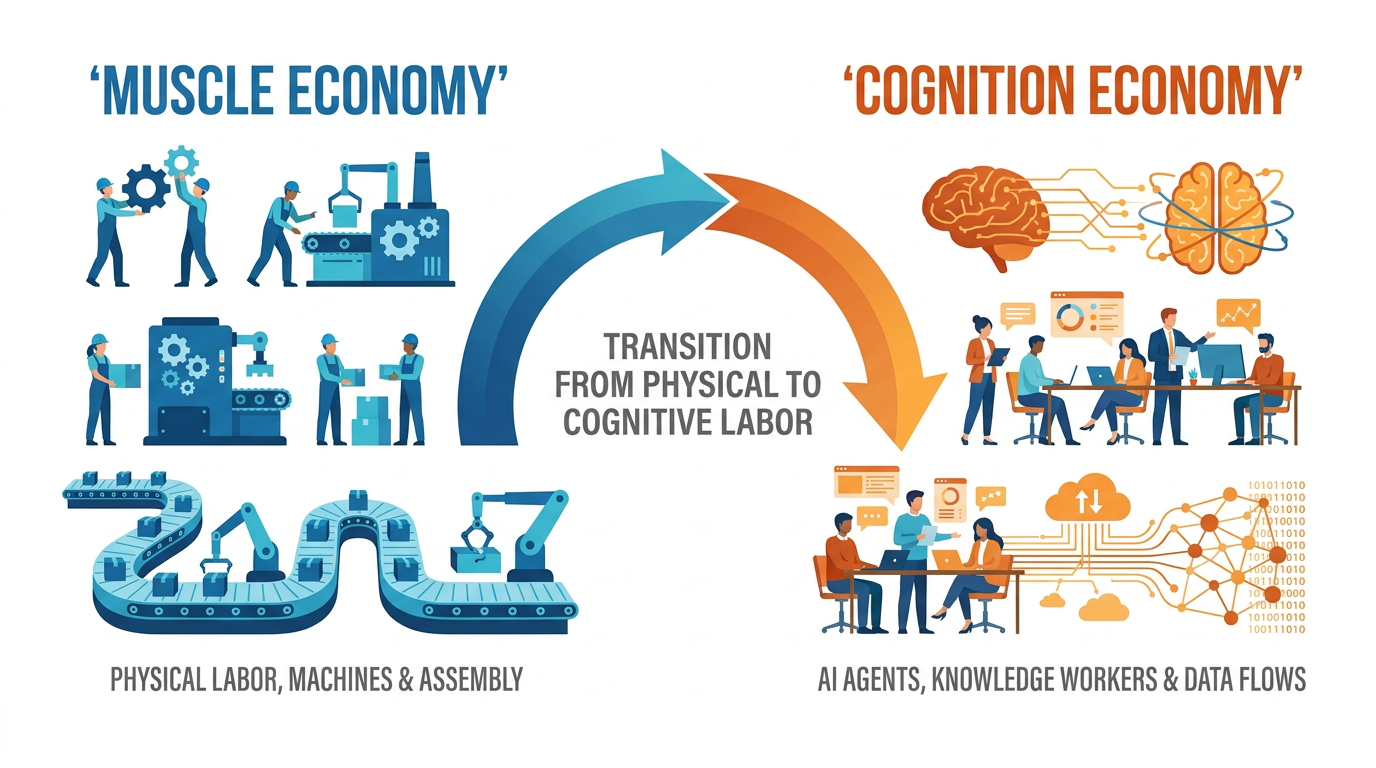
Figure 4:From Muscle to Cognition — The fundamental economic shift this book is about.
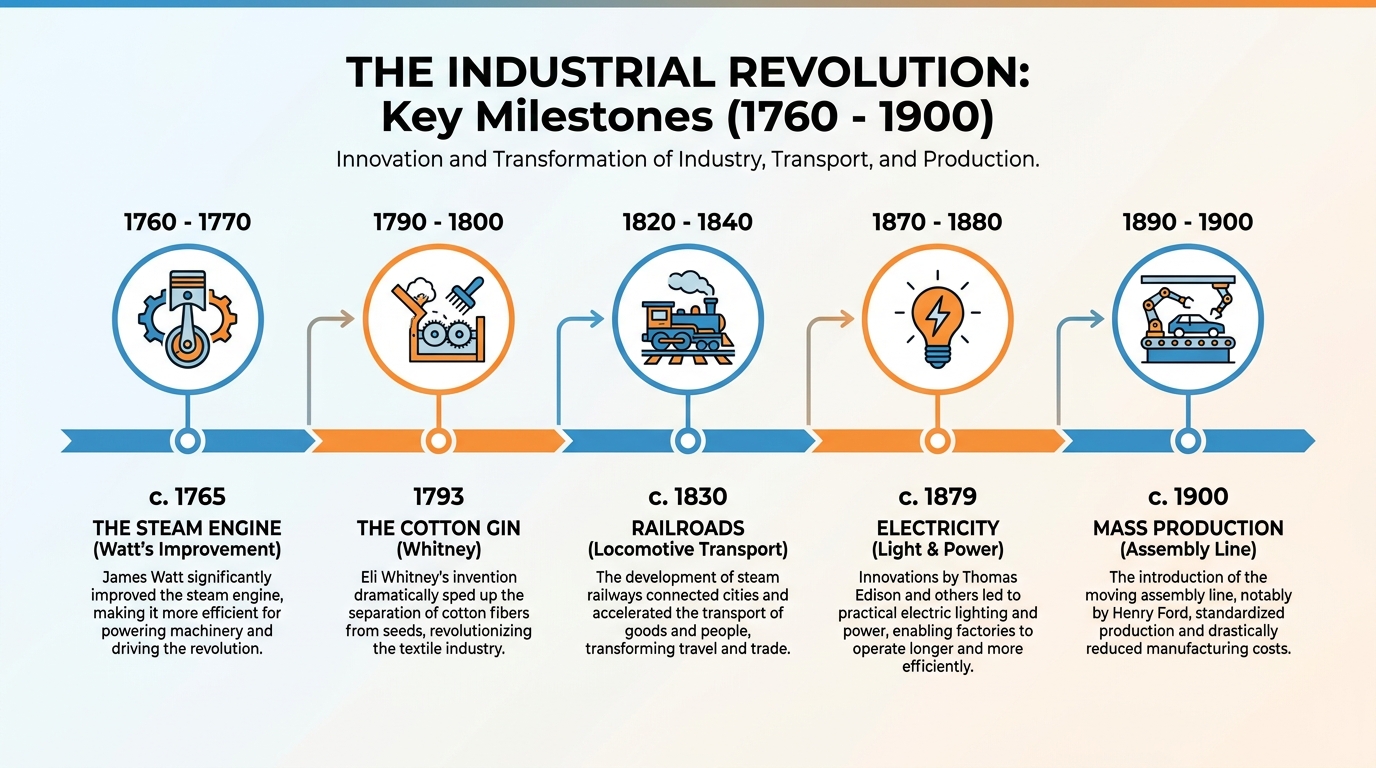
Figure 5:The Industrial Revolution Timeline — 140 years of muscle-augmentation milestones.
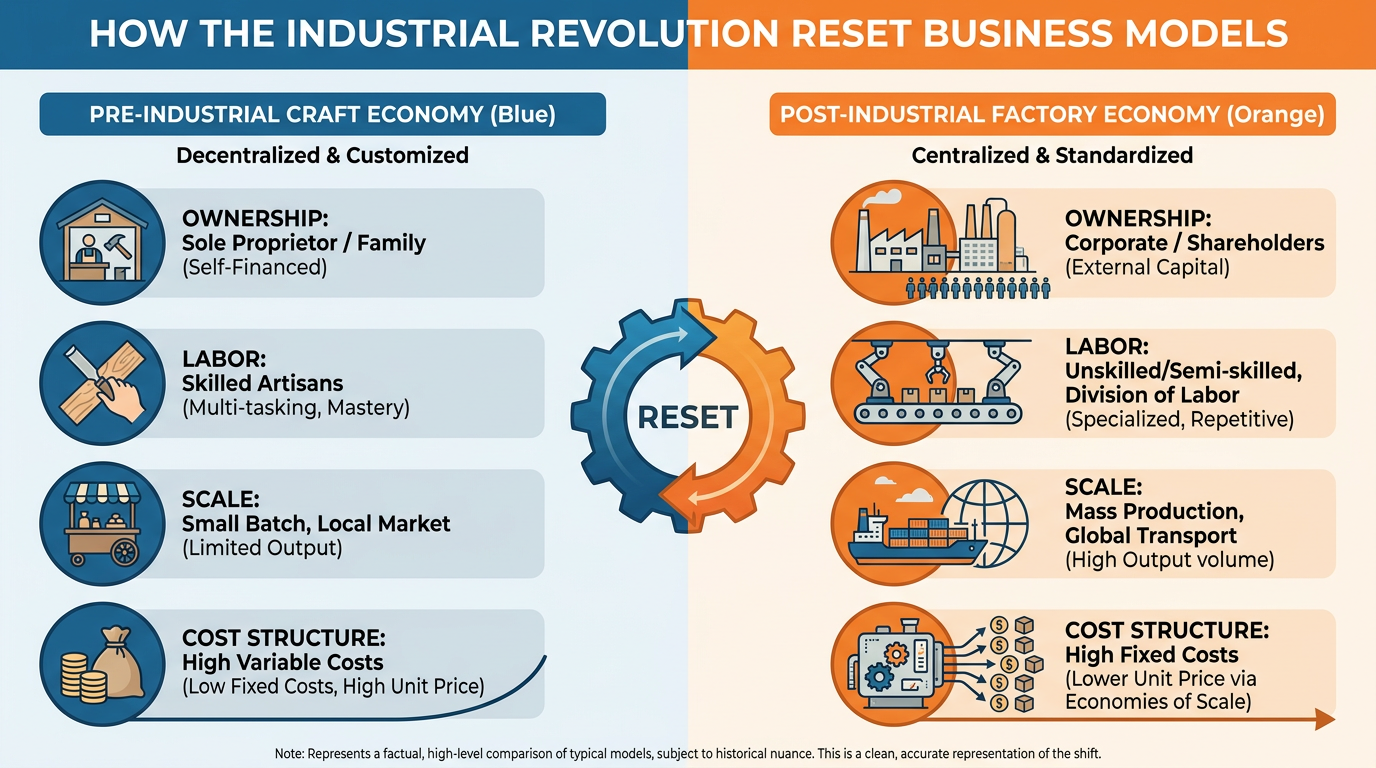
Figure 6:The Business Model Reset — Craft economy vs factory economy, side by side.
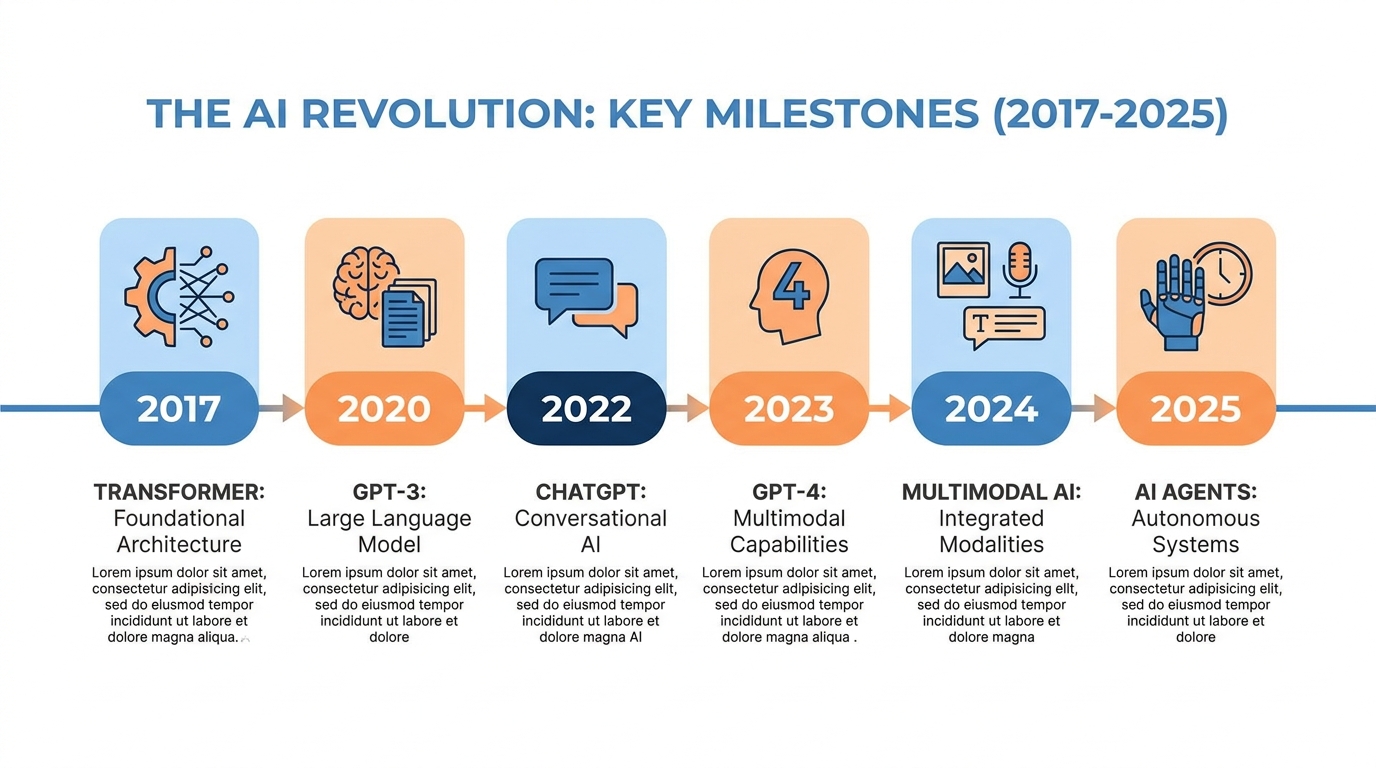
Figure 7:The AI Revolution Timeline — From Transformer paper to autonomous agents in under a decade.
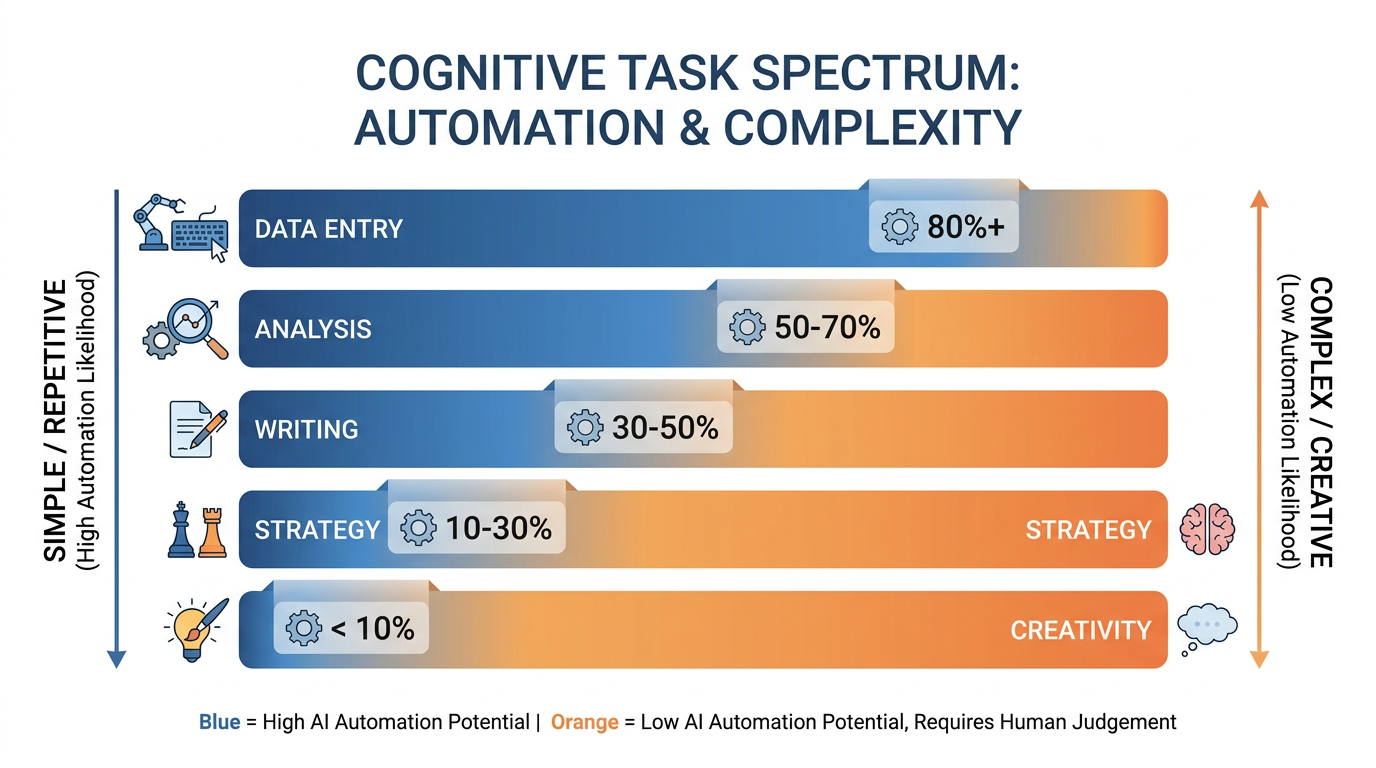
Figure 8:The Cognitive Labor Spectrum — Which tasks AI can take, and which still need you.
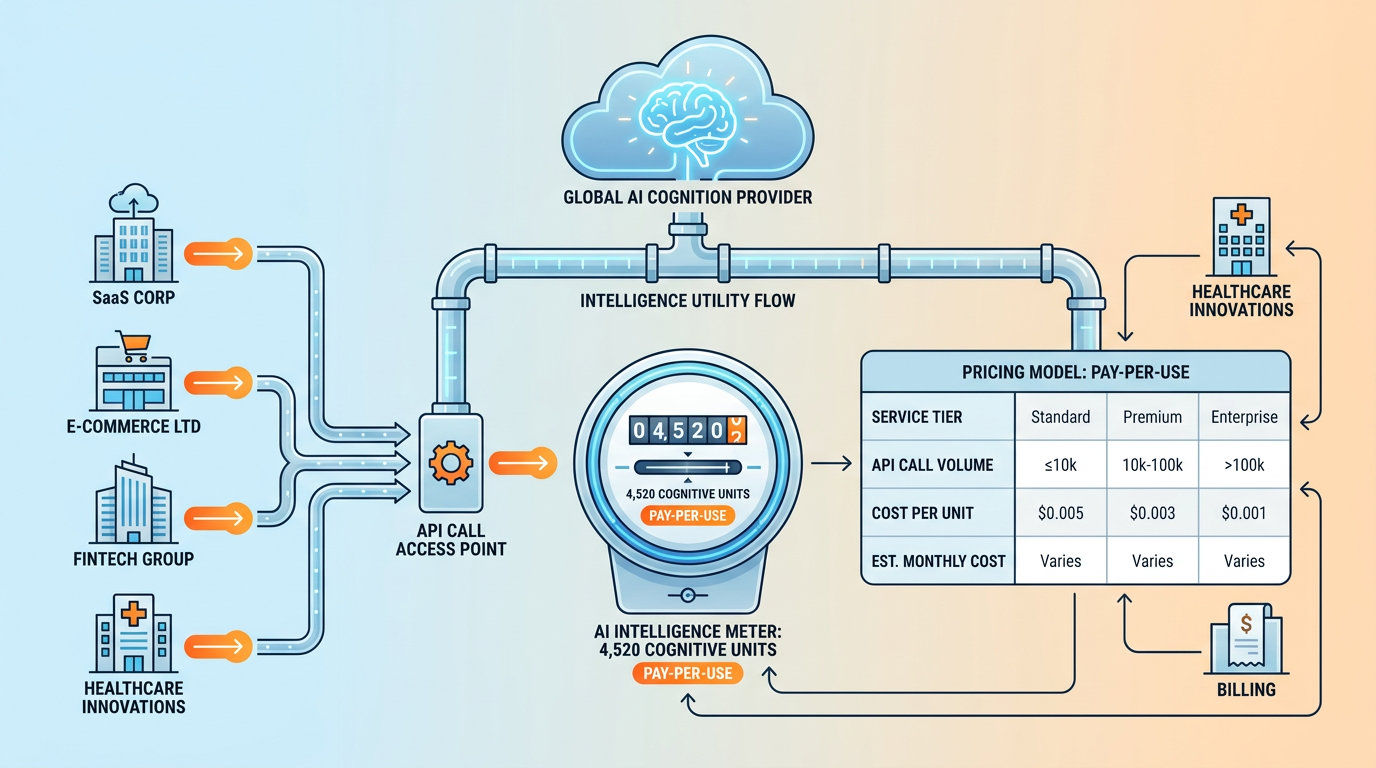
Figure 9:Renting Cognition — Intelligence as a utility: pay for what you use, scale at will.
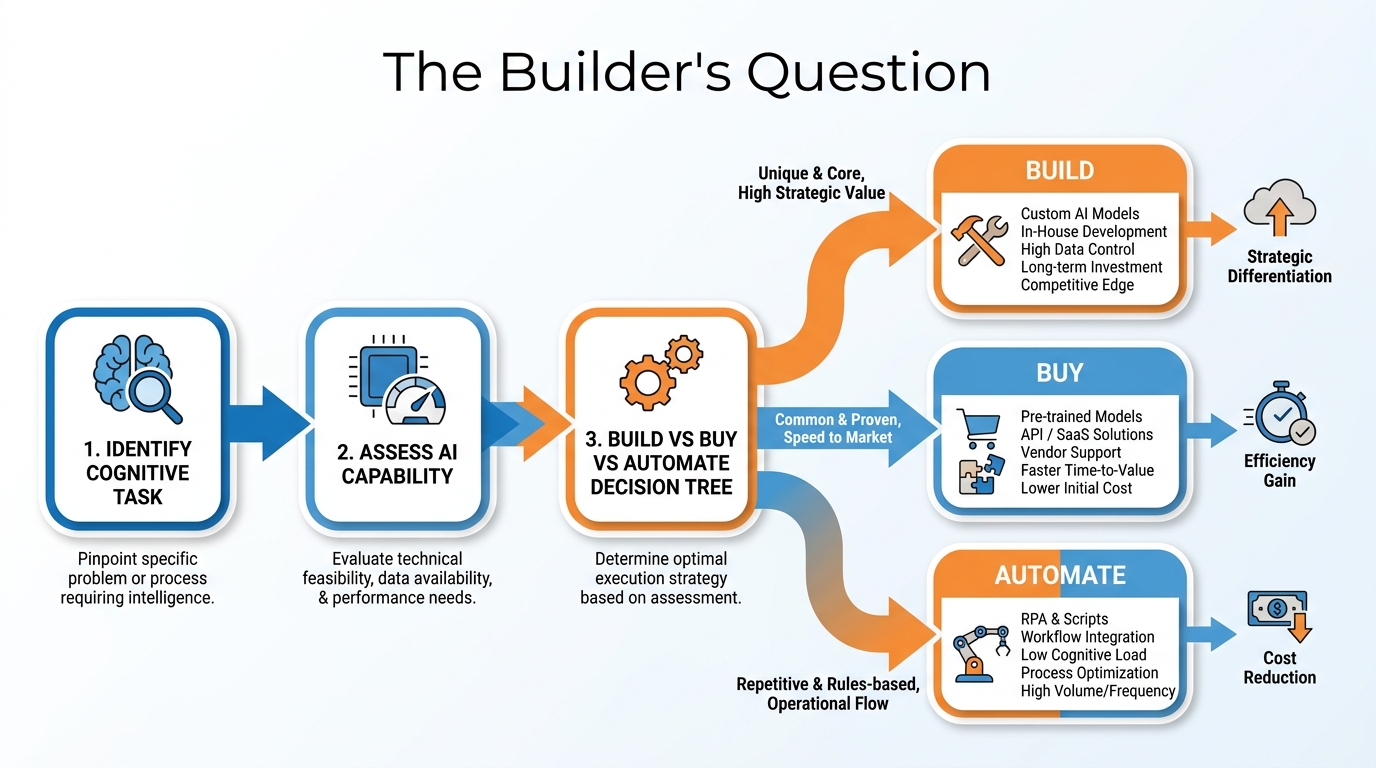
Figure 10:The Builder’s Question Framework — Build, buy, or automate? A decision tree for every cognitive task.